
Level 1 sweep and inspection to the NFPA 211 annual standard - flue, crown, cap, and flashing checked and photographed
Chimney sweep logs do not sweep chimneys. They loosen some creosote - which then falls where a brush and vacuum still have to collect it.
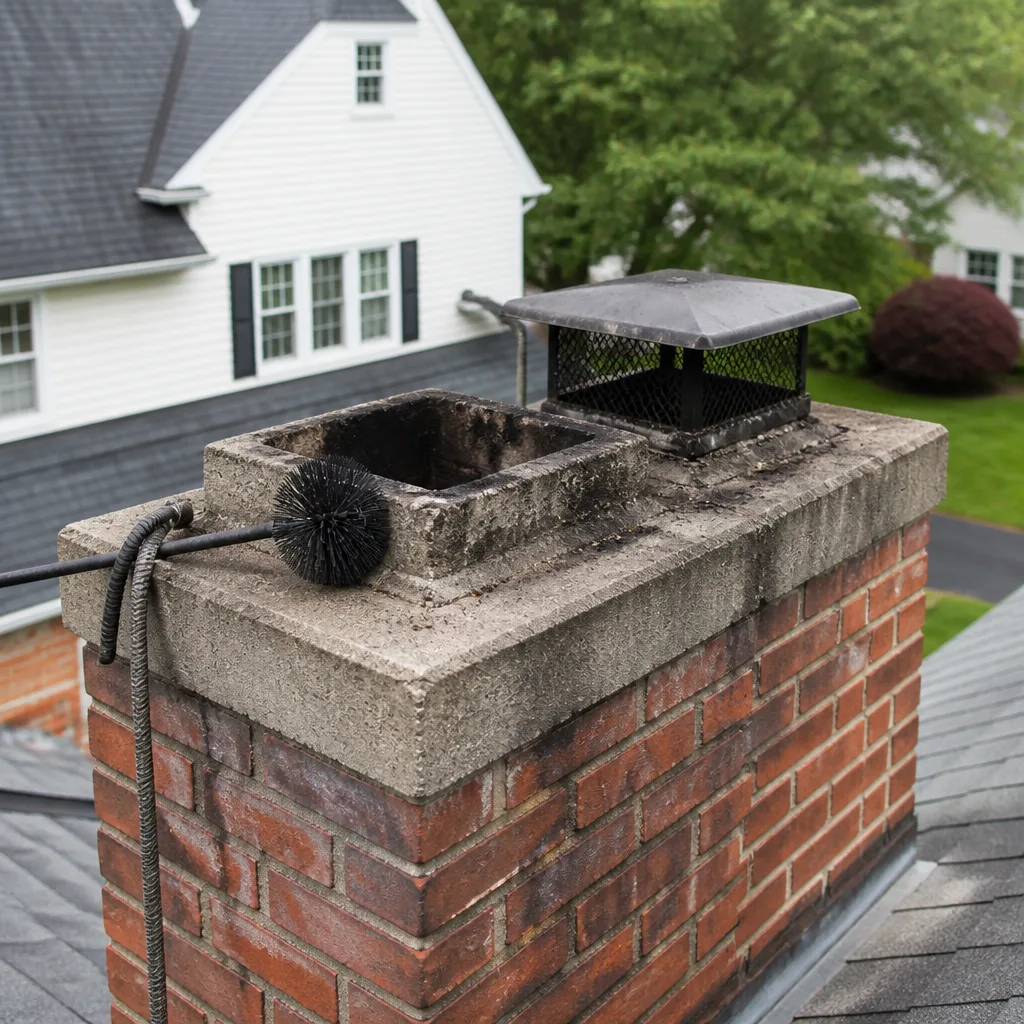
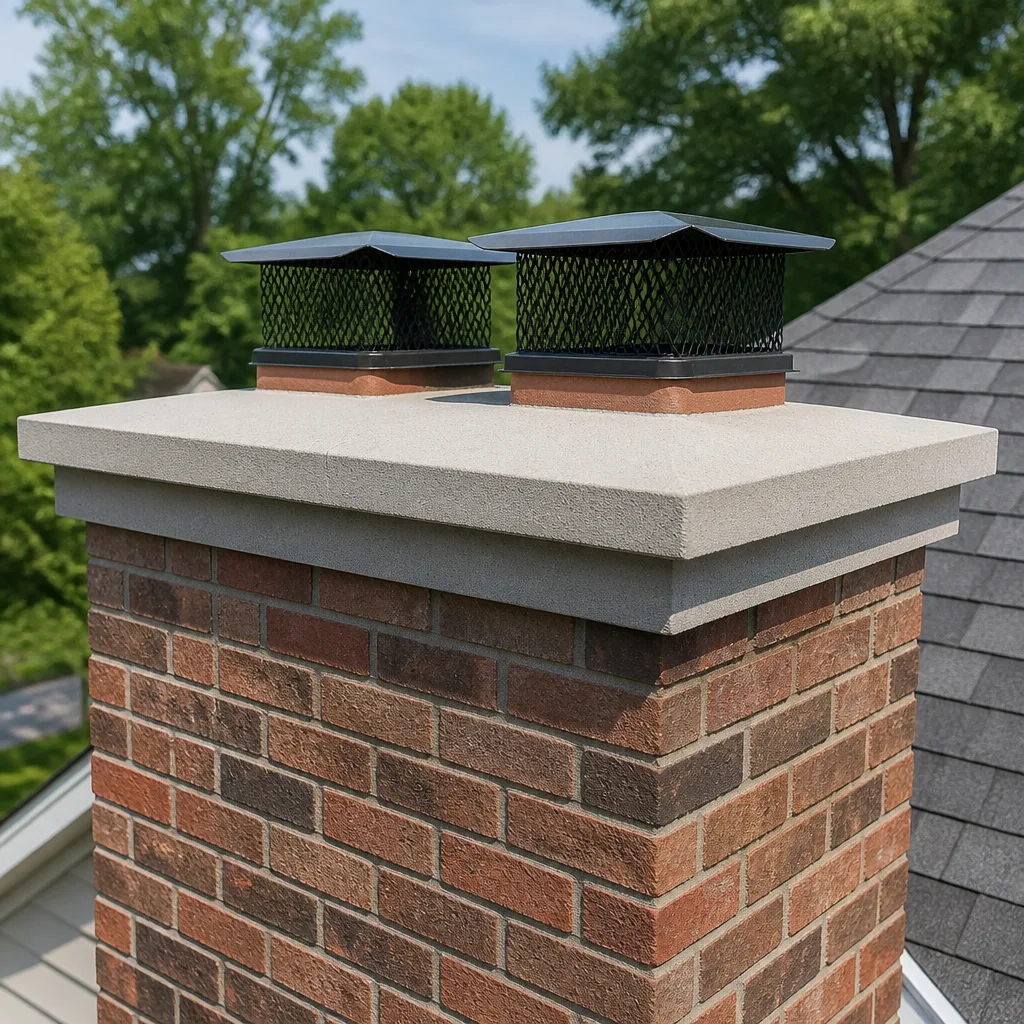
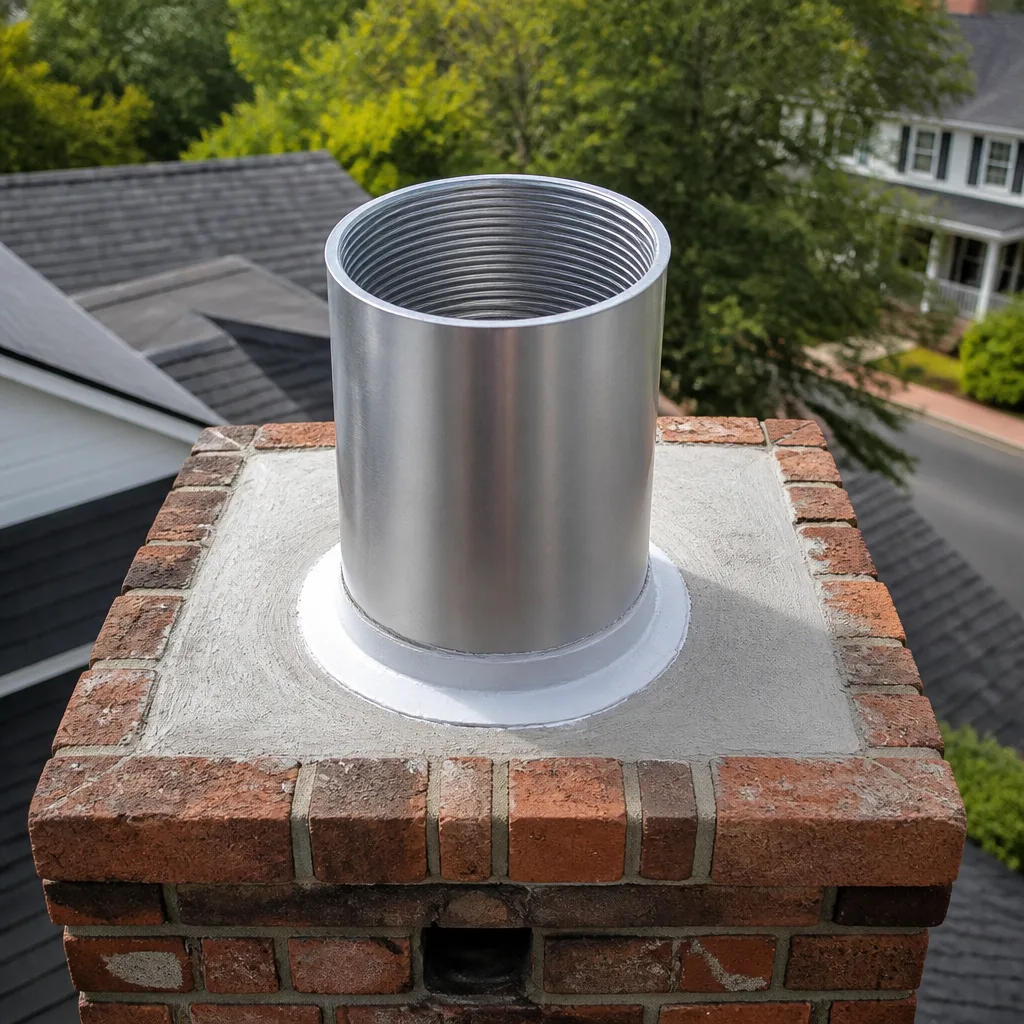
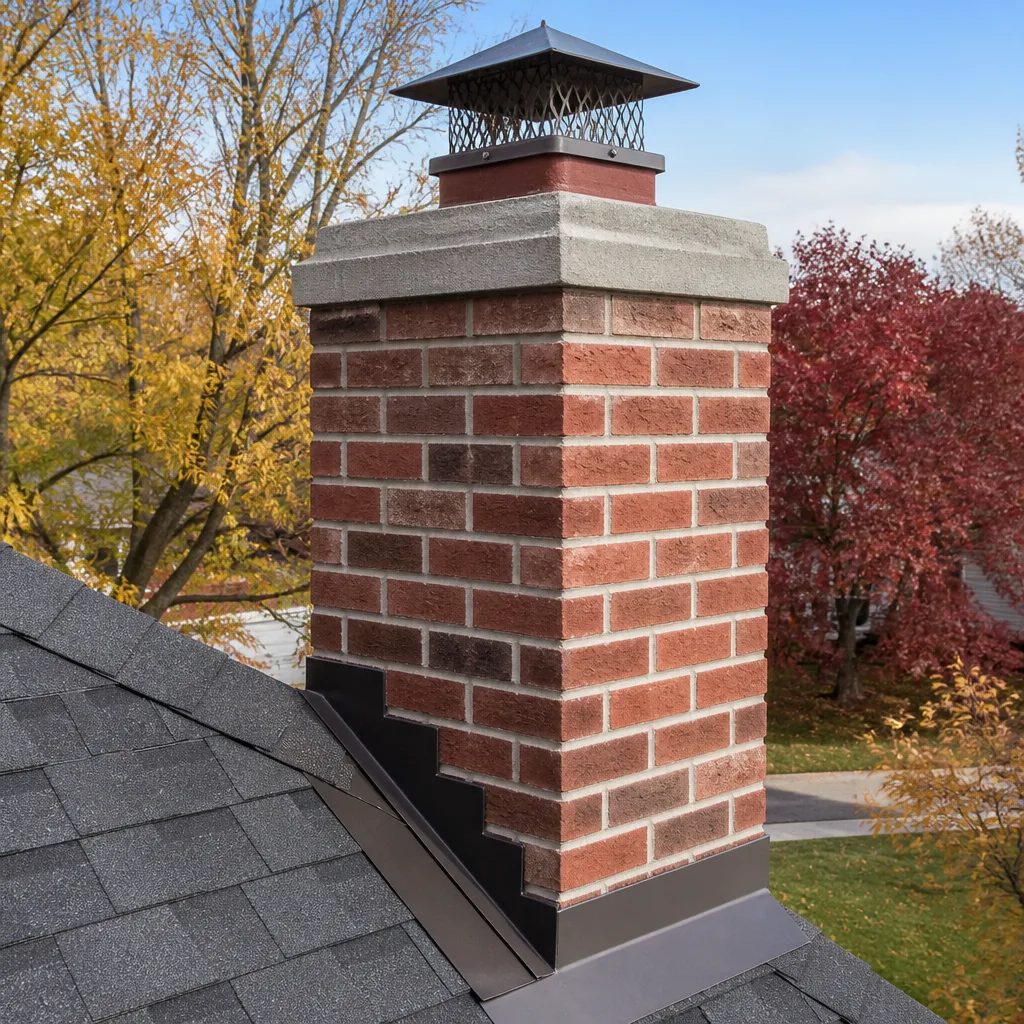
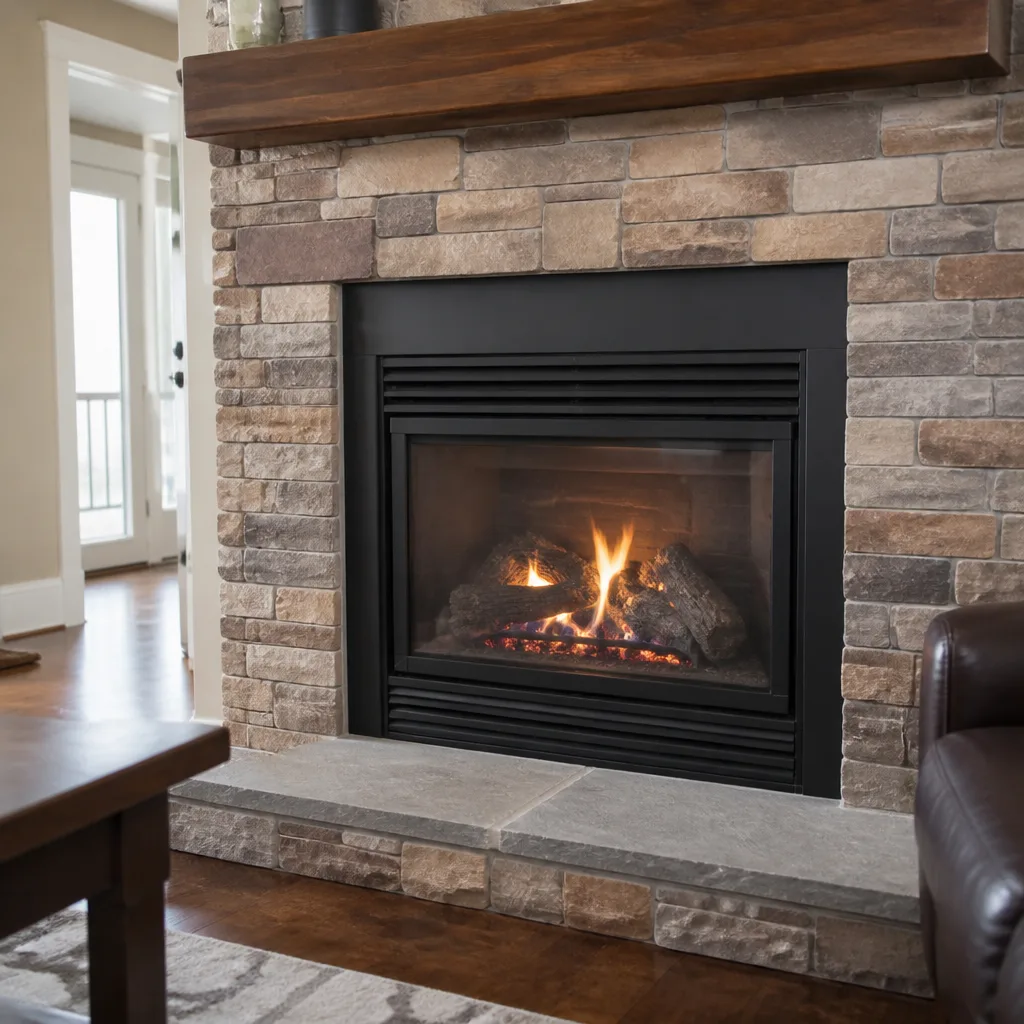
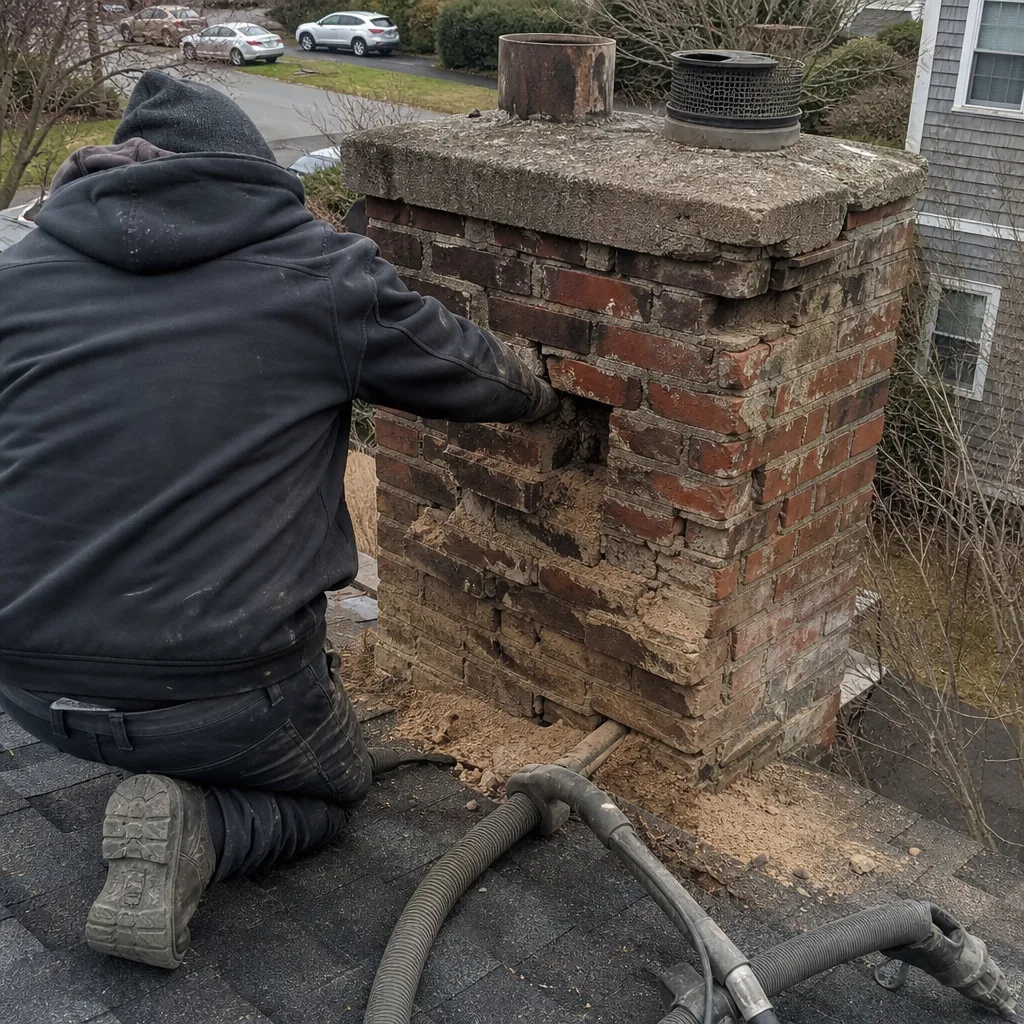 Before
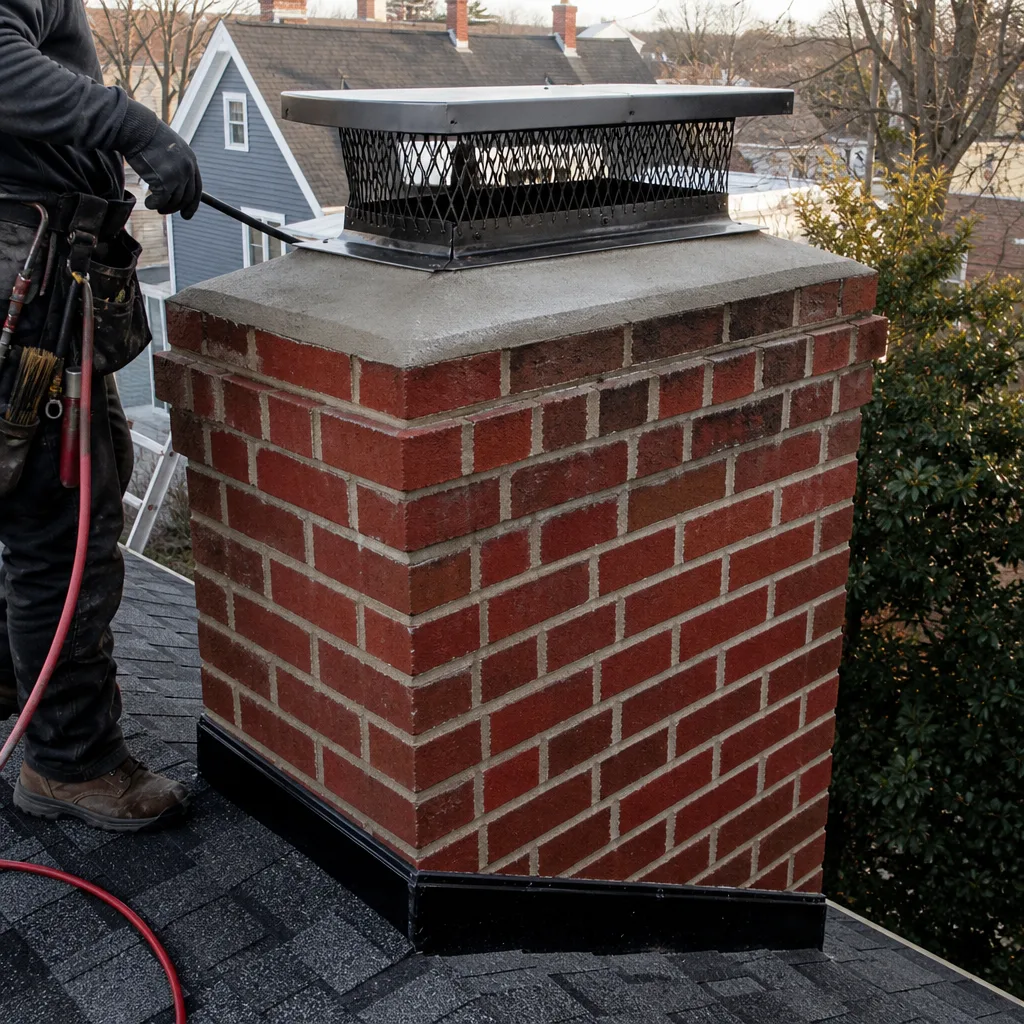 After
After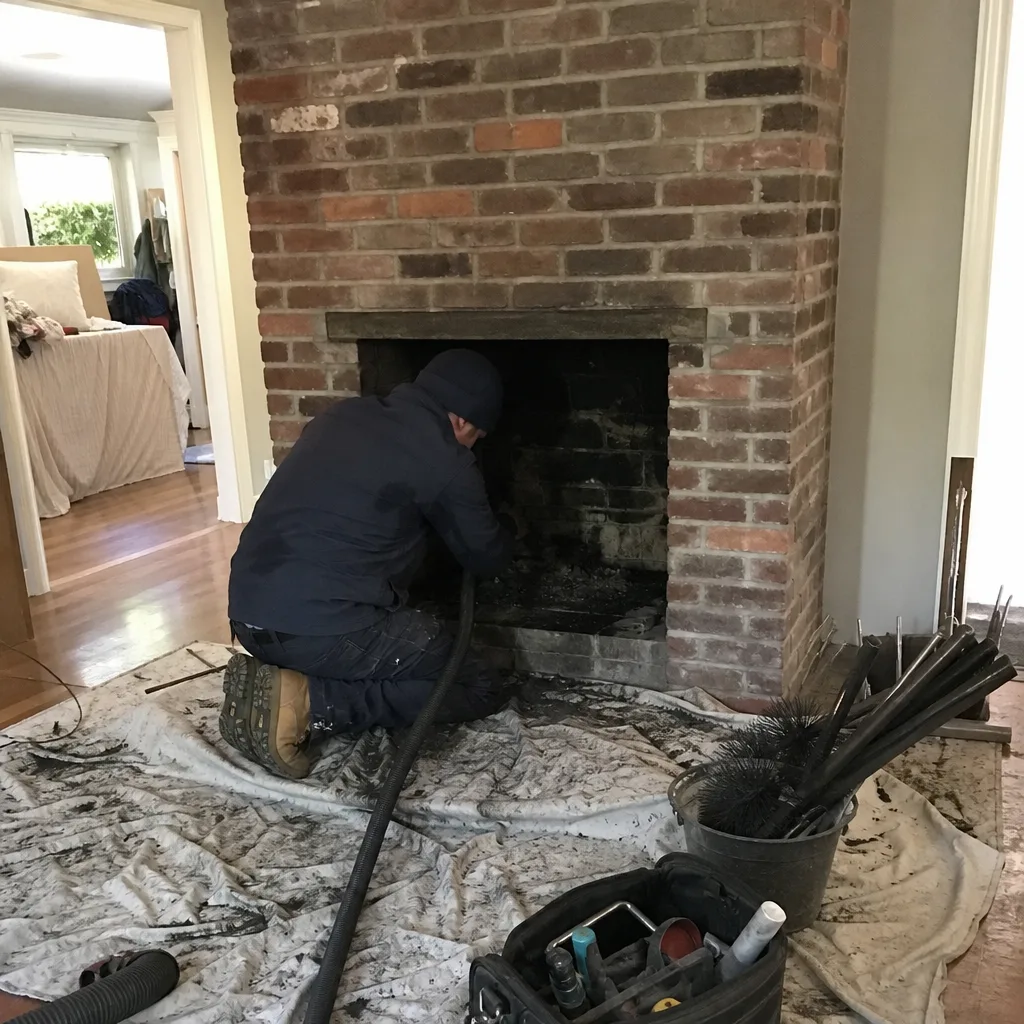 Before
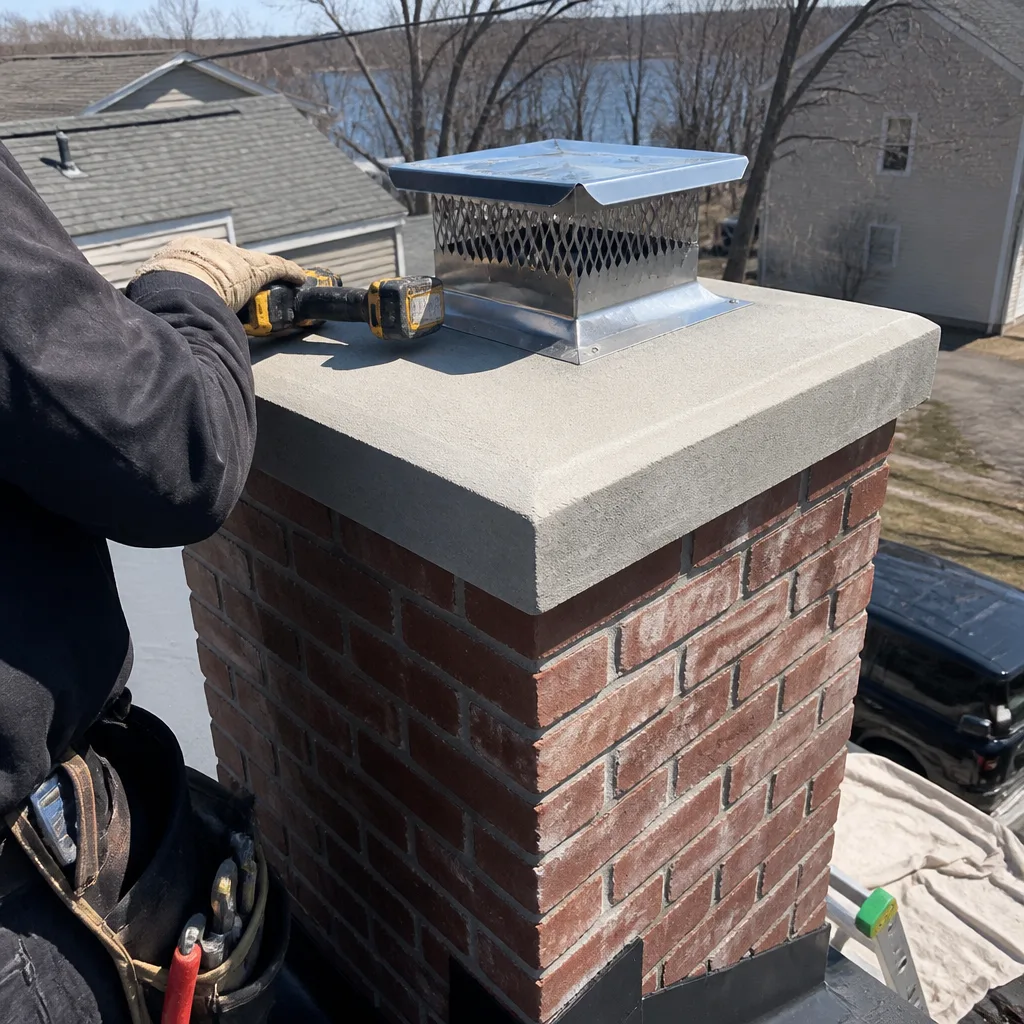 After
After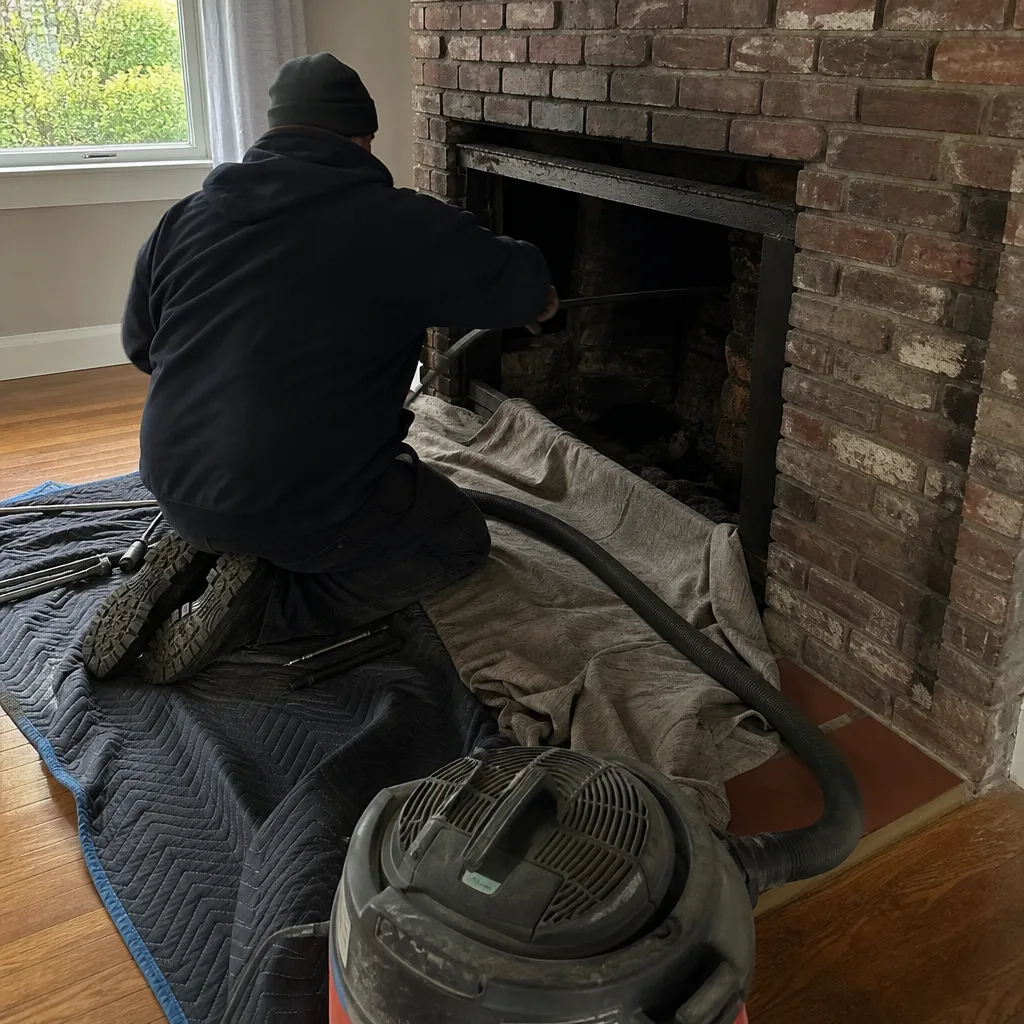 Before
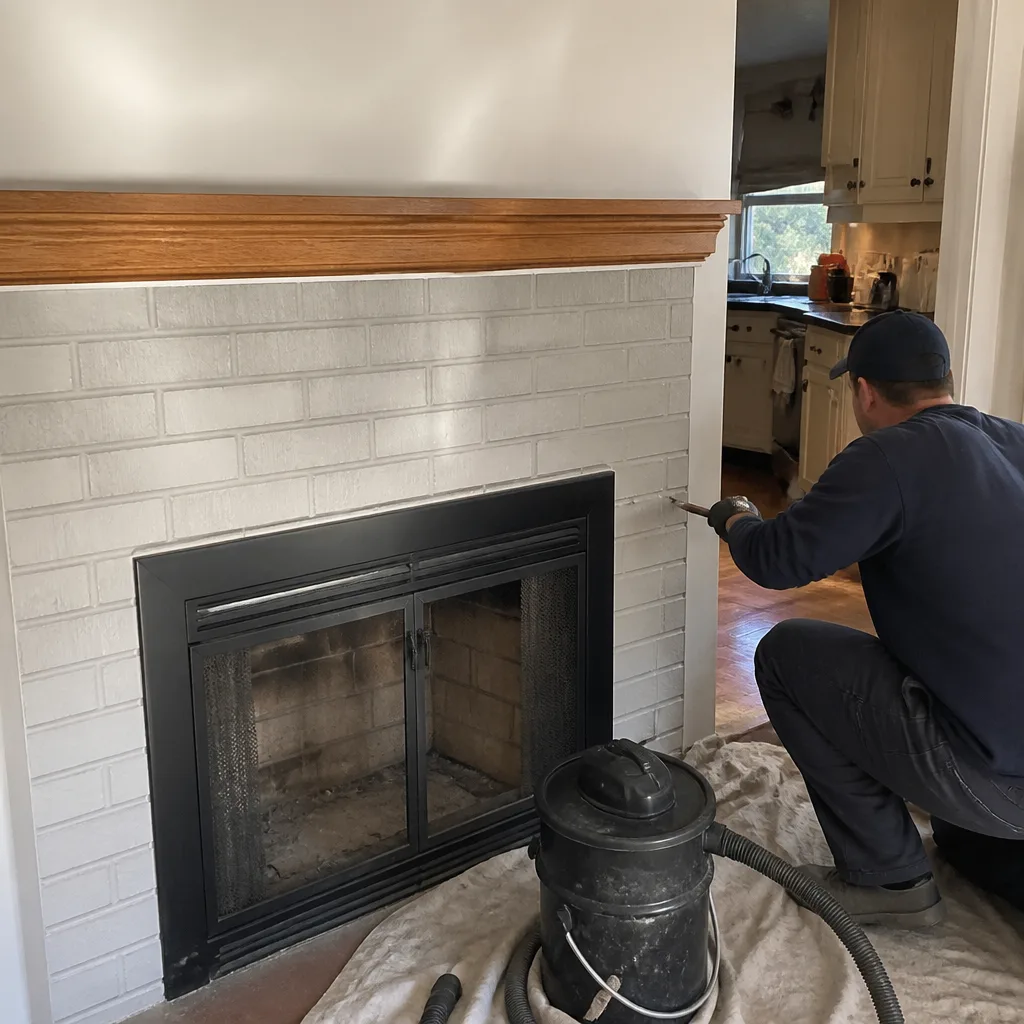 After
AfterCreosote Removal in Boston, MA
Creosote removal in Boston typically runs $199-$599, depending on the classification of buildup and the number of flues involved. Most single-flue Chimney Cleaning & Sweep services for light-to-moderate creosote are completed in one visit, while heavy Class III glazed deposits require chemical treatment followed by a second mechanical sweep.
If your chimney has any creosote buildup beyond a thin, brushable layer, it is the primary cause of chimney fires in Boston-area homes – and Boston sees more of it than most cities because of how many older pre-1980 masonry chimneys are still in daily use across neighborhoods like Jamaica Plain, Roslindale, and West Roxbury. At Level Two Chimney Boston, every creosote removal job starts with a camera scan down the flue, a written classification of the deposit, and a written price before a single tool goes up the stack. That is not a selling point we added later; it is how we have operated since 2009, and it is codified in Clause 1 of the Haven Standard.
If you have questions or want to schedule, call us directly at (857) 567-8887 – a live person answers around the clock. You can also read about everything that falls under our Chimney Cleaning & Sweep in Boston service if you want the broader picture before booking.
When You Need Creosote Removal
Creosote accumulates every time you burn wood. The question is how much has built up and what form it has taken. Here are the situations where a removal service – not just a standard sweep – is the right call:
- You smell a sharp, tar-like odor when the fireplace is cold. That smell is volatilizing creosote. In Boston’s humid summers and wet springs, the moisture that seeps into older brick chimneys accelerates the off-gassing. If the smell reaches the living room with the damper closed, the deposit is thick enough to warrant a professional assessment.
- Your last sweep turned up Class II or Class III creosote. Class II deposits are porous, tar-like layers that a standard rotary brush cannot fully remove. Class III is the glazed, shiny variant – essentially solidified chimney tar – that requires chemical treatment to convert before mechanical removal is even possible. Neither class is a wire-brush-and-done situation.
- You burn primarily softwood or green wood. A lot of Boston homeowners in triple-deckers or older Victorians source firewood from informal suppliers. Wet or softwood burns cooler, produces more smoke, and deposits creosote faster than seasoned hardwood.
- You haven’t had the chimney inspected since buying the home. If you purchased after 2015 and the previous owner used the fireplace, there is a reasonable chance a thin Class II layer has been sitting untouched. Many of the pre-inspection sales we see in neighborhoods like Hyde Park and Dorchester come back with moderate buildup that the sellers simply didn’t know about.
- You had a slow-burning fire or a smoldering overnight burn. Restricted airflow – common when people try to bank a fire overnight – is the fastest path to heavy creosote. One season of overnight burns can move a flue from clean to Class II.
- Your damper or smoke chamber shows staining or dripping residue. Creosote migrates down as well as up. Black, oily streaking below the damper plate or at the firebox throat is a sign that the deposit above is thick and potentially liquefying when the flue heats up – a condition that warrants same-day inspection.
Our Creosote Removal Process
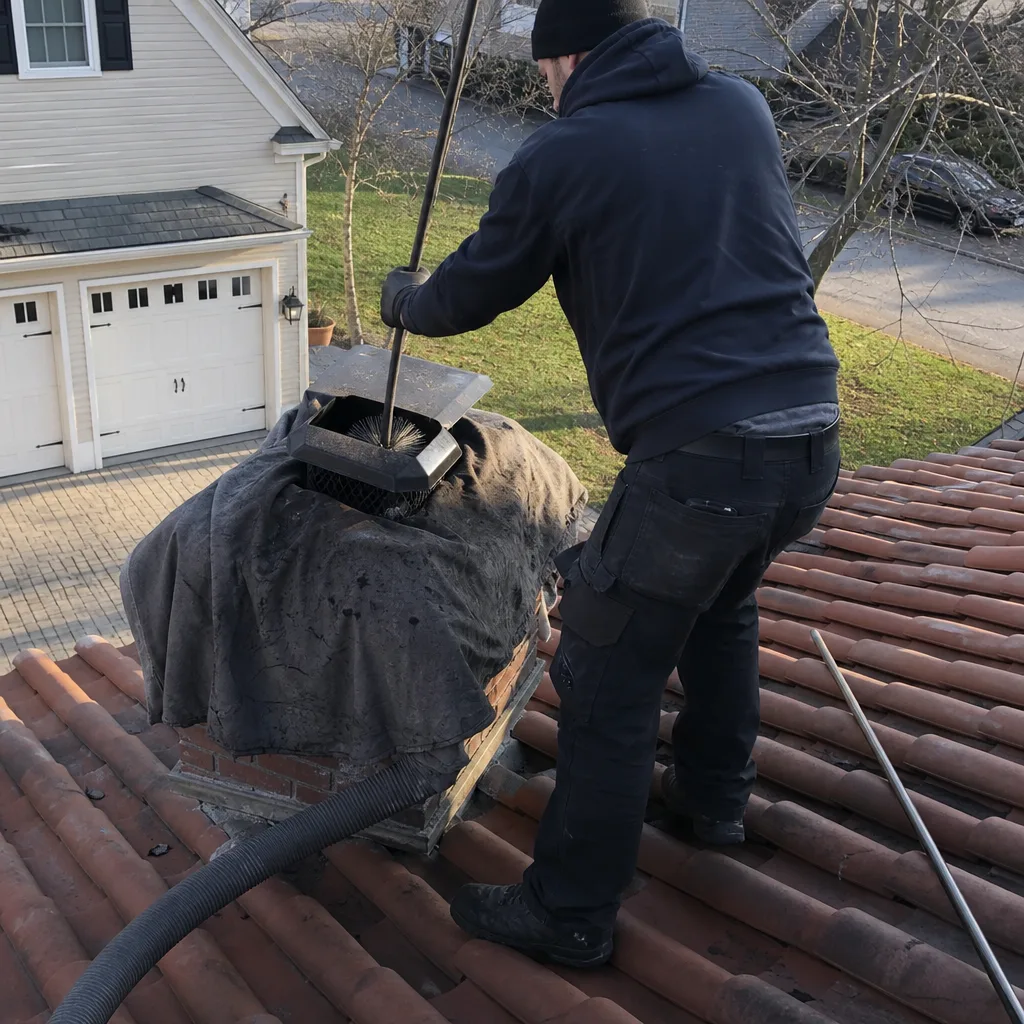
We follow NFPA 211 Level 2 Inspection and cleaning protocols on every visit. Here is exactly what happens when Level Two Chimney Boston arrives at your door:
- Camera scan and deposit classification. Before any tools go up the flue, we run our video inspection camera from the firebox to the crown. The footage shows us the liner condition, the creosote class, and any structural issues – cracks, spalling, offset joints – that would affect the cleaning approach. We classify the deposit as Class I (light, flaky), Class II (tar-like, porous), or Class III (glazed, hardened). You see the same footage we see.
- Written price, written scope, written warranty – before work starts. Once we have classified the deposit, we give you a price in writing that covers the full removal to that classification. No verbal quotes, no “it depends” answers after the truck is in the driveway. This is Haven Standard Clause 1, and it applies without exception.
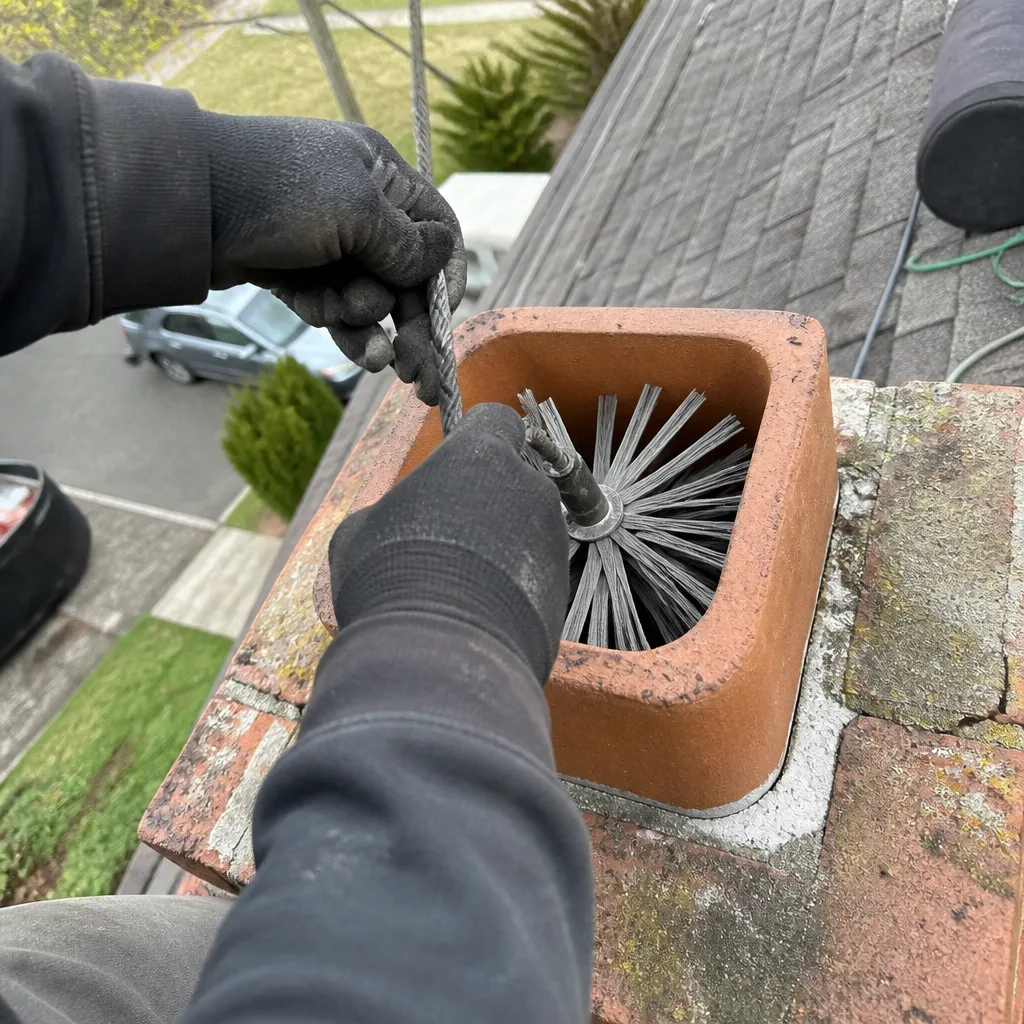
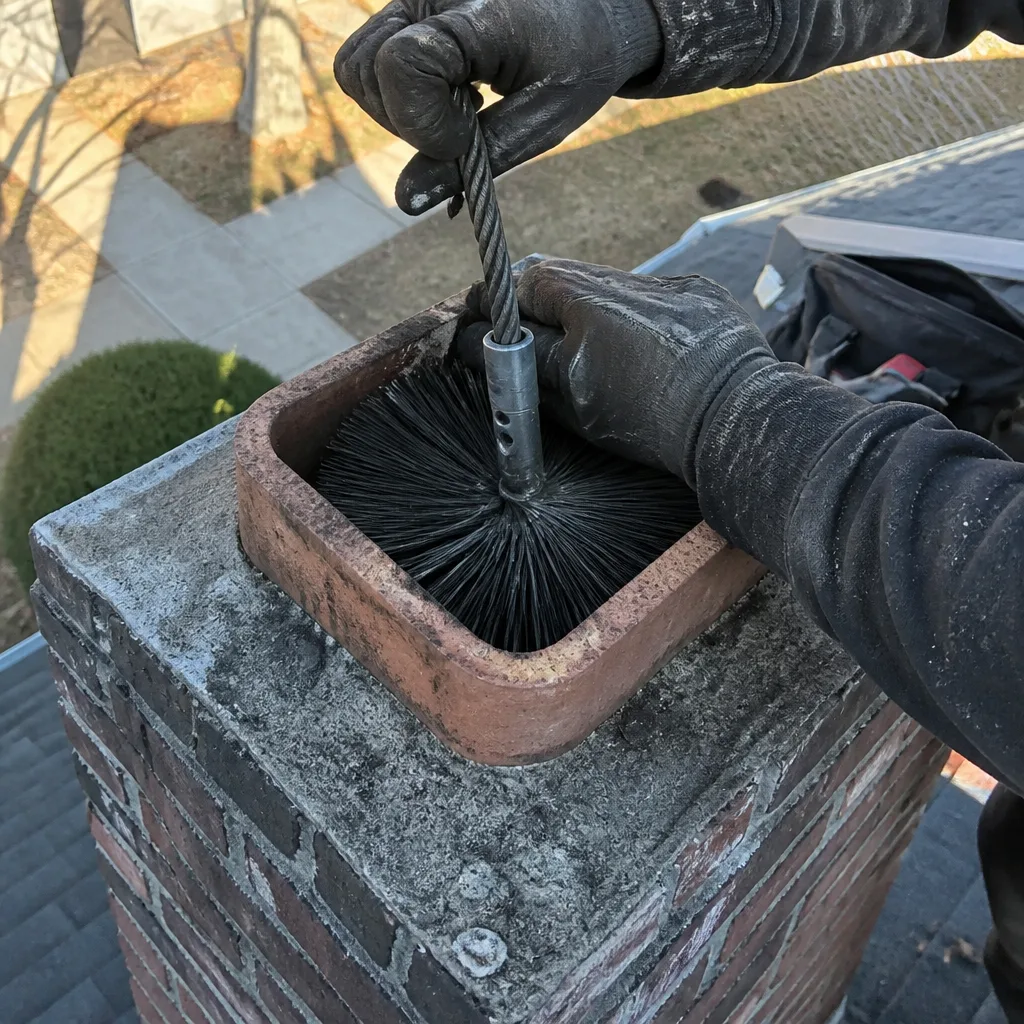
- Rotary brush mechanical sweep for Class I and Class II deposits. For Class I creosote, we use a standard rotary cleaning system with rods sized to your flue liner – typically a round or rectangular terra cotta or stainless liner common in Boston’s triple-deckers and colonial-era chimneys. Class II deposits get a more aggressive rotary head and extended contact time. All debris is vacuumed directly into sealed commercial equipment; nothing migrates into your living space.
- Chemical treatment for Class III glazed creosote. Glazed creosote cannot be mechanically removed without first altering its structure. We apply a certified chemical conversion product to the flue walls, schedule a follow-up appointment after the conversion period (typically 7-14 days), and then return to mechanically remove the now-friable residue. Trying to chip or scrape Class III without conversion risks cracking the liner – which turns a $400 cleaning into a $2,000 liner repair. We use materials sourced through Haven’s buying network, including products from Gelco and Olympia Chimney, to make sure the chemistry is right for Boston’s flue conditions.
- Post-cleaning camera re-scan and photo record. After cleaning, the camera goes back down. We document the liner condition post-removal with photographs and footage. You receive a copy of both the pre-cleaning and post-cleaning record. This is Haven Standard Clause 4 – not an optional add-on, not something we charge extra for. It has been standard practice at Level Two since 2009.
- Written summary and 365-Day Done Right Promise. The job closes with a written summary of what was found, what was removed, what the liner condition is now, and any recommendations. Every completed creosote removal is backed by our 365-Day Done Right Promise: if the work isn’t right, we make it right. Full stop.
BeforeAfterCreosote Removal Pricing in Boston
Creosote removal in Boston costs $199-$599 for most residential single-flue jobs. The range is real, and the factors that move a job toward the higher end are specific and predictable – none of them are surprises after you’ve seen the camera footage.
| Creosote Classification | Typical Price Range (Single Flue) | Notes |
|---|---|---|
| Class I (light, flaky) | $199-$279 | Standard rotary sweep; one visit |
| Class II (tar-like, porous) | $279-$399 | Extended mechanical sweep; one visit in most cases |
| Class III (glazed, hardened) | $399-$599 | Chemical conversion + return mechanical sweep; two visits included |
| Second flue (add-on) | $99-$149 | Per additional flue on same visit |
What moves cost up: flue length (taller chimneys in Boston’s older multi-story row houses take longer), flue shape (square or rectangular liners require different tooling than round), access difficulty, and deposit severity within a class. What doesn’t move the cost up: the camera scan, the photo record, and the written documentation. Those are included on every visit.
If you have a written estimate from another Boston chimney company, bring it to us. We offer a free second opinion on any written estimate – no obligation, no pressure. Call (857) 567-8887 and we’ll review it with you.
What Affects Your Final Price
- Flue liner material: Older clay terra cotta liners – common in Jamaica Plain three-families and Dorchester two-deckers built before 1950 – can have offset joints or cracks that require careful tool selection to avoid worsening the damage during cleaning.
- Last cleaning date: A flue that hasn’t been swept in three or more seasons typically carries a heavier deposit load, which adds time regardless of classification.
- Smoke chamber condition: If the smoke chamber above the firebox has creosote accumulation as well – which often happens alongside flue buildup – that is a separate cleaning step. We’ll note it in the written scope and price it separately before touching it.
- Accessibility: Boston rooflines are not all the same. Steep-pitched roofs on Brookline colonials and tight urban lots in the South End sometimes require additional setup time, which is reflected in the written quote before work begins.
Why Creosote Is Not a “Monitor It” Problem
A chimney fire burns between 2,000°F and 2,500°F. That is hot enough to crack terra cotta flue tiles, warp stainless liner sections, and ignite wood framing through shared walls – a real structural risk in Boston’s dense triple-decker and row-house neighborhoods where one chimney often serves multiple units. The National Fire Protection Association’s NFPA 211 standard exists precisely because creosote fires are not small events that burn themselves out. They produce sustained, intense heat that can travel into the building envelope before anyone smells smoke.
Class III creosote in particular behaves differently from what most homeowners picture. It doesn’t look like soot. It looks like a dark, glossy lacquer on the inside of the flue wall. We regularly find it in Boston homes where the previous owner used an insert without adequate draft, which concentrates the deposit in the lower third of the flue. In Roslindale and West Roxbury, we see this pattern often in homes that were retrofitted with pellet stoves or wood inserts in the 2000s but never had Fireplace Cleaning done afterward to the right standard.
Important safety note: High-concentration creosote deposits, particularly Class III, should never be approached as a DIY project. The chemicals used for conversion are industrial-grade, the physical removal requires tools and technique specific to flue geometry, and working above a fire chamber or on a Boston roofline carries real fall and exposure risk. A trained technician with the right equipment is not optional here – it is the only safe approach.
Our work is part of a broader home maintenance picture: a clean, documented flue protects your insurance coverage, satisfies the NFPA 211 standard that many Boston-area insurers now reference, and gives you a clear written record if you ever sell the property.
Class I, II, and III Creosote: Plain Definitions
The industry uses three classifications, and your cleaning approach depends entirely on which one is present. Here is what each one actually looks like:
- Class I: Loose, flaky, sooty deposits. Gray to black, not sticky. A standard rotary brush removes it cleanly in one pass. This is normal annual accumulation for a homeowner burning seasoned hardwood correctly.
- Class II: Porous, tar-like, crunchy when probed. Often appears as a thick, black, irregular coating on the liner wall. A rotary brush can remove it, but it takes more contact time and more passes. Left alone, Class II converts to Class III under continued heat and evaporation cycles.
- Class III: Smooth, hard, shiny. Often described as glazed. It is essentially distilled wood tar that has polymerized onto the liner surface. Mechanical tools alone will not remove it – they’ll chip it, sending hot fragments down the flue, or crack the liner behind it. Chemical conversion is required first. This is the classification responsible for the most severe chimney fires.
FAQs – Creosote Removal
How much does creosote removal cost in Boston?
Creosote removal in Boston costs between $199 and $599 for a single flue, depending on the deposit classification. Class I removal (light, flaky buildup) typically falls in the $199-$279 range. Class III glazed creosote, which requires chemical treatment and a return visit, runs $399-$599. Every price is given in writing before work starts. Call (857) 567-8887 for a free estimate – we’ll tell you the price after we see the flue, not before we’ve looked at it.
Can Class III creosote be removed in one visit?
Class III glazed creosote cannot be safely or fully removed in a single visit. The process requires applying a chemical conversion product to the flue walls, waiting 7 to 14 days for the deposit to convert from a hard glaze to a friable, removable residue, and then returning for the mechanical sweep. When we quote Class III removal, both visits are included in the written price – there is no separate charge for the return appointment.
How often does a Boston chimney need creosote removal?
NFPA 211 recommends a Level 1 Inspection and cleaning chimneys at least once a year for any chimney in regular use. In Boston, where many homes have older masonry chimneys and variable firewood quality, we find that annual cleaning is the right interval for most active fireplace users. Homeowners burning fewer than 2-3 cords per season may be fine on an annual schedule; heavy users or those burning less-than-ideal wood sometimes need a mid-season check. The camera scan at each visit shows exactly where the deposit level stands, so you’re making decisions based on what’s actually in the flue, not a general rule.
Is creosote removal covered by homeowners insurance in Boston?
Standard homeowners insurance policies in Massachusetts do not cover routine creosote removal – it is classified as preventive maintenance, not a sudden or accidental loss. However, documented proof of regular cleaning and inspection matters after a chimney fire claim. Many Boston-area insurers reference NFPA 211 compliance when evaluating fire-related claims, and having a written inspection record, camera footage, and a dated cleaning report gives you a clear paper trail. Our photo record and written documentation on every job is exactly what you would need to produce in that situation.
Schedule Creosote Removal in Boston
If your flue has any buildup beyond a thin, easily brushed layer – or if you simply haven’t had a camera inspection done since you bought the home – call Level Two Chimney Boston at (857) 567-8887. A live person answers every call, any time of day. We’ll schedule your inspection, run the camera, classify the deposit, and hand you a written price before a single tool goes up the stack. No voicemail, no web forms, no “we’ll call you back with pricing.” That’s been the standard here since 2009, and it doesn’t change.
Written by Corrine Halstead, Owner at Level Two Chimney Boston, serving Boston.