
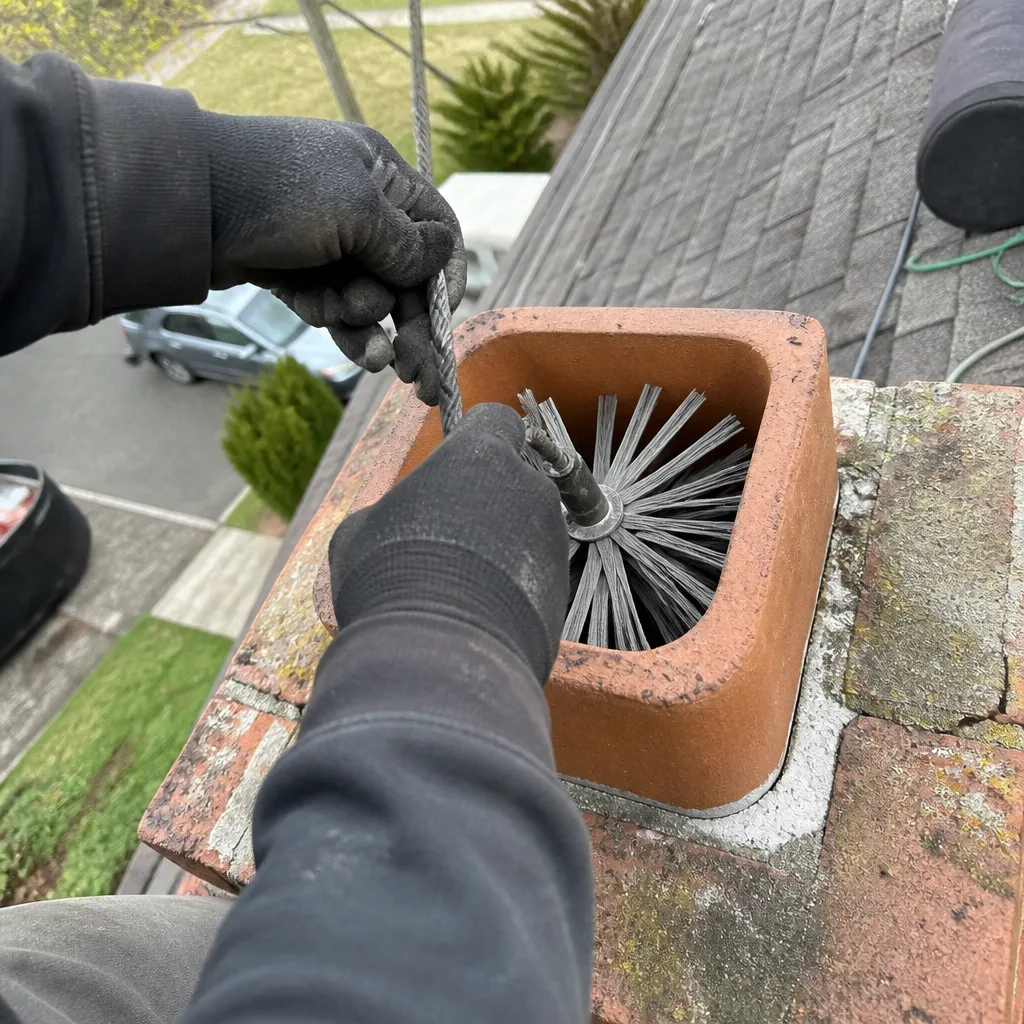
Level 1 sweep and inspection to the NFPA 211 annual standard - flue, crown, cap, and flashing checked and photographed
Chimney sweep logs do not sweep chimneys. They loosen some creosote - which then falls where a brush and vacuum still have to collect it.
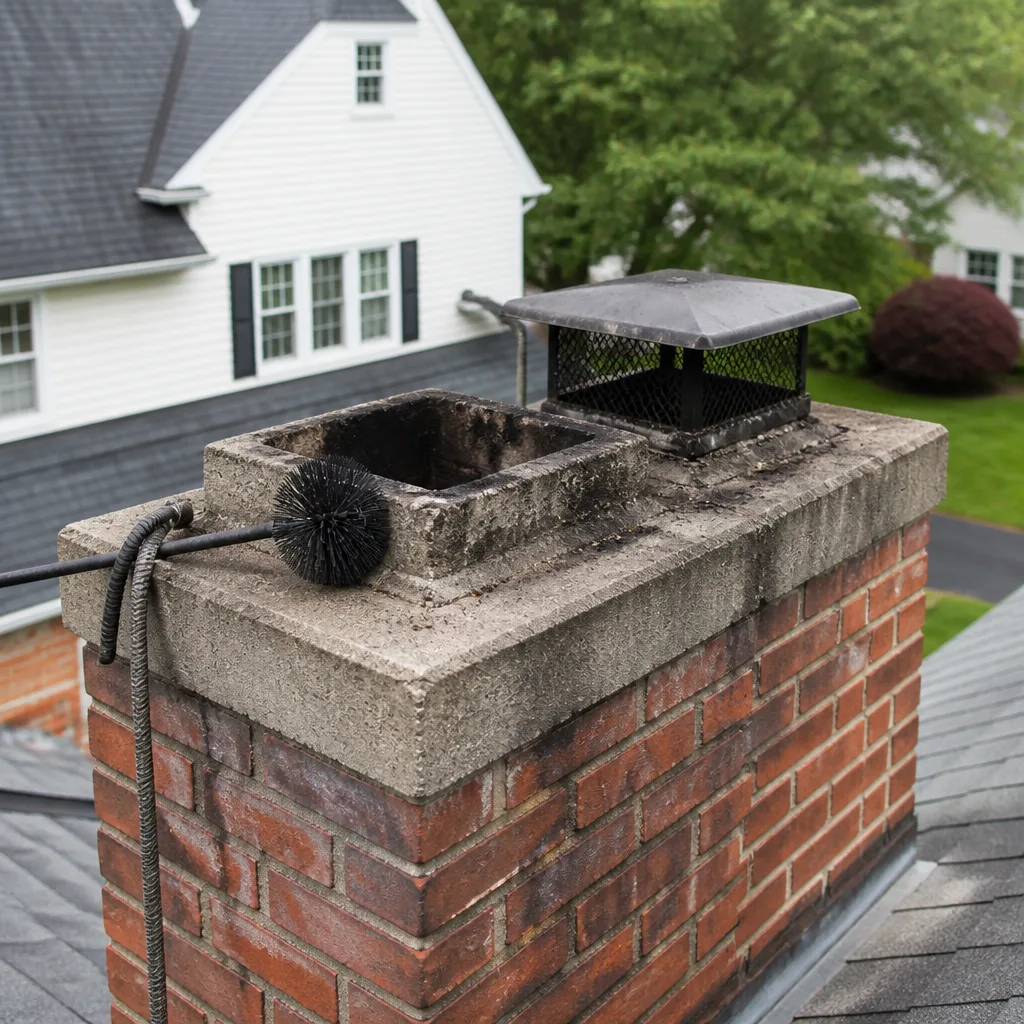
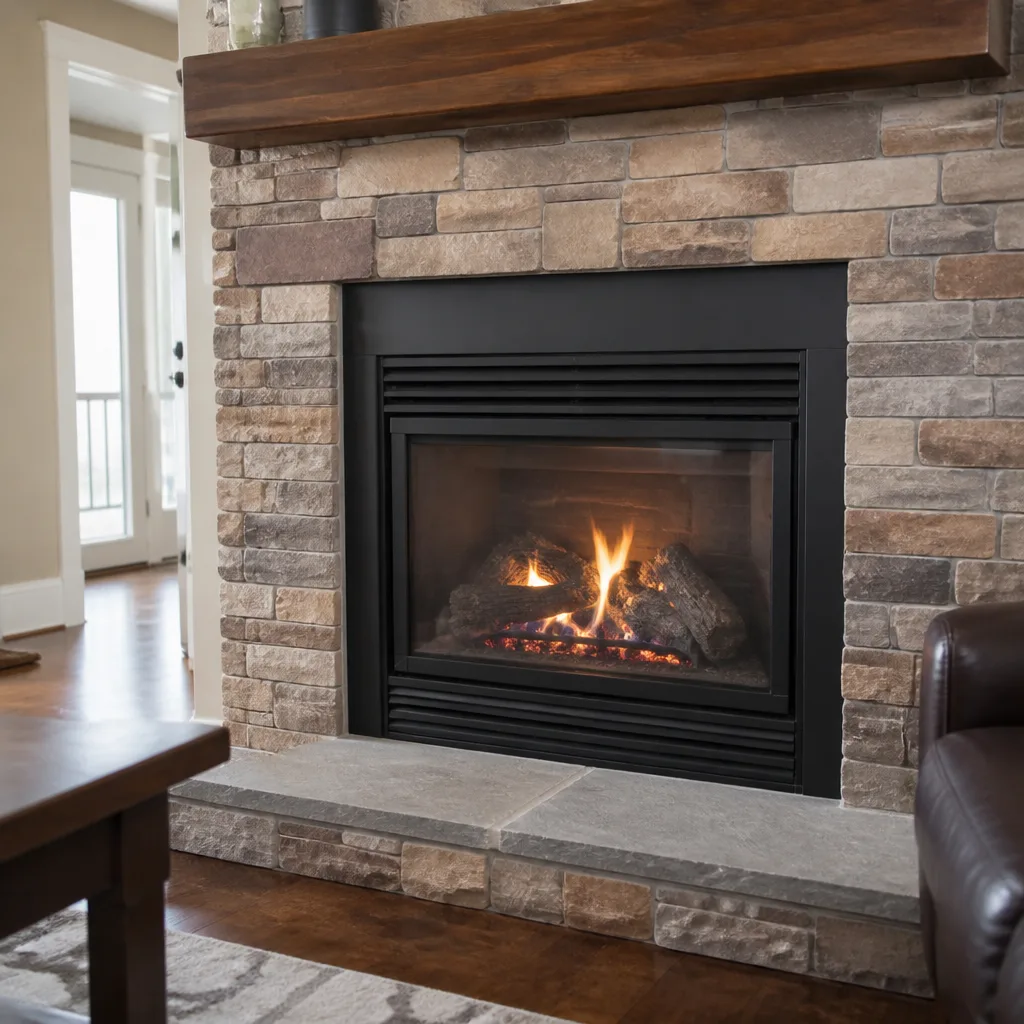
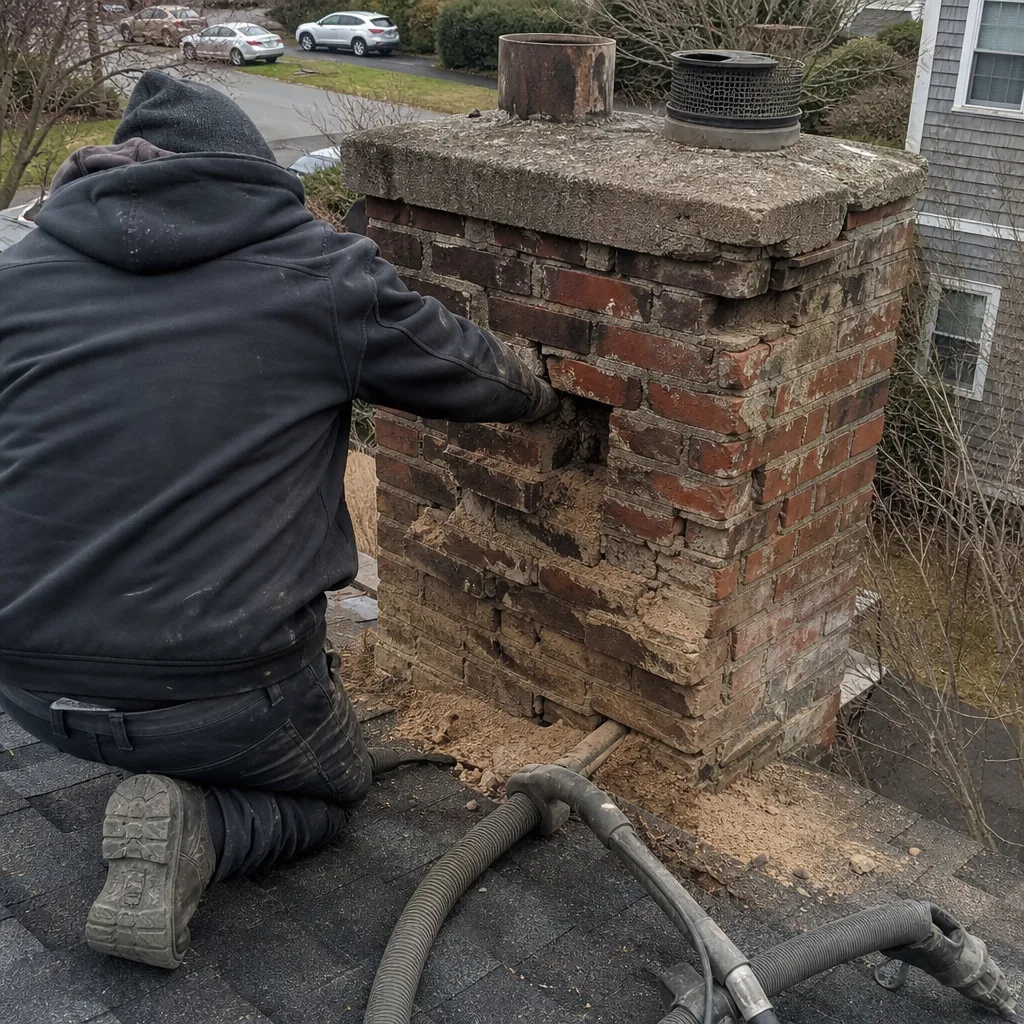 Before
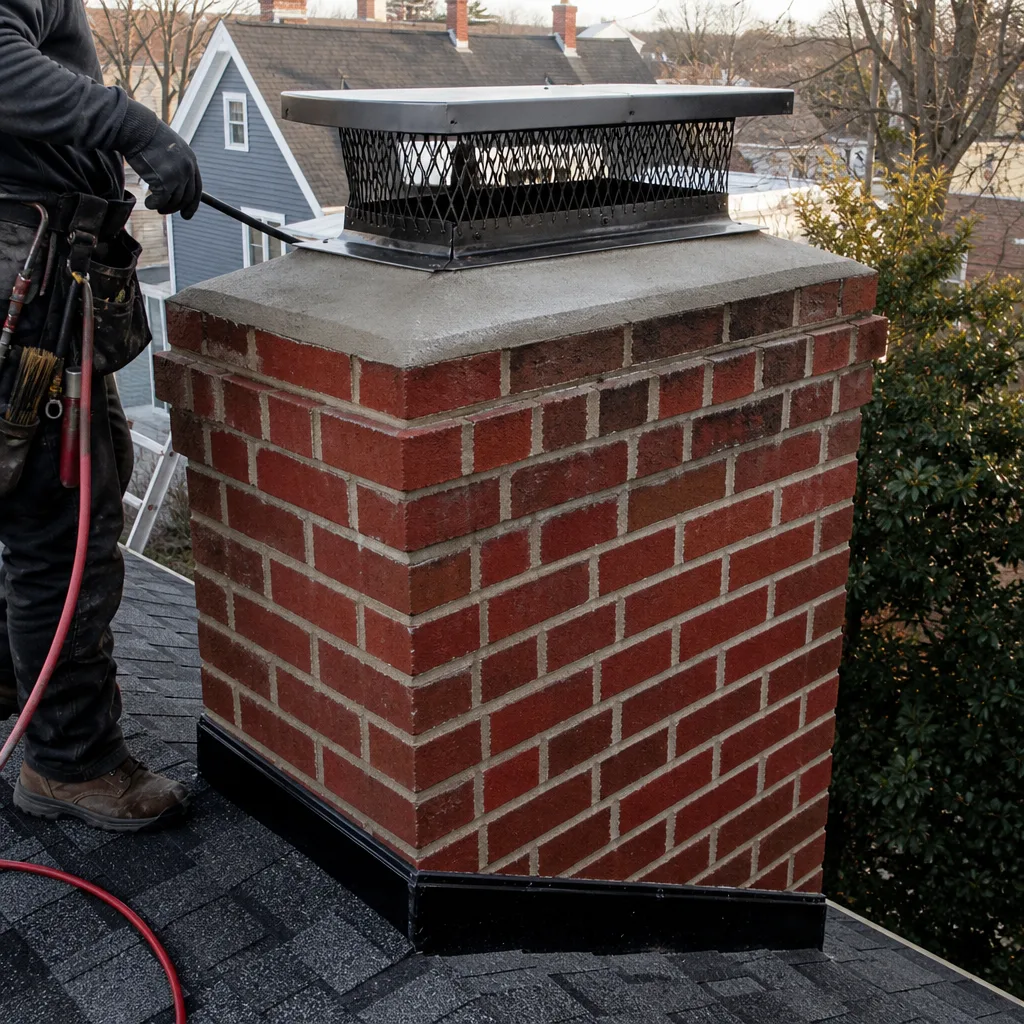 After
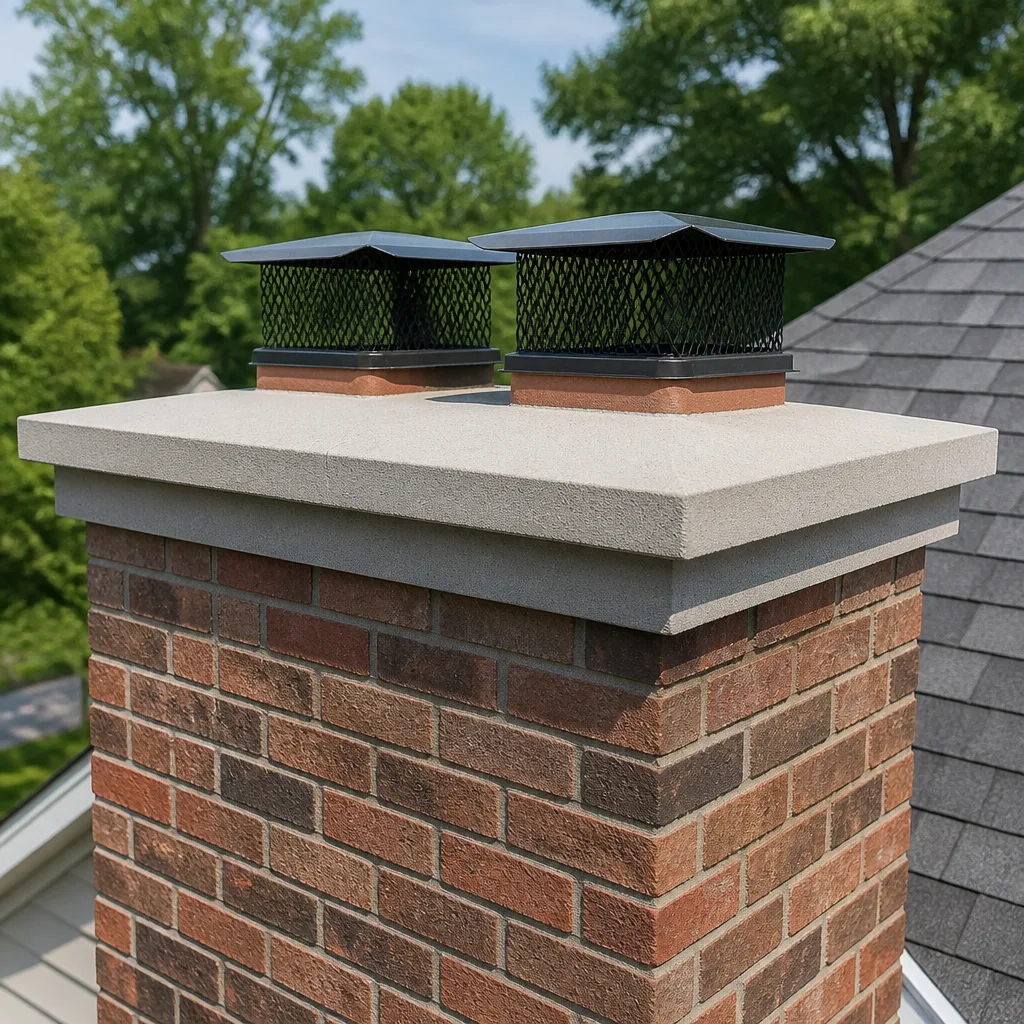
After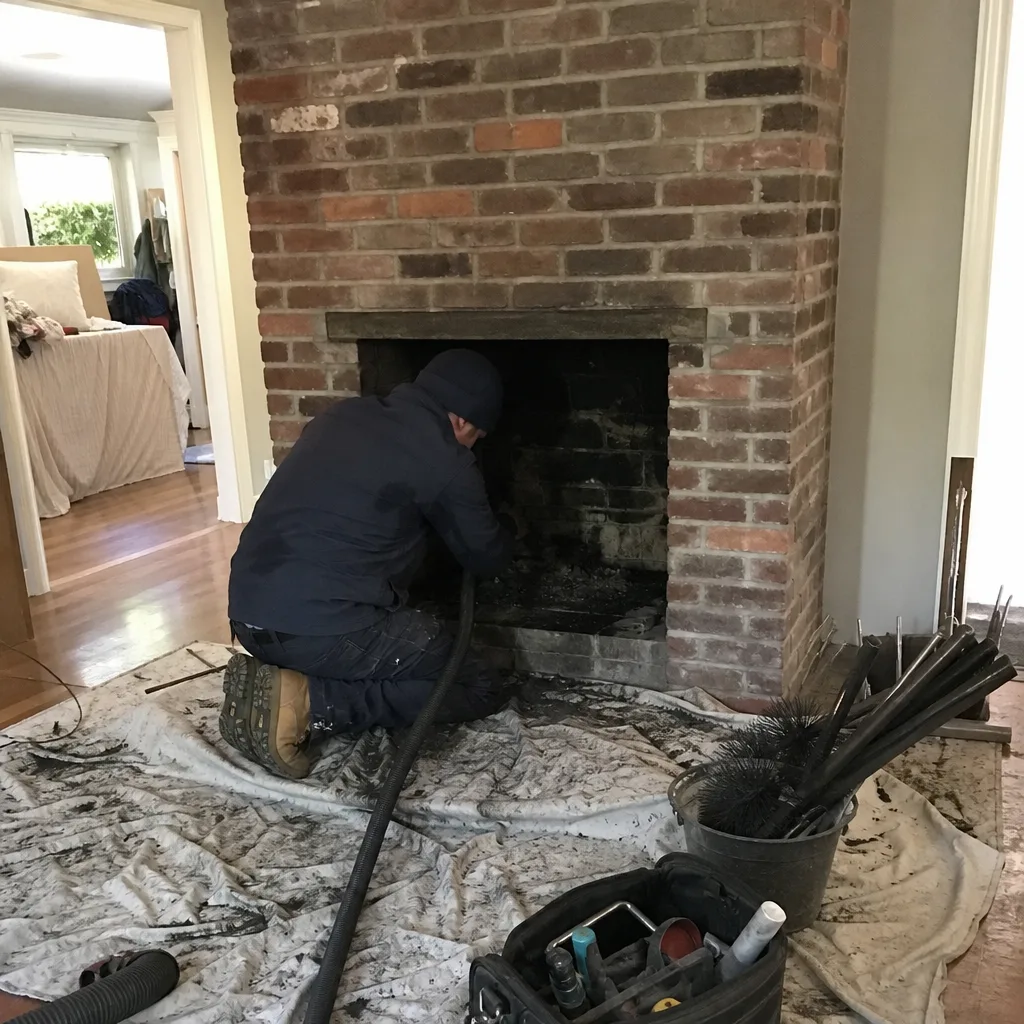 Before
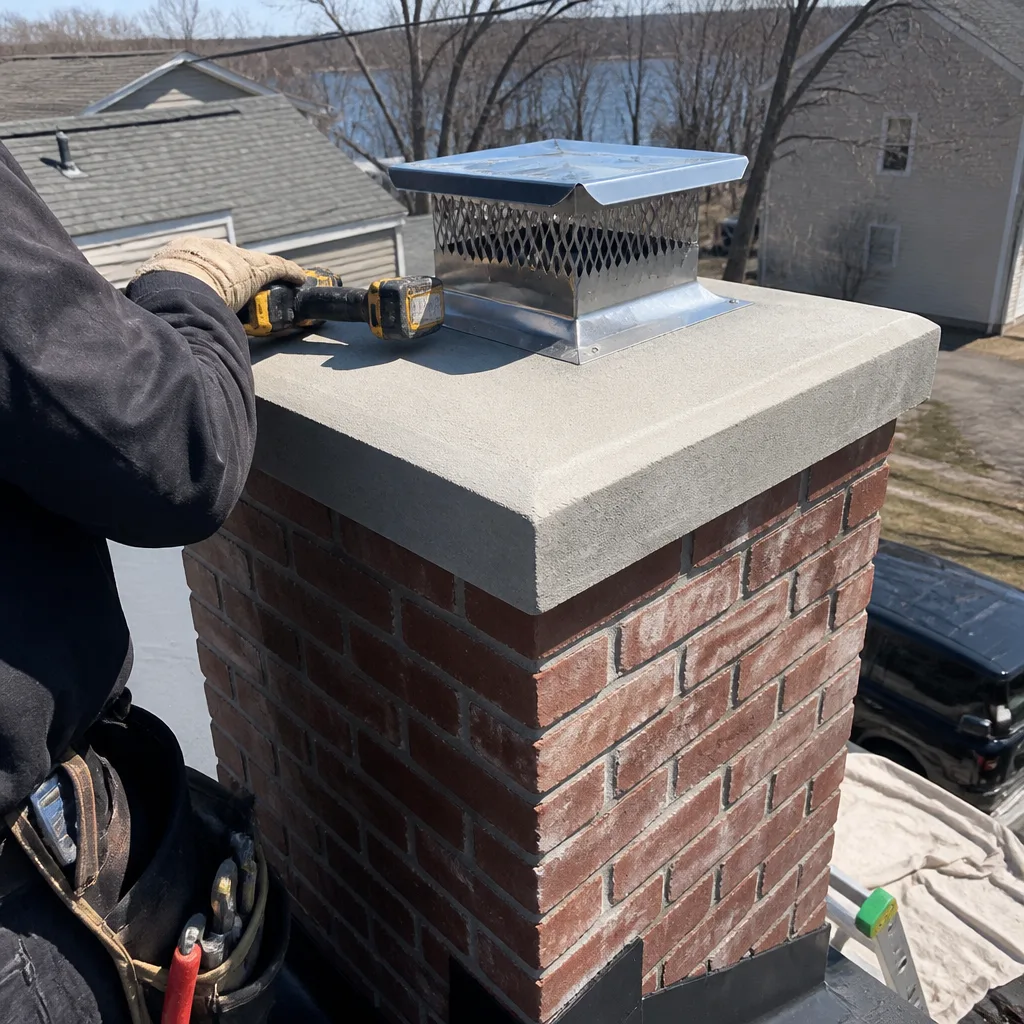 After
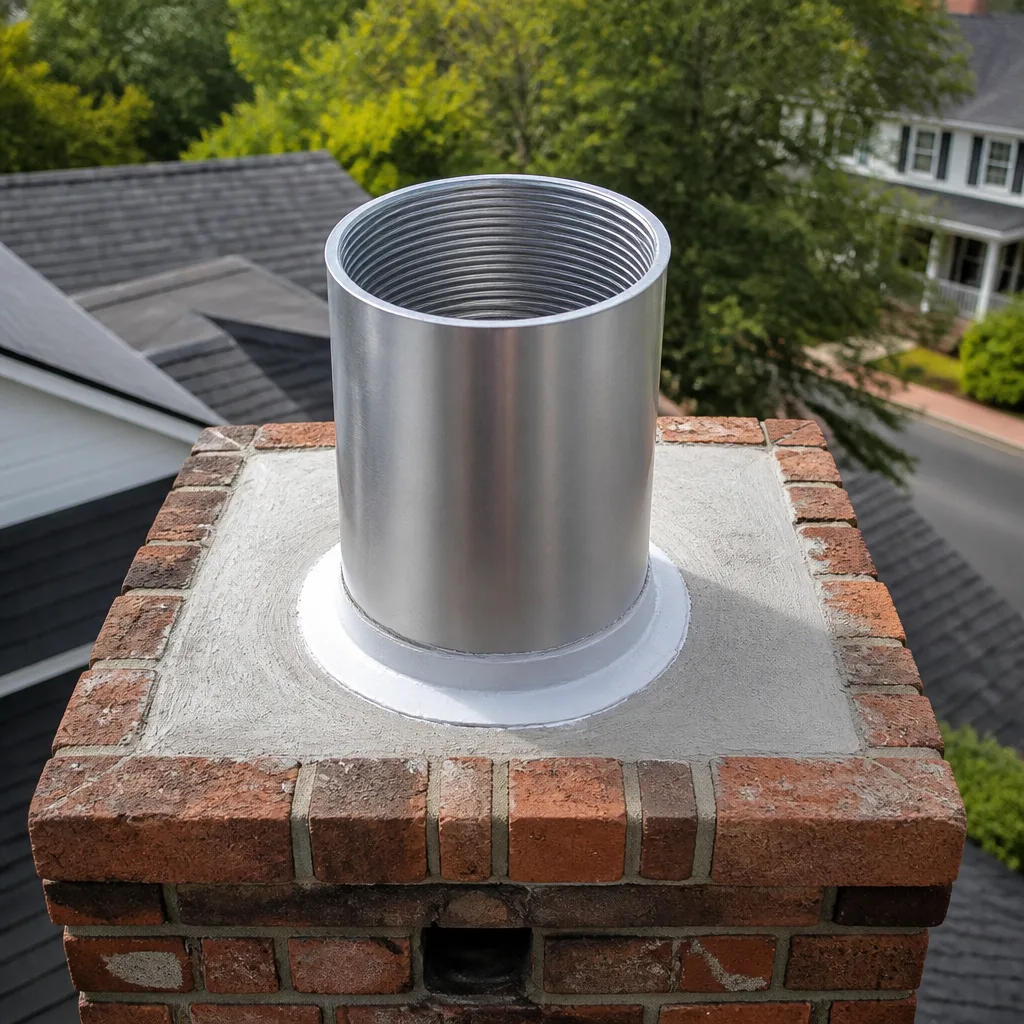
After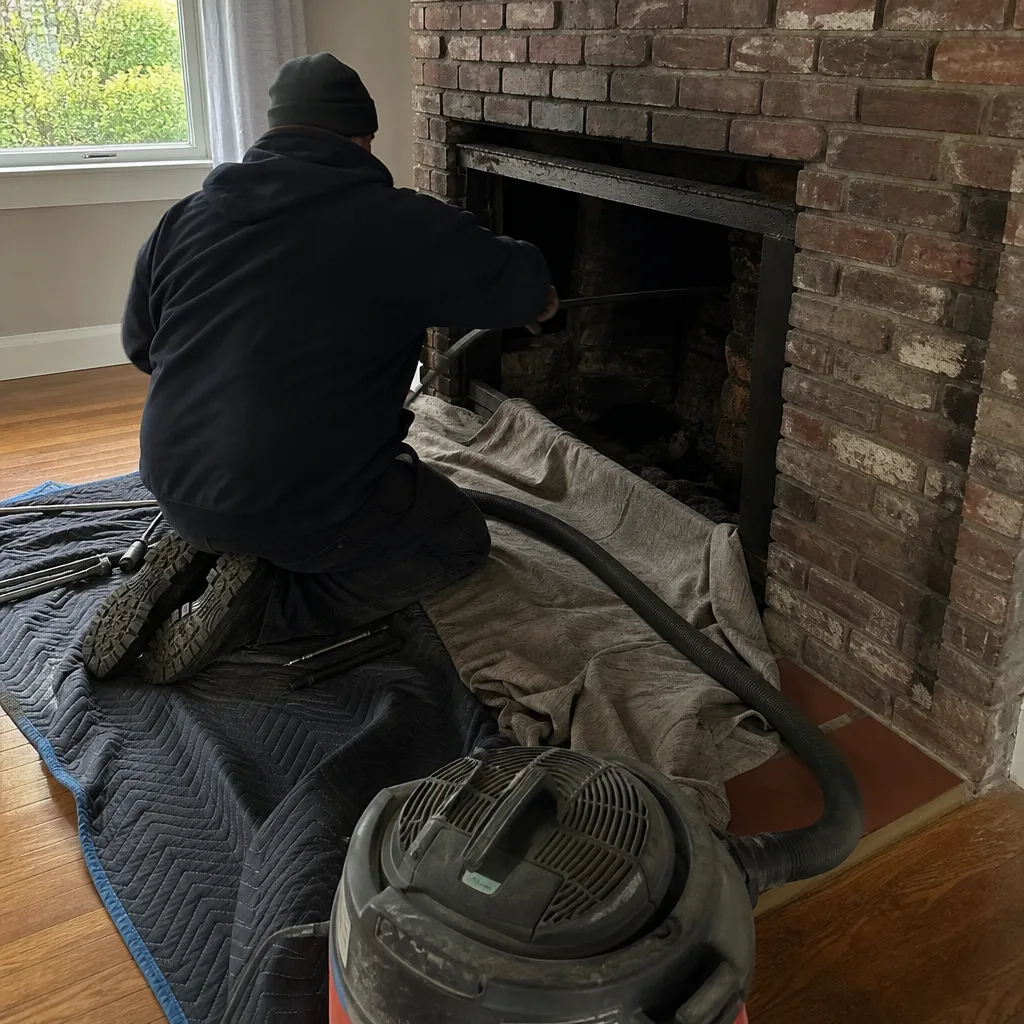 Before
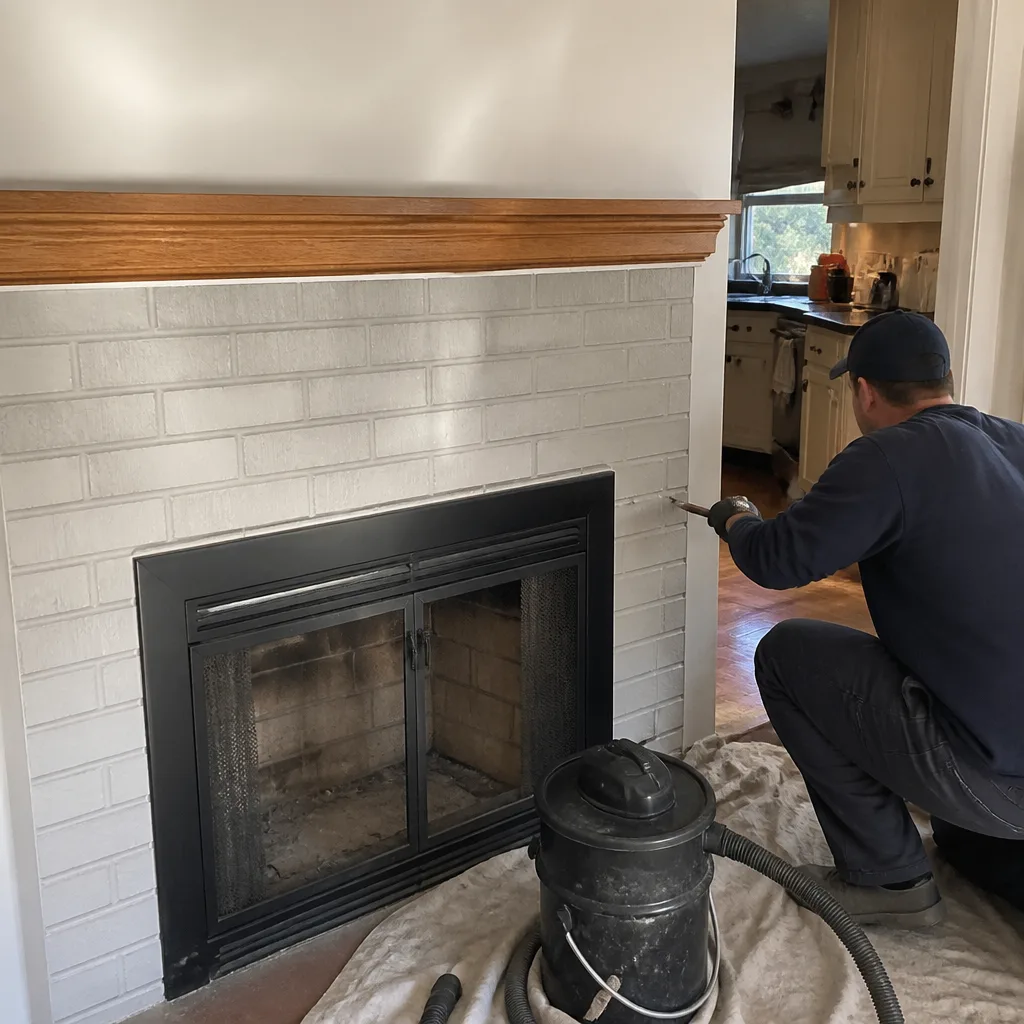 After
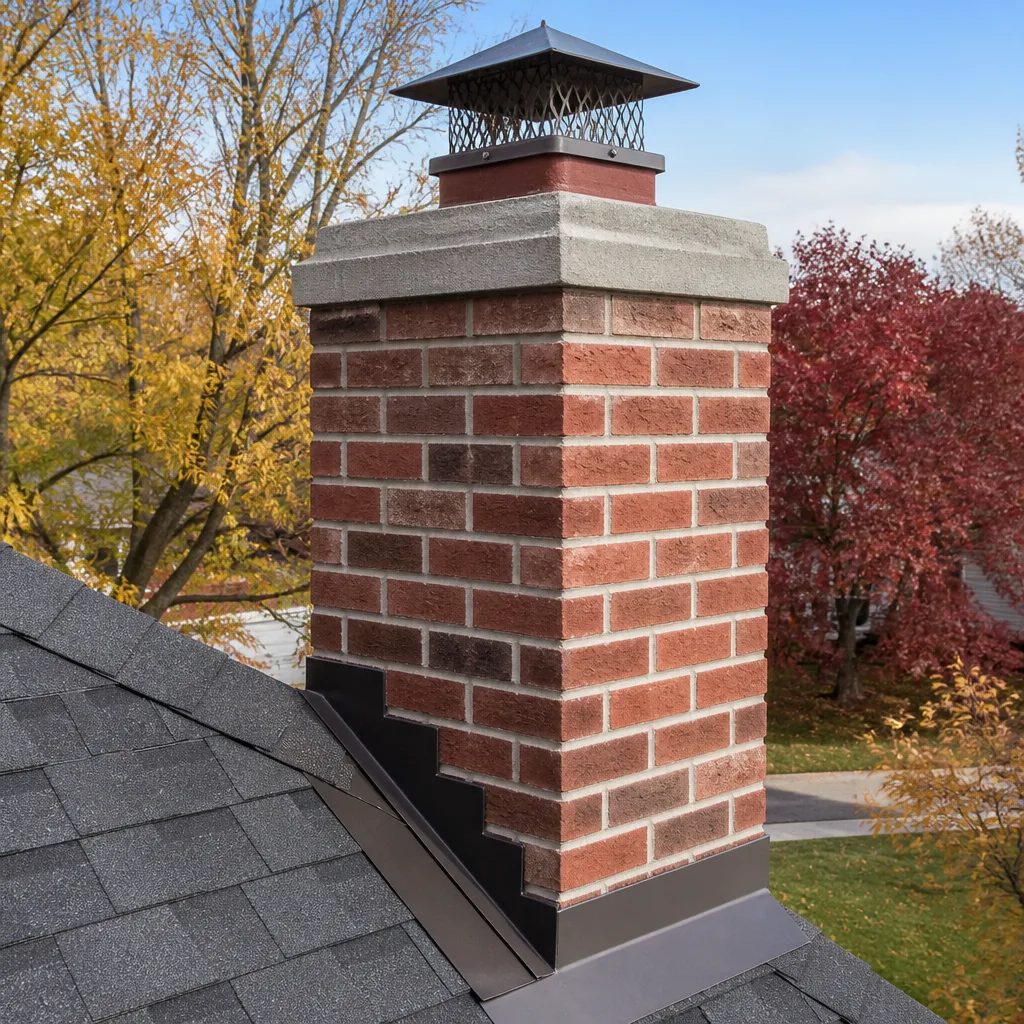
AfterMortar Repointing in Boston, MA
Mortar repointing in Boston typically costs between $300 and $1,800 depending on chimney height, how many linear feet of joint have deteriorated, and whether any underlying brick damage needs Spalling Brick Repair or other chimney work first. Most single-story chimneys with moderate joint erosion can be repointed in one visit. If you’re seeing crumbling mortar lines, white staining on the exterior, or brickwork that’s starting to shift, the problem is already progressing – call us at (857) 567-8887 and we’ll give you a written price before anyone touches your chimney.
Repointing is exactly what it sounds like: removing the deteriorated mortar from between the courses of brick and packing in fresh mortar that matches the original in composition, color, and texture. It’s one of the most common repairs we make as part of Chimney Repair in Boston, and when it’s done right it stops water from working its way into your brickwork for another 20 to 30 years. When it’s done wrong – wrong mortar type, poor joint preparation, mortar bridged over rather than packed in – it fails faster than the original and can trap moisture behind it, making the damage worse than if nothing had been done at all.
Corrine Halstead leads every inspection workflow here at Level Two Chimney Boston, and the standard we hold repointing to is the same one we’ve applied to more than 38,000 chimney inspections and cleanings since 2009: you get a written price, a written scope, and a written warranty before work starts. That’s Haven Standard Clause 1. No tech is going to start chipping mortar and then hand you a number.
When You Need Mortar Repointing
Boston’s climate is genuinely hard on masonry. Freeze-thaw cycles through a typical South End or Jamaica Plain winter push water into tiny joint cracks, expand them, and repeat until the mortar fractures completely. The following signs point to repointing before the problem moves from the joints into the brick itself.
- Mortar joints that are visibly recessed or crumbling. If you run a key across the joint line and mortar falls out, the binder has failed. In older triple-deckers throughout Dorchester and Roxbury, we regularly find joints that have eroded back a half inch or more – at that depth, water reaches the brick face on every rain.
- Efflorescence – white staining on the chimney face. That chalky residue is mineral salt drawn out by water moving through the masonry. It doesn’t cause damage on its own, but it’s a clear sign water is already finding a path through deteriorated joints.
- Spalling brick faces. When the mortar joint fails, water gets to the brick itself. Boston brick from the early 1900s was typically soft, wire-cut stock – once the face spalls off, that brick holds moisture and the damage accelerates. Catching it at the mortar stage is significantly cheaper than replacing courses of brick.
- Interior water staining near the firebox or on the ceiling above the fireplace. Many homeowners in older Back Bay brownstones find staining they attribute to the roof. We’ve identified mortar joint failure as the actual cause in a notable share of these cases during camera-scan inspections – water migrates down through the chimney chase and shows up in unexpected places.
- A chimney crown that’s already cracked. Crown damage and joint erosion often happen together. If your crown is failing, the mortar joints directly below it are usually taking water too. We inspect both during the same visit and price them separately so you know exactly what each repair covers.
- Gaps or open joints visible at the roofline. This is one the homeowners in Charlestown and South Boston often spot from a dormer window. Any gap at or above the roofline is an open channel for water to enter the flue cavity.
Our Mortar Repointing Process
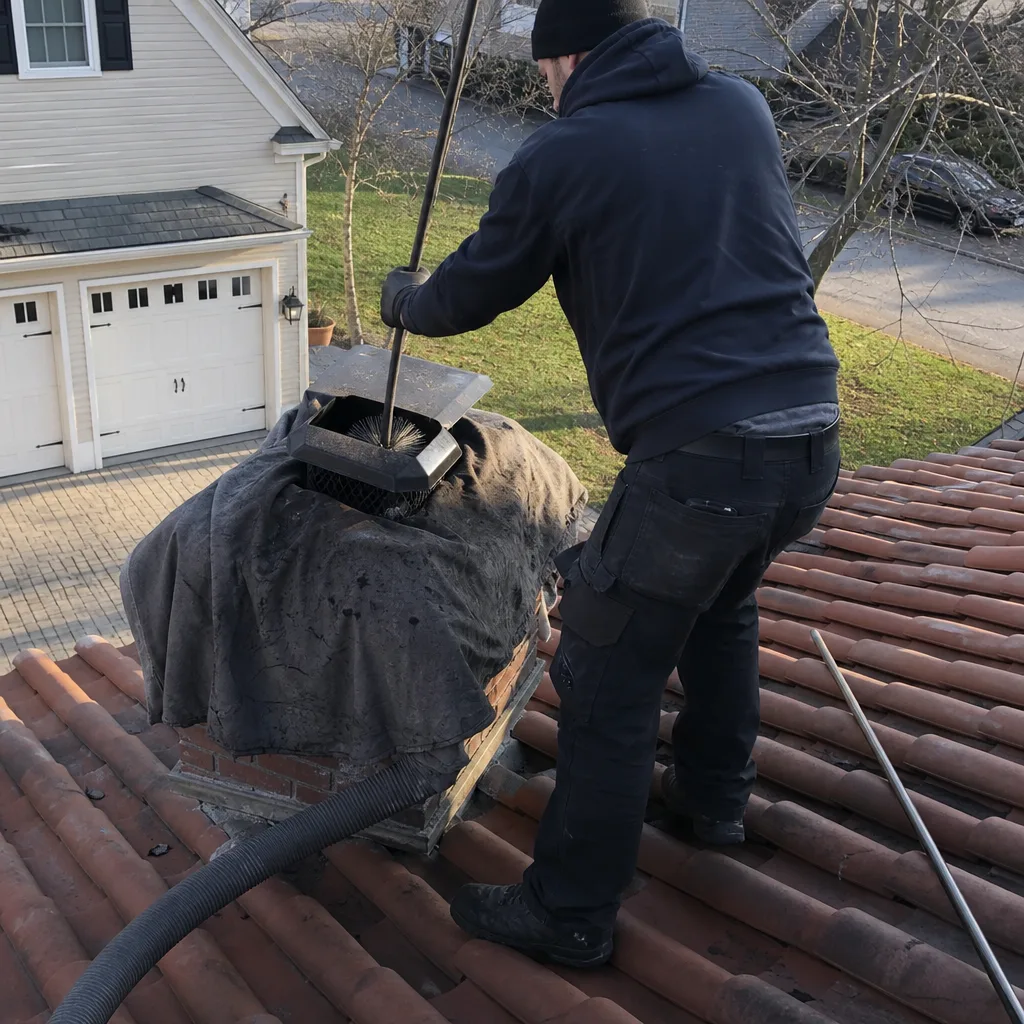
Before we quote anything, we document everything. Here’s how a repointing job runs from the first call to the final photo record.
- NFPA 211 Level 2 camera-scan inspection. We run a camera down the flue and photograph the exterior joint condition before we discuss repair scope. This has been our default since 2009 – not because regulators required it, but because a written quote without documentation of what was found isn’t honest pricing. You get the photos. Haven Standard Clause 4 requires a documented photo record on every visit, and this is where that record starts.
- Written price, scope, and warranty delivered before work starts. Once we know the linear footage of failed joint, the mortar type the chimney requires, and whether any brick replacement is needed, we give you a number in writing. That’s Haven Standard Clause 1. If the number doesn’t work for you, you keep the inspection documentation and owe us nothing for the estimate.
- Mechanical joint preparation. A saw or angle grinder removes deteriorated mortar to a minimum depth of three-quarters of an inch – often deeper on chimneys where the original joints have never been repointed. This is the step that separates a durable repoint from a surface patch. Skipping depth on preparation is the single most common failure mode we see on competitors’ repointing work when homeowners call us for a second opinion.
- Mortar selection and mixing. Boston’s older masonry was set in lime-based mortar. Packing a modern Type S portland-heavy mix into a pre-Civil War chimney in Beacon Hill will cure harder than the surrounding brick, and when movement or freeze-thaw stress occurs, the brick spalls rather than the joint failing first. We match mortar type – lime-to-portland ratio, aggregate, color – to the existing masonry. Materials come through our supply network, which includes Olympia Chimney and Gelco, sourced through Haven’s buying network specifically to keep pricing honest.
- Packing and tooling the joints. Fresh mortar is packed in layers into each prepared joint, then tooled to match the original profile – typically a concave or flush profile on most Boston brick chimneys, though some period homes in the South End have a distinct weathered-V profile we replicate. The tooling compresses the mortar surface and sheds water rather than collecting it.
- Final photo record and documentation handoff. When the work is done, we photograph every elevation. You get before-and-after images, the written warranty, and a job record tied to your address. If you sell the house, that documentation transfers – buyers’ inspectors increasingly ask for it, and having it on file is a real asset in Boston’s market.
BeforeAfterMortar Repointing Pricing in Boston
Mortar repointing in Boston costs $300 to $1,800 for most residential chimneys. For a deeper dive, see How Much Does Chimney Repair Cost? (2026 Price Guide) - Boston, MA; below is a quick breakdown of the ranges we see most often, followed by the factors that move a job toward the higher end.
| Scope | Typical Range |
|---|---|
| Single-story chimney, partial repoint (one or two exposed faces) | $300 – $550 |
| Single-story chimney, full perimeter repoint | $550 – $900 |
| Two-story or taller chimney, full perimeter repoint | $850 – $1,400 |
| Full repoint with partial brick replacement (up to 10 bricks) | $1,100 – $1,800 |
| Smoke chamber parging (often needed alongside repointing) | $300 – $650 additional |
Several things push a job toward the higher end of these ranges in Boston specifically:
- Chimney height and roof pitch. A steep mansard or gambrel roof – common in Dorchester and Jamaica Plain triple-deckers – requires more setup time and equipment than a flat-roof condo in the Seaport. That’s real labor cost and we put it in the written price, not in an invoice surprise afterward.
- Original mortar type. Pre-1920 chimneys typically need a custom lime-dominant mix. It’s not dramatically more expensive, but it takes more time to batch correctly and it matters for the longevity of the repair.
- Joint erosion depth. Joints that have eroded past an inch require more material and more preparation time. We don’t quote a flat rate without measuring – and we don’t measure without giving you the number first.
- Combined repairs. If the crown needs addressing at the same visit, we scope it separately and price it separately. You’ll always know what each line item covers.
We offer a free second opinion on any written estimate you’ve already received. Bring us the paperwork and we’ll tell you if the scope is accurate and the price is fair for the Boston market – no charge, no obligation. Call (857) 567-8887 to schedule.
FAQs – Mortar Repointing
How long does repointed mortar last in Boston’s climate?
Properly repointed mortar on a Boston chimney lasts 20 to 30 years when the joint preparation was done to adequate depth and the mortar type was matched to the existing masonry. The primary failure driver in this climate isn’t mortar quality – it’s preparation depth. Joints ground or cut back to only a quarter inch pack too shallowly to bond well and typically begin showing failure within five to ten years. Boston’s freeze-thaw cycle between November and March is among the most punishing in the northeast; a shallow repoint is essentially a delayed repoint. Every repointing job we do is backed by our 365-Day Done Right Promise: if it’s not performing as it should within the first year, we make it right. Call us at (857) 567-8887 if you have questions about a specific chimney.
Can I repoint a chimney myself?
The short answer is: the prep work is where DIY repointing fails, not the trowel work. Homeowners often buy pre-mixed mortar from a hardware store (usually a Type S or Type N portland mix) and apply it over joints without grinding back to sound material first. The new mortar adheres to old mortar dust rather than clean brick, and it pops out within a season. Beyond technique, matching mortar composition to older Boston brick matters for how the assembly handles stress – if the mortar is harder than the brick, spalling follows. We don’t say this to steer you toward an unnecessary repair; we say it because we spend a portion of our time each year correcting failed DIY and cut-rate repoints on chimneys across Roslindale, West Roxbury, and Hyde Park. A written price before the job starts is the protection you want – call (857) 567-8887 and we’ll give you one.
What’s the difference between repointing and tuckpointing?
Repointing means replacing failed mortar with new mortar that matches the original in type and color throughout the joint. Tuckpointing is a specific decorative technique where two colors of mortar are used: a base mortar filling the joint, and a thin contrasting line – traditionally white or cream – pressed into the center to simulate tighter, more precise stonework joints. True tuckpointing is a period detail found on some older federal-style Boston buildings; most residential chimneys in Boston need repointing, not tuckpointing. When you call us, we’ll tell you which one applies to your chimney and why – in writing, before work starts.
Does repointing also fix water leaks into the firebox?
Repointing fixes water that enters through deteriorated chimney joints on the exterior masonry. If water is getting into the firebox, the cause could also be a failed chimney cap, a cracked crown, a deteriorated flashing at the roof line, or a damaged flue liner – problems that our Chimney Repair services can fully address once identified. This is exactly why our process starts with a camera-scan inspection rather than a visual check from the ground. We identify every water entry point before quoting repair, so you’re not paying for repointing when the real source is a $180 chimney cap replacement, or vice versa. Call (857) 567-8887 and we’ll document what we find and price what it actually needs.
Key Takeaways
- Mortar repointing in Boston runs $300 to $1,800 for most residential chimneys, with the final number depending on height, perimeter, and mortar type – not a formula we make up on the day.
- Boston’s freeze-thaw cycle makes joint preparation depth the most critical variable in how long a repoint lasts. Shallow prep is the single most common reason repointing fails before it should.
- Every job at Level Two Chimney Boston starts with a camera-scan inspection, a written price, and a written warranty – no work starts before you have all three in hand.
- Corrine Halstead and the Level Two team have documented more than 38,000 inspections since 2009. That photo archive, paired with the 365-Day Done Right Promise, is the record you keep after we leave.
- If you already have a written estimate from another company, bring it to us. We’ll give you a free second opinion on scope and price, no strings attached.
Schedule Your Repointing Inspection
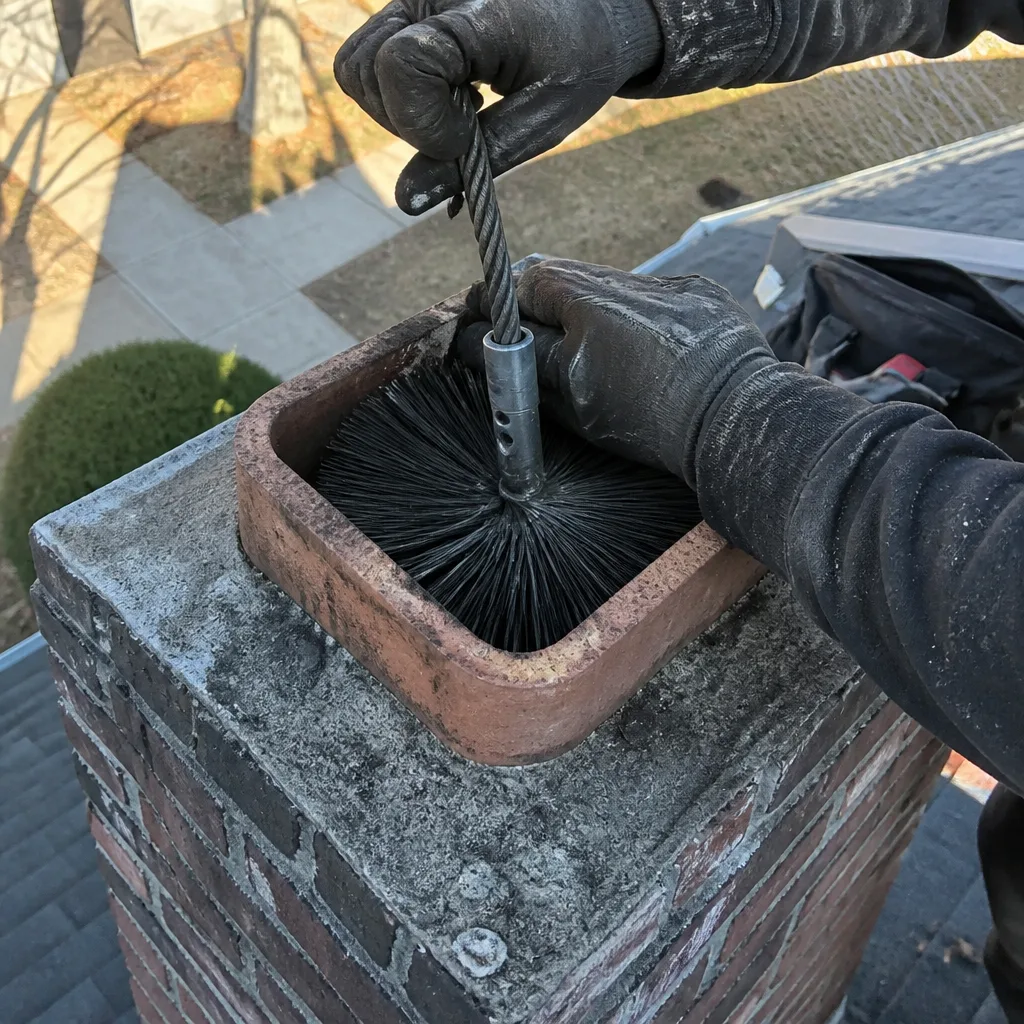
If you’re seeing crumbling joints, white staining, or water showing up inside near the fireplace, the mortar is already failing and it won’t stabilize on its own through another Boston winter. Call Level Two Chimney Boston at (857) 567-8887 – a live person picks up 24 hours a day, 7 days a week. We’ll schedule a camera-scan inspection, document what we find, and give you a written price before anyone touches a single course of brick. That’s how we’ve worked since 2009, and it’s not changing.
Level Two Chimney Boston serves the full Boston metro, including Back Bay, South End, Jamaica Plain, Dorchester, Roxbury, Charlestown, South Boston, Roslindale, West Roxbury, and Hyde Park, as well as surrounding communities. All repointing work is performed by background-checked, uniformed technicians under the Haven Standard and is backed by our 365-Day Done Right Promise. Visit our home to learn more about how we work.
Written by Corrine Halstead, Owner at Level Two Chimney Boston, serving Boston.