
Last updated September 20, 2026
Level 1 sweep and inspection to the NFPA 211 annual standard - flue, crown, cap, and flashing checked and photographed
Chimney sweep logs do not sweep chimneys. They loosen some creosote - which then falls where a brush and vacuum still have to collect it.
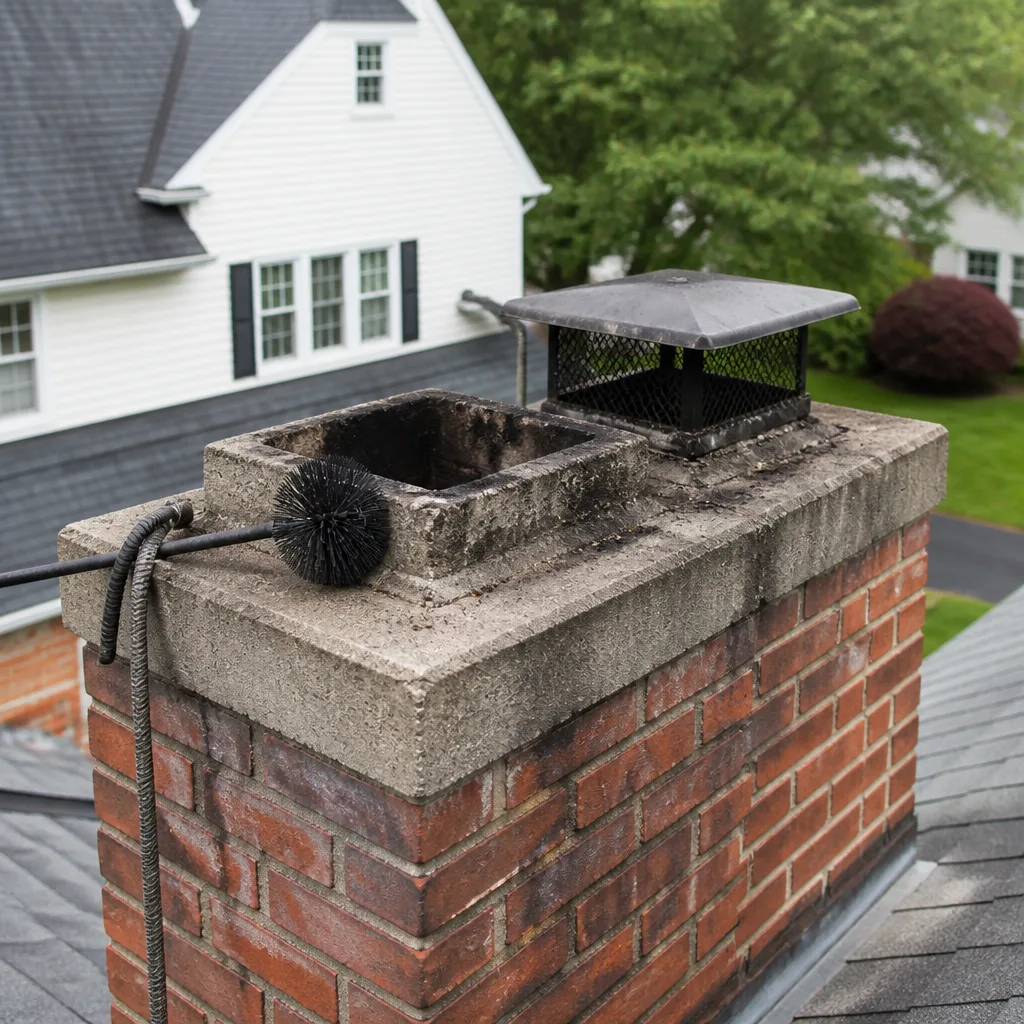
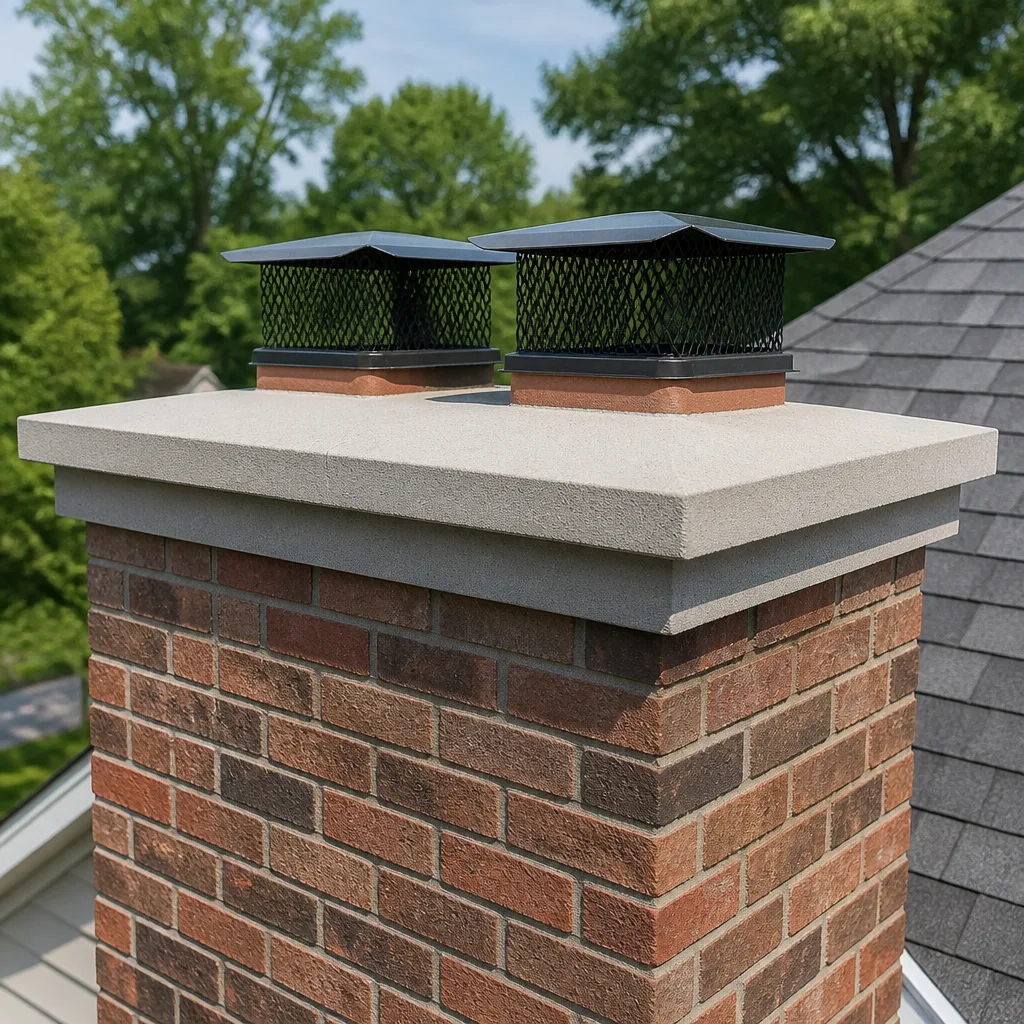
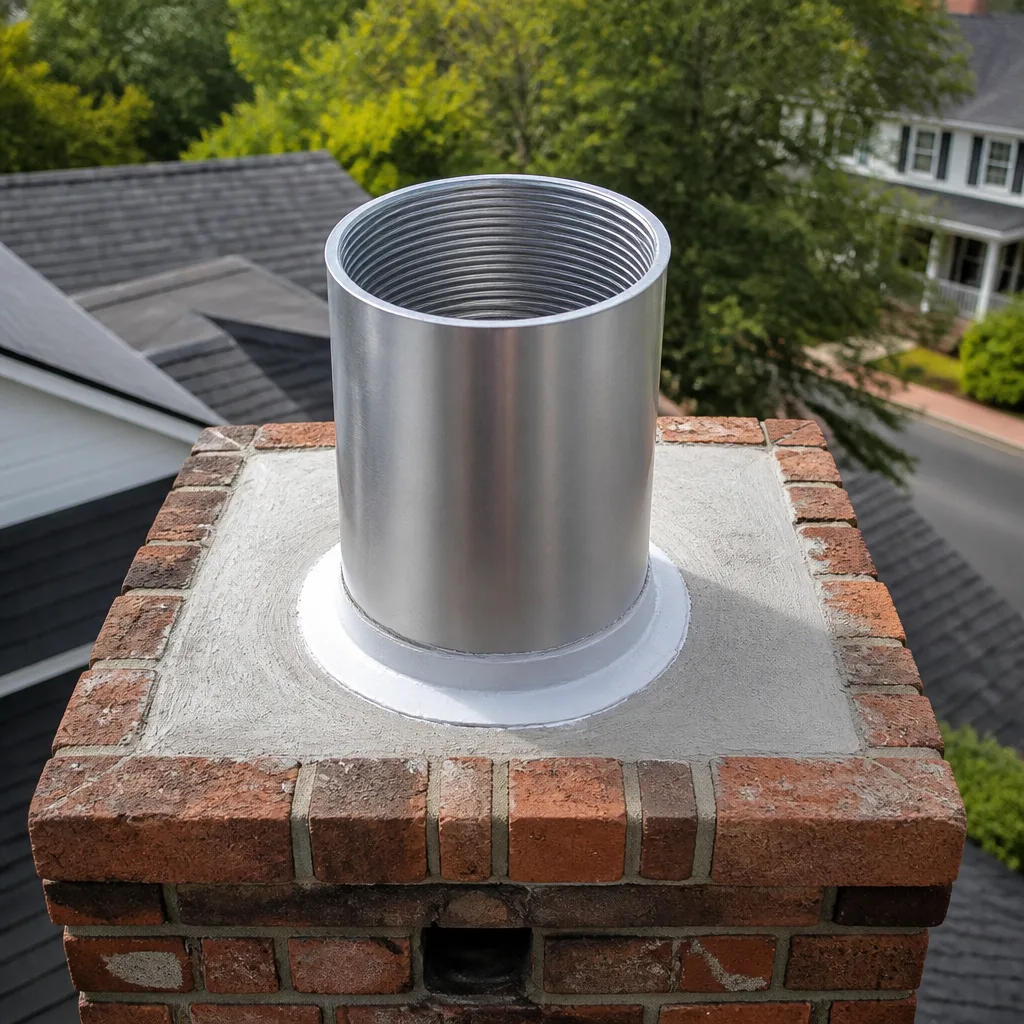
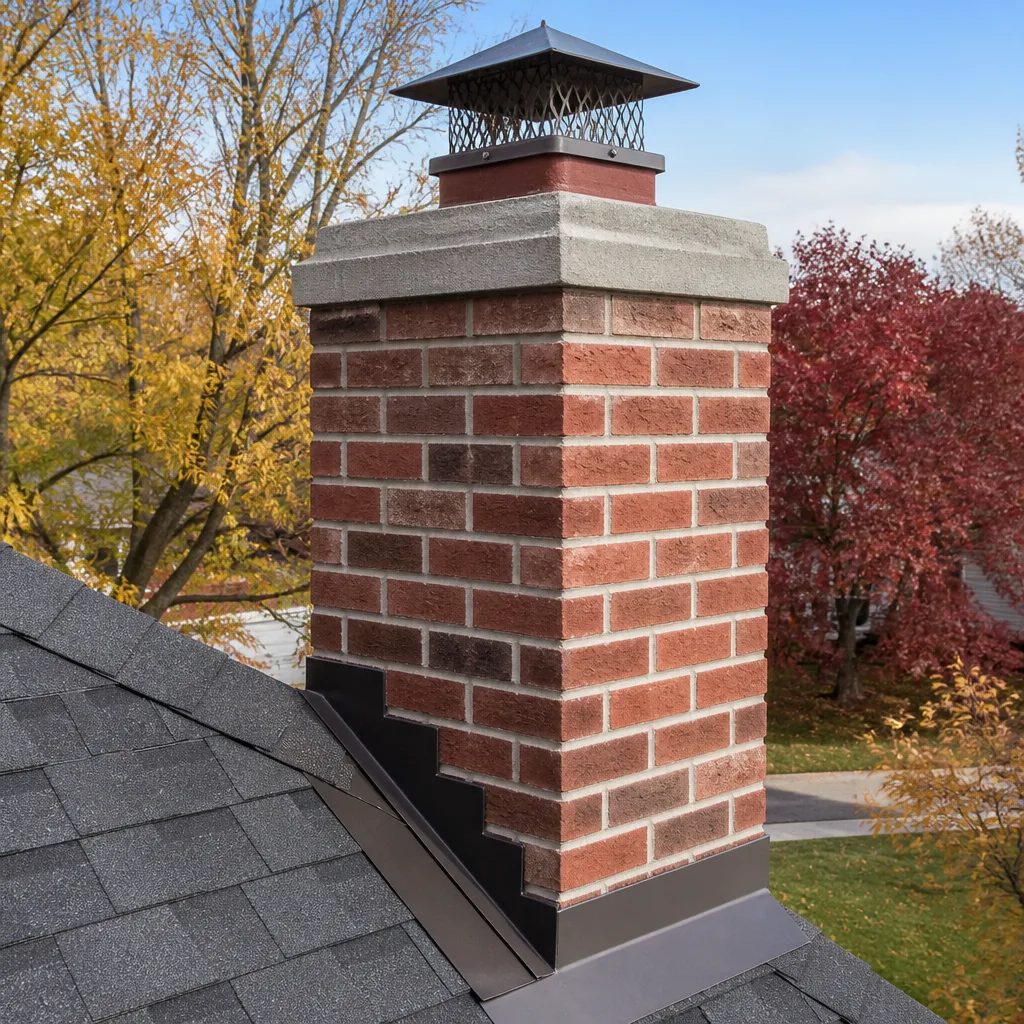
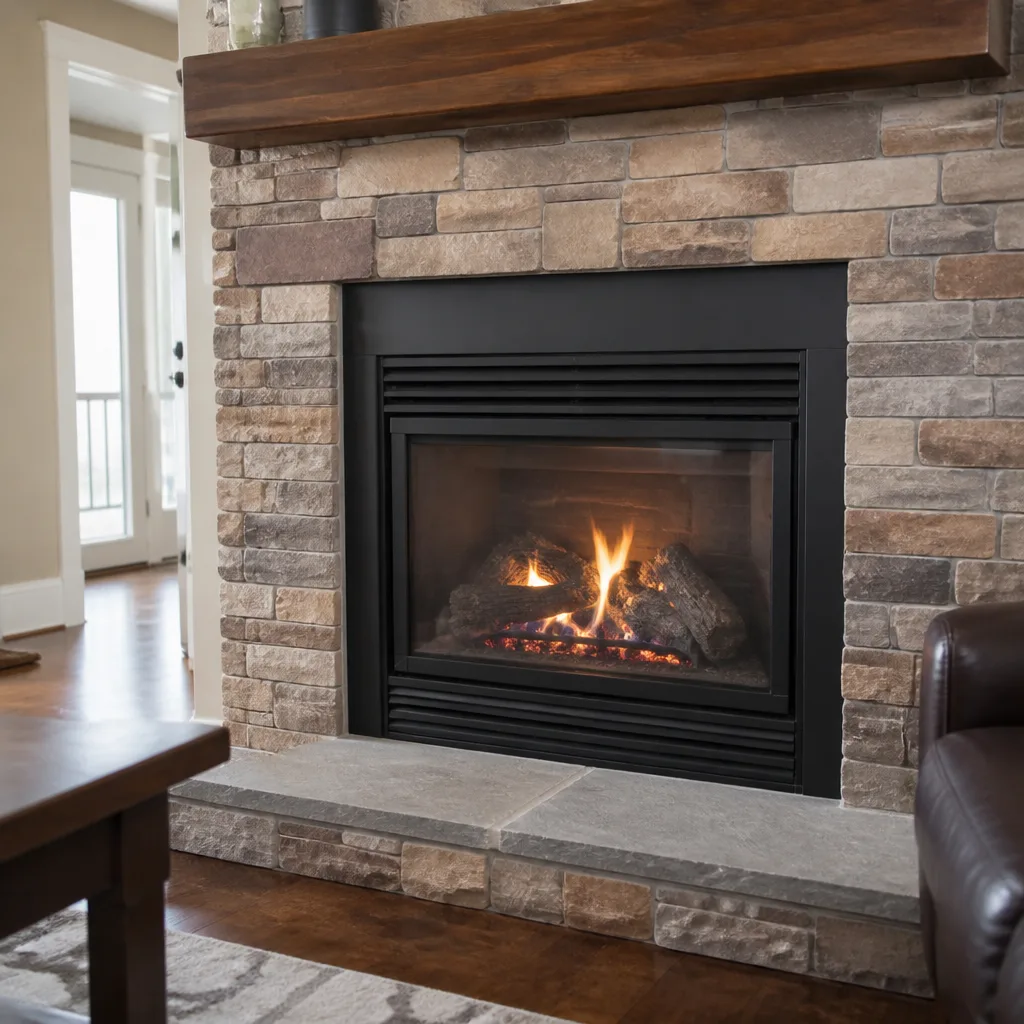
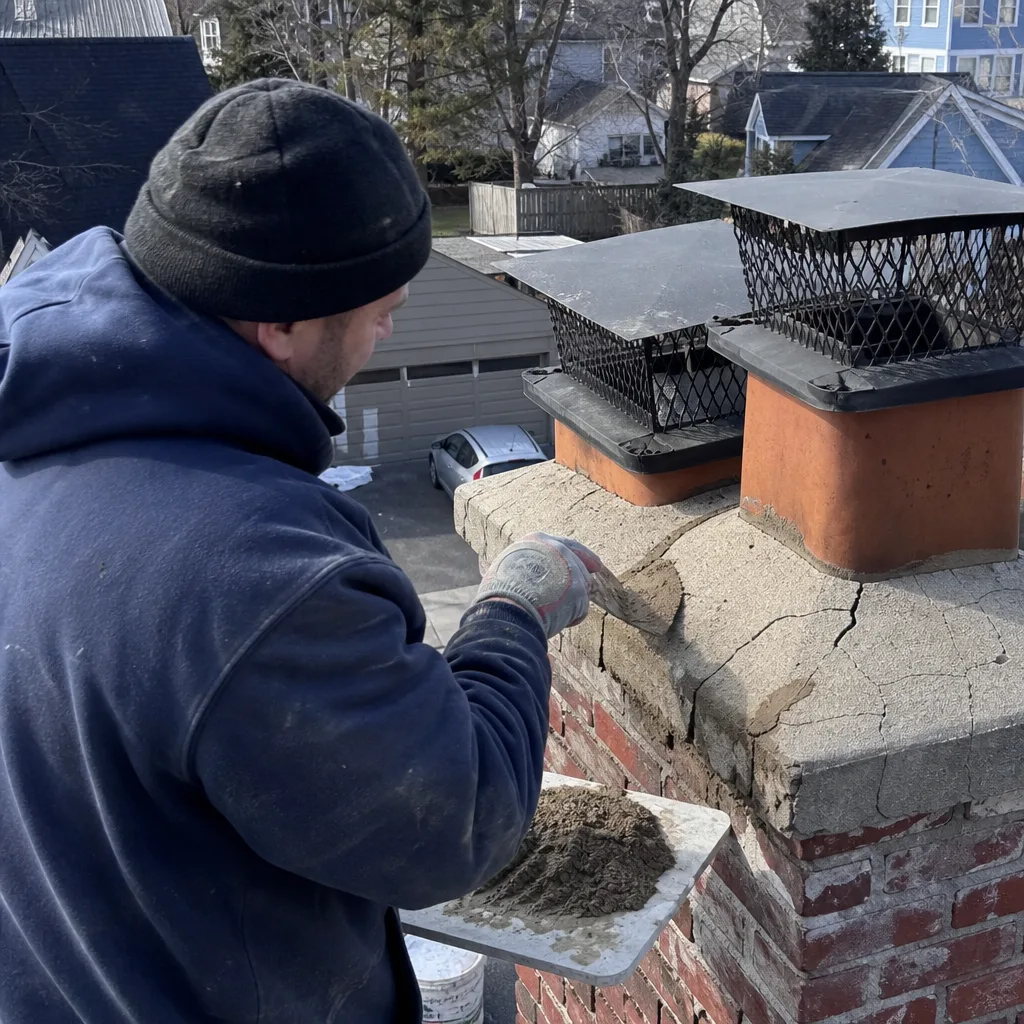
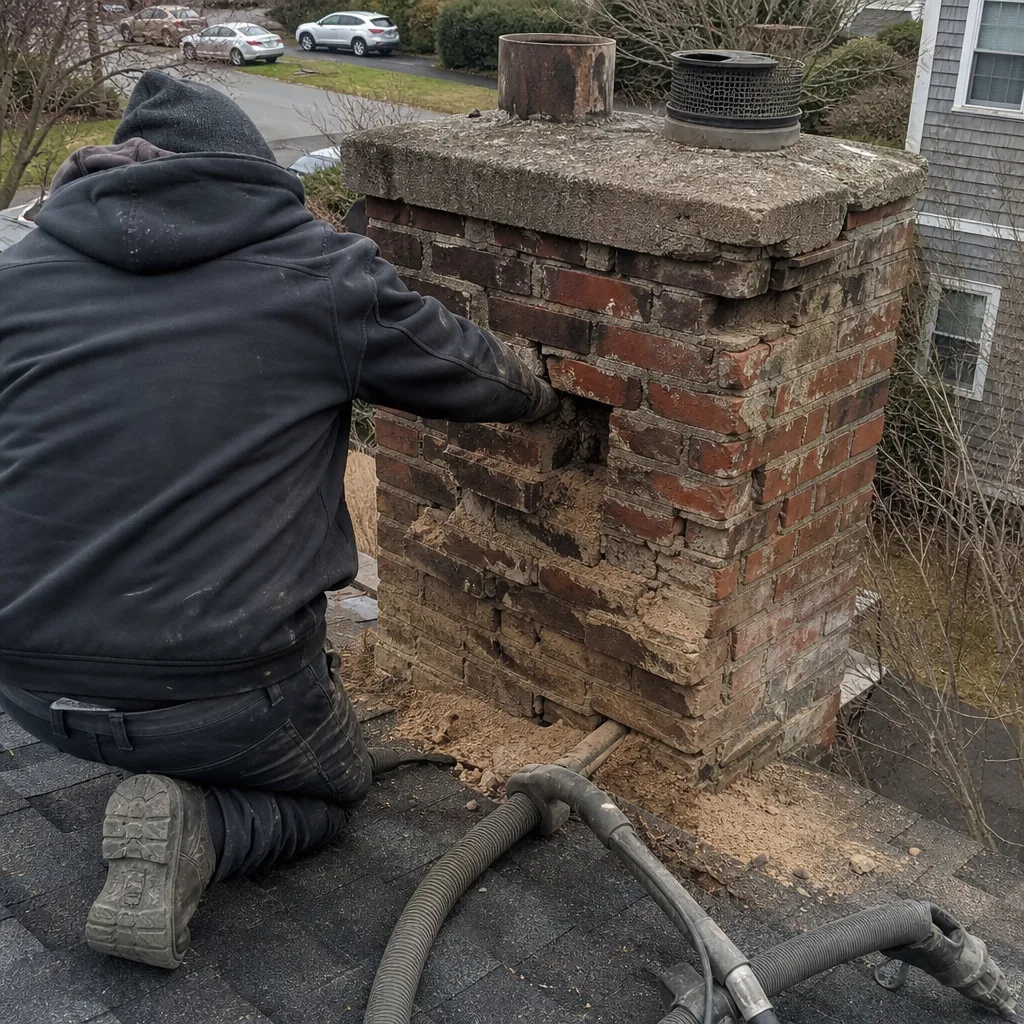 Before
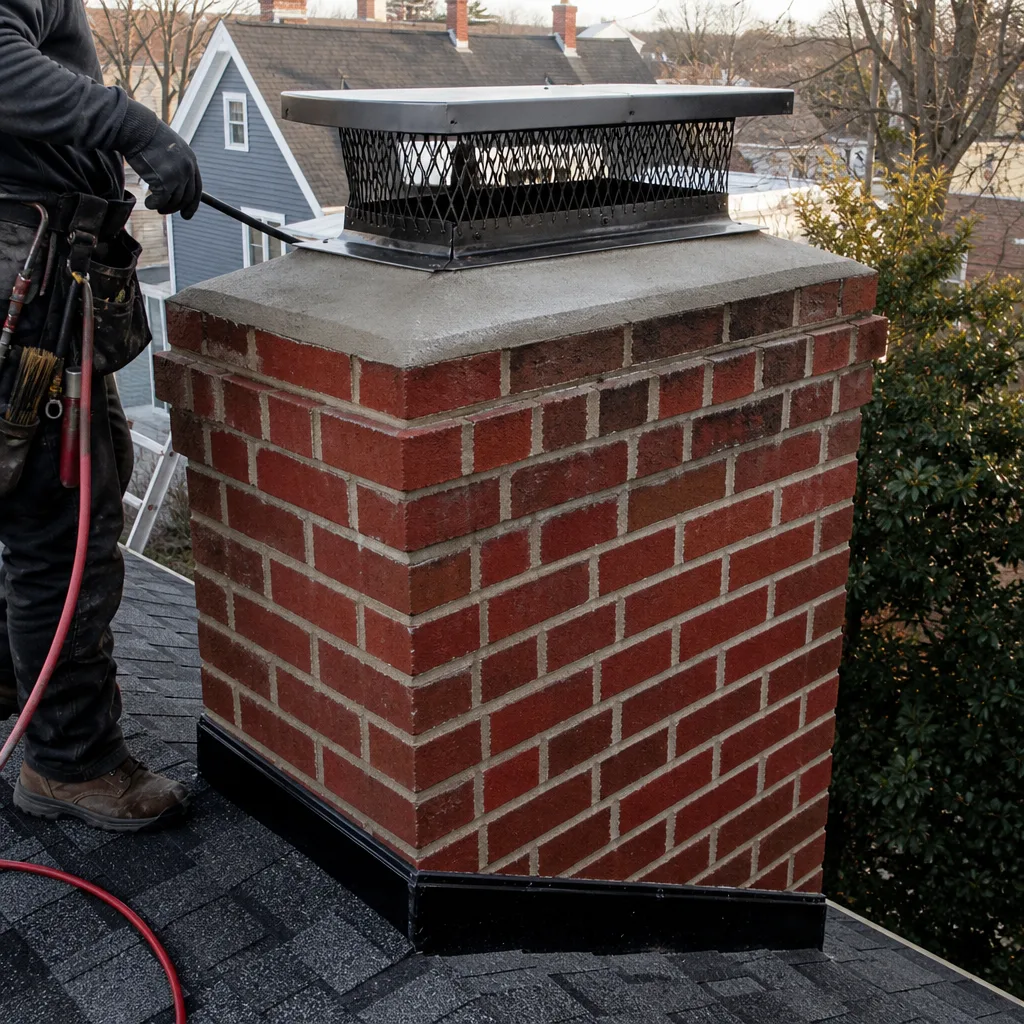 After
After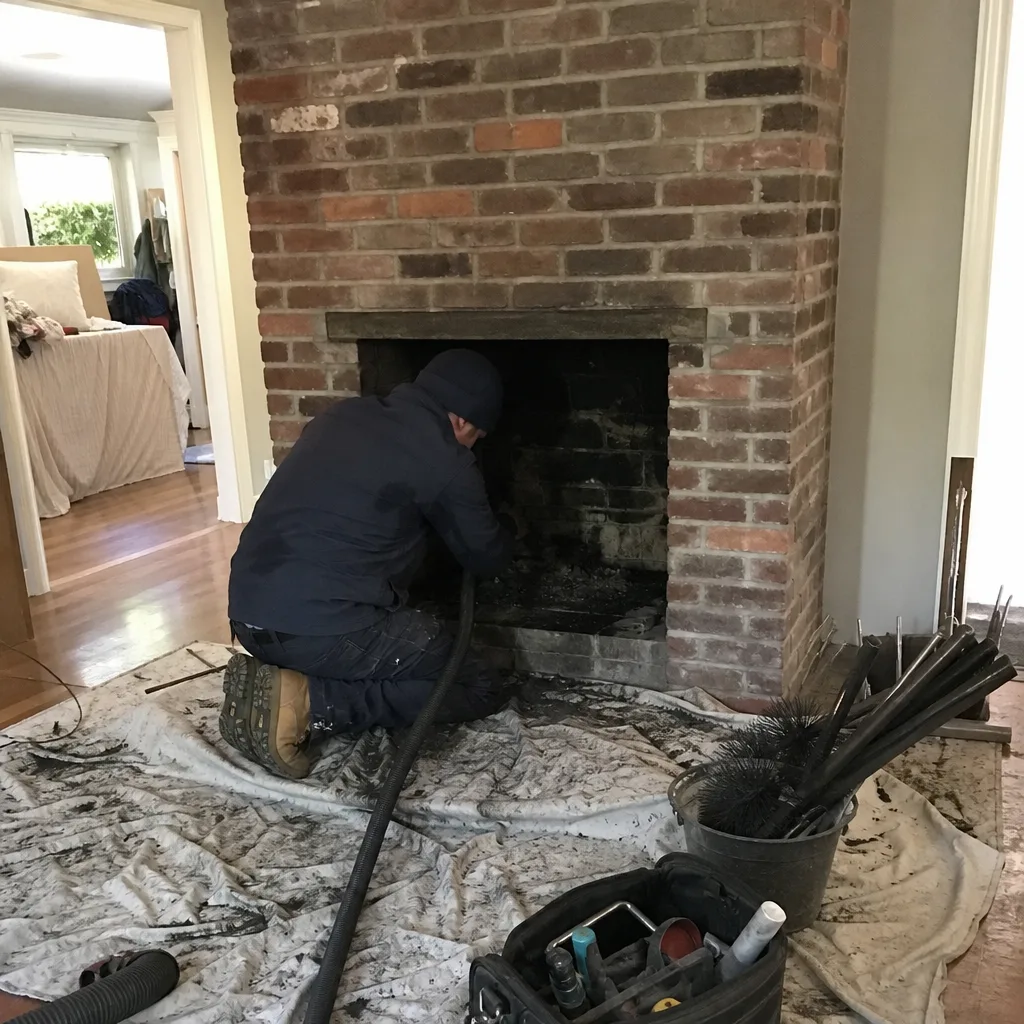 Before
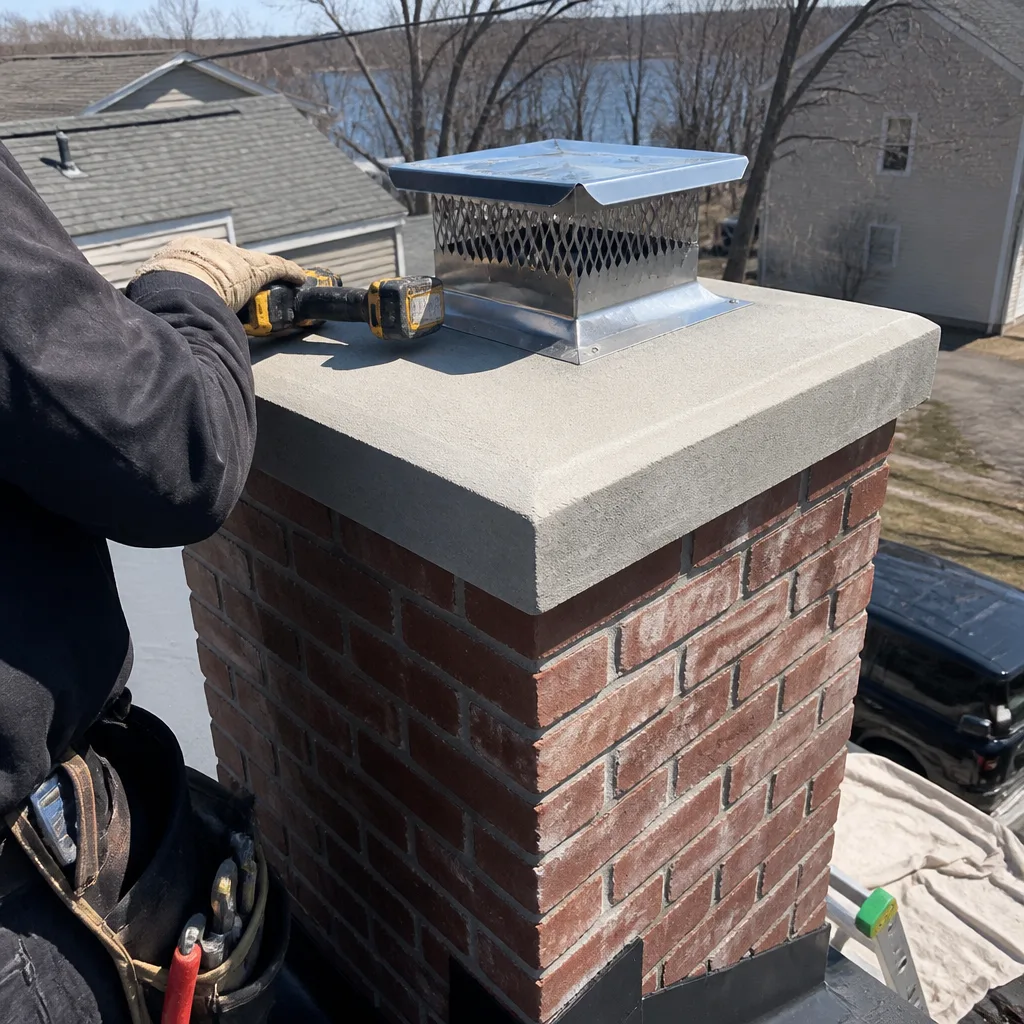 After
After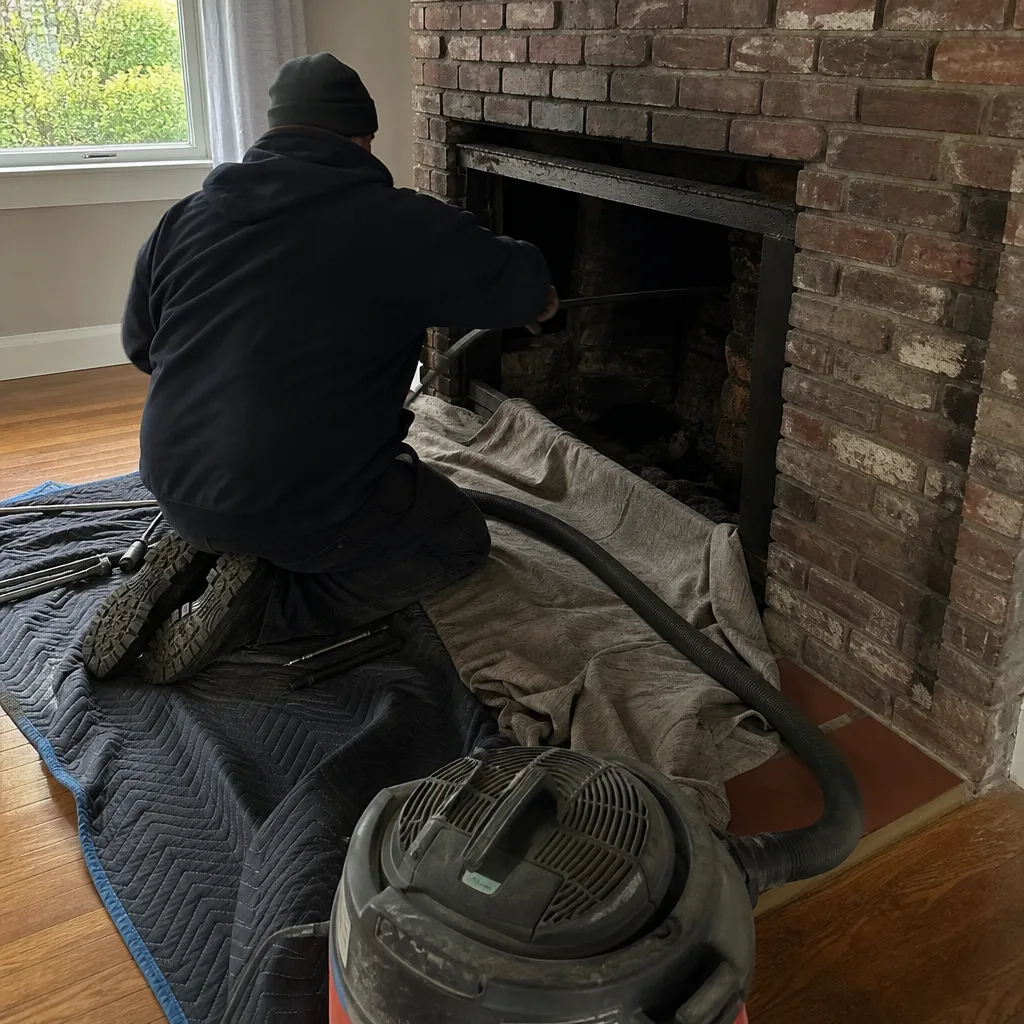 Before
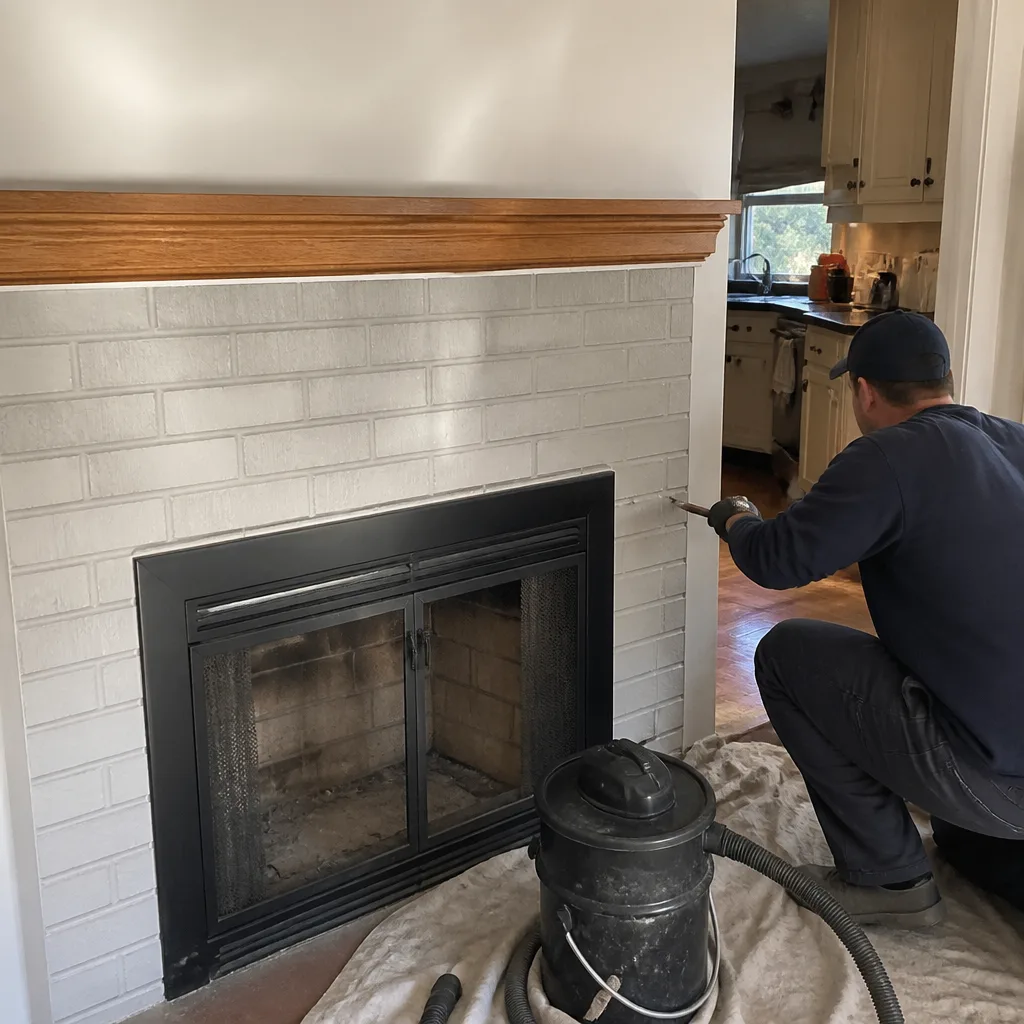 After
AfterChimney Cleaning Permits, Codes & Inspections in MA: What You Need to Know
Most Boston homeowners spend more time researching a new refrigerator than understanding the regulatory status of the chimney attached to their house. That’s a problem, because the chimney is the one home system where a small oversight compounds into a structural repair, and that repair quietly triggers Massachusetts permit law. A simple sweep rarely requires a permit. The liner replacement, crown rebuild, or repointing job that the sweep uncovers almost always does, and doing that work without the right paperwork can shift fire liability from the contractor to you. This guide maps the full landscape-what Massachusetts building code actually says, what Boston’s Inspectional Services Department will ask for, what your insurer expects, and how a proper Level 2 camera inspection becomes the document that holds it all together-and you can explore The Complete Guide to Chimney Cleaning in Boston for more depth on the maintenance side.
Quick Answer
Routine chimney sweeping and a Level 2 camera inspection do not require a permit in Massachusetts, but almost all chimney repairs do: relining, rebuilding, crown replacement, and masonry work fall under 780 CMR and typically need a Boston ISD building permit. Homeowners unsure whether their chimney shows warning signs that cross from maintenance into repair territory can consult our Chimney Cleaning Warning Signs: A Boston Homeowner’s Reference Guide. The cleaning itself is permit-exempt, but the moment a sweep finds damage requiring repair, the permit obligation attaches to the repair, and unpermitted work on a chimney can give your insurer grounds to deny a future fire claim.
Table of Contents
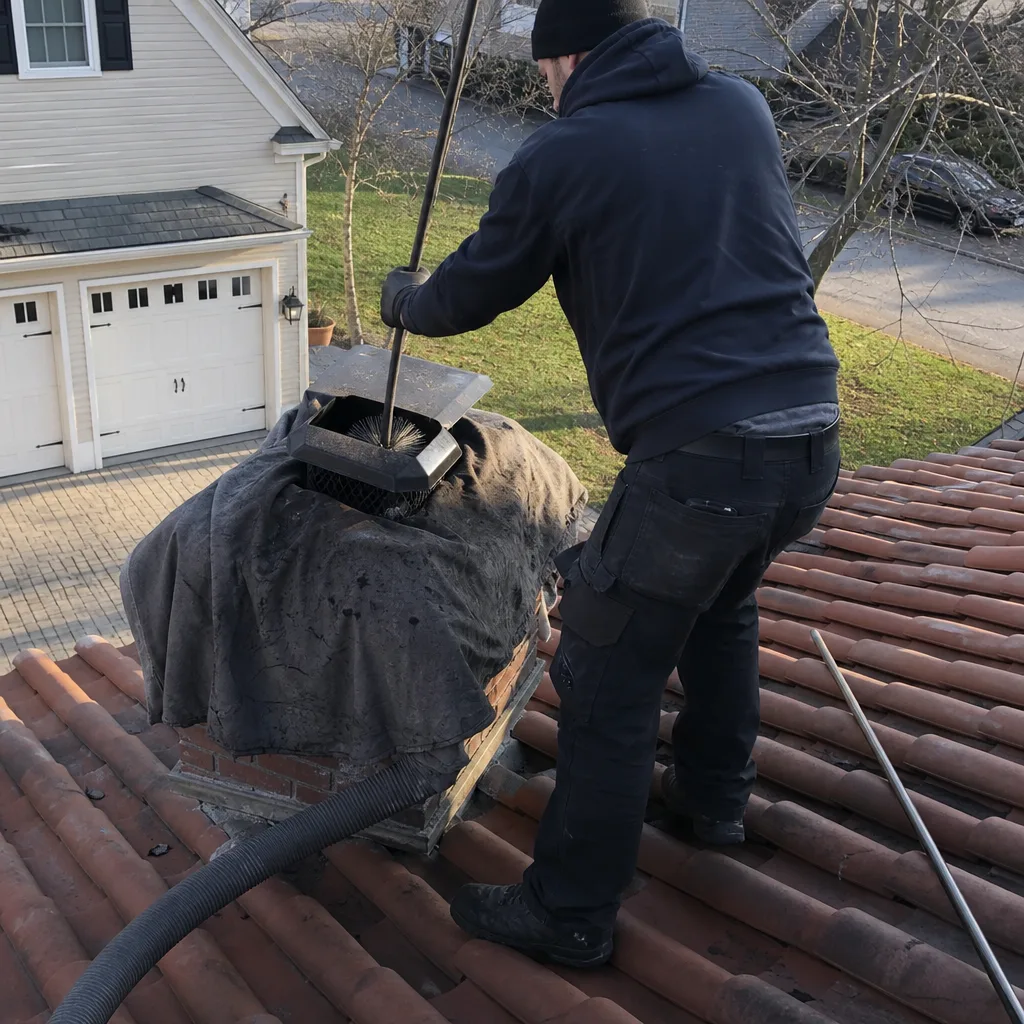
- Chimney Cleaning vs. Chimney Repair: Where the Permit Line Actually Is
- The Massachusetts Building Code (780 CMR) and Your Chimney
- NFPA 211: The Inspection Standard Your Insurer Actually Reads
- Boston ISD Permits: What Triggers What
- The Oil-to-Gas Conversion Gap: What Happened in the 2000s
- How a Level 2 Inspection Report Satisfies Code and Insurance Requirements
- What a Boston Home Inspector or Insurer Will Ask For
- Common Mistakes to Avoid
- When to Call a Professional
- Frequently Asked Questions
- The Bottom Line
BeforeAfterChimney Cleaning vs. Chimney Repair: Where the Permit Line Actually Is
Here’s the distinction that clarifies nearly every regulatory question about chimneys in Massachusetts: cleaning is maintenance, and maintenance does not require a permit. Repair is construction, and construction does. That’s not a nuance. It’s the entire line.
A chimney sweep is a service. The sweep removes creosote, clears obstructions, vacuums the smoke chamber, and documents the flue condition. The Massachusetts State Building Code (780 CMR) does not regulate this as construction. Neither does the Boston Inspectional Services Department. You can book a sweep the same way you book gutter cleaning, and no one at City Hall needs to know.
But if the sweep finds a cracked flue liner, and that liner needs to be replaced, the work now falls under 780 CMR 92.00 (the chapter governing chimneys, fireplaces, and vents). A liner replacement is an alteration. An alteration requires a building permit. Same with a crown rebuild, a smoke chamber parge, repointing of the exterior chimney stack, or a firebox rebuild. Every one of those jobs physically changes the structure, and Massachusetts treats structural change as regulated work.
In Boston specifically, ISD administers these permits. Pulling a permit for a chimney repair in Boston isn’t a formality. The inspector will look at the work site, verify the scope matches the application, and sign off before the flue goes back into service. This is where a Chimney Repair in Boston should always include the permit discussion before the work starts, not after.
The practical takeaway for a Boston homeowner: cleaning is always safe to book without paperwork, but you should assume any repair the cleaning uncovers will require one. The cost of the permit itself is modest, usually between $100 and $300 for typical residential chimney work, but the value is the paper trail it creates. When a contractor pulls a permit, the work is on record, the inspection is on record, and the liability question is closed. When there’s no permit, the liability question stays open, and in Massachusetts, that question lands on the homeowner.
The Massachusetts Building Code (780 CMR) and Your Chimney
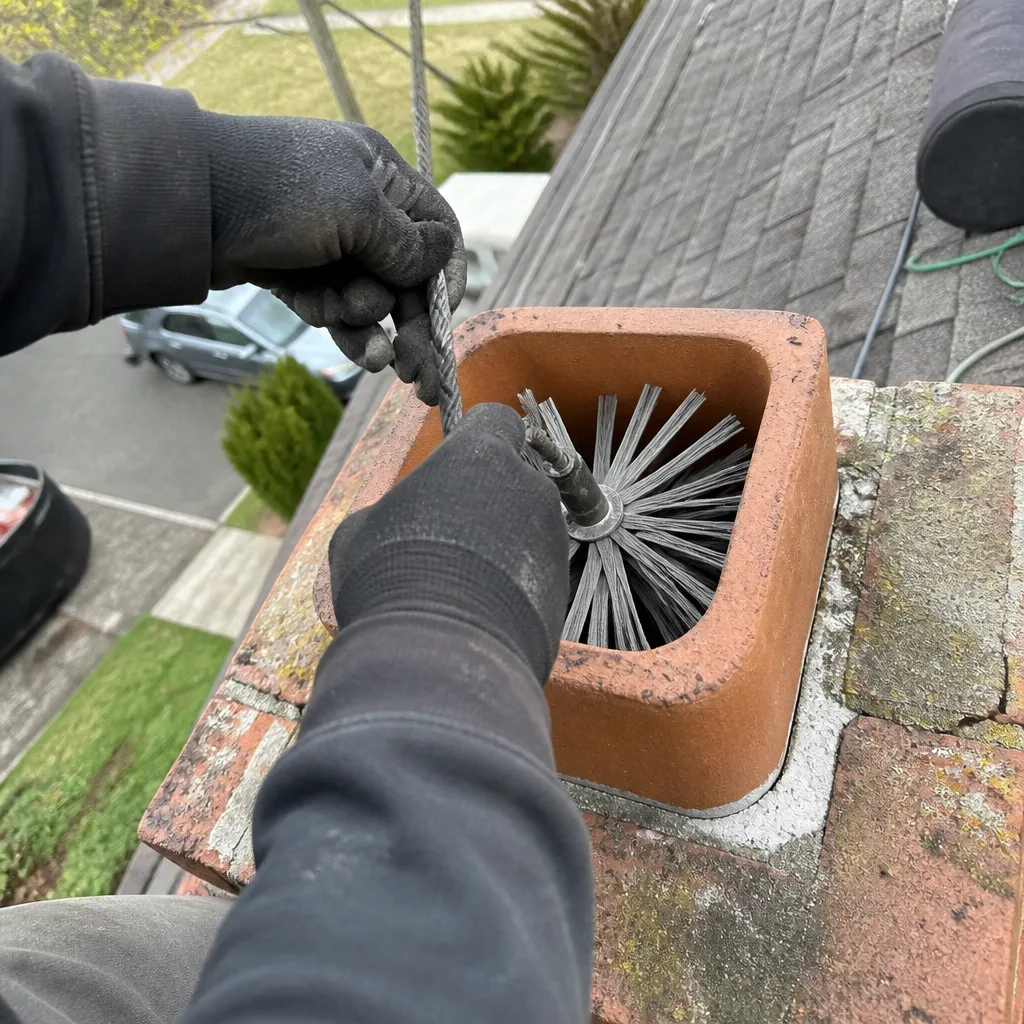
Massachusetts uses its own building code rather than a national model code. The governing document is 780 CMR, the Massachusetts State Building Code, now in its 10th edition. For chimney work, the relevant chapter is 92.00: Chimneys and Fireplaces. That chapter incorporates large portions of the International Residential Code’s chimney provisions but modifies them for Massachusetts climate and building stock.
What does 780 CMR 92.00 actually govern? Three things a homeowner cares about:
- Construction standards for new chimneys, fireplaces, and vents, including clearances from combustible framing, flue sizing, and material requirements.
- Alteration standards for existing chimneys: when a liner is replaced, a crown is rebuilt, or a firebox is repaired, the altered portion must meet current code, not the code that existed when the house was built.
- Inspection triggers tied to the permit process: any regulated alteration requires a permit application, a building inspection, and a certificate of completion.
The part of this most Boston homeowners miss: the code triggers on alteration, not on time. You can live with a 1920s chimney that would never pass a 2025 inspection. You can use it, sweep it, and maintain it. But the moment you alter it, such as dropping in a new liner, the entire altered assembly must comply with the current code. A homeowner in Dorchester who replaces a clay tile liner with a stainless one will often find that other deficiencies, such as inadequate clearance to attic framing, also need to be addressed as part of the permitted scope. The code doesn’t grandfather existing conditions once you open the wall or the flue.
This is one reason a proper camera inspection matters before repair. A Level 2 scan shows what’s actually in the flue, not just what the homeowner reports. When we run a camera down a chimney in a Back Bay brownstone, we’re looking for exactly the conditions that 780 CMR will require to be fixed as part of any alteration: wall thickness, liner condition, clearance issues, and whether the flue was ever lined at all. A written report with photos then becomes the basis for the permit application, because the scope of work in a permit application needs to describe the actual condition, not an estimate.
NFPA 211: The Inspection Standard Your Insurer Actually Reads
If 780 CMR is the legal backbone, NFPA 211 is the practical standard that insurers and inspectors reference when a chimney is involved in a claim. NFPA stands for National Fire Protection Association, and Standard 211 covers chimneys, fireplaces, vents, and solid fuel burning appliances. It’s not state law in Massachusetts, but it operates with legal force in one specific way: insurance policies commonly require that homeowner maintenance follow “recognized standards,” and NFPA 211 is the recognized standard for chimney inspection and maintenance.
NFPA 211 defines three levels of inspection:
- Level 1: A visual check of the readily accessible areas of the chimney, performed during routine sweeping. No camera, no access to concealed areas. This is the minimum.
- Level 2: A camera scan of the entire flue, plus inspection of accessible attics, crawl spaces, and the exterior. Required when the home is being sold or transferred, after a chimney fire, after an earthquake or weather event, or when the appliance or fuel type changes.
- Level 3: Invasive inspection that requires removing components of the building to access concealed areas of the chimney. Only warranted when a Level 2 reveals a serious problem that requires full visibility.
For a Boston homeowner, the Level 2 distinction matters most. It’s the inspection type that Massachusetts home inspectors and real estate contracts reference when a home changes hands. It’s also what your insurer will ask about after a chimney fire: did the homeowner obtain a Level 2 inspection after the event? If the answer is no, and the chimney was put back into use, the insurer has a documented basis to deny the resulting claim for negligence.
Level Two Chimney Boston’s name comes from this standard. We made camera-scan Level 2 inspection the default on every visit starting in 2009. Not because regulators demanded it, but because it was the only way to produce evidence of what was actually inside a flue before saying whether it was safe to use. That practice became Clause 4 of the Haven Standard: a documented photo record on every job, no exceptions. In Boston’s housing stock, where many chimneys are unlined, partially lined, or lined with deteriorated century-old clay tile, a flashlight from the roof tells you almost nothing.
Boston ISD Permits: What Triggers What
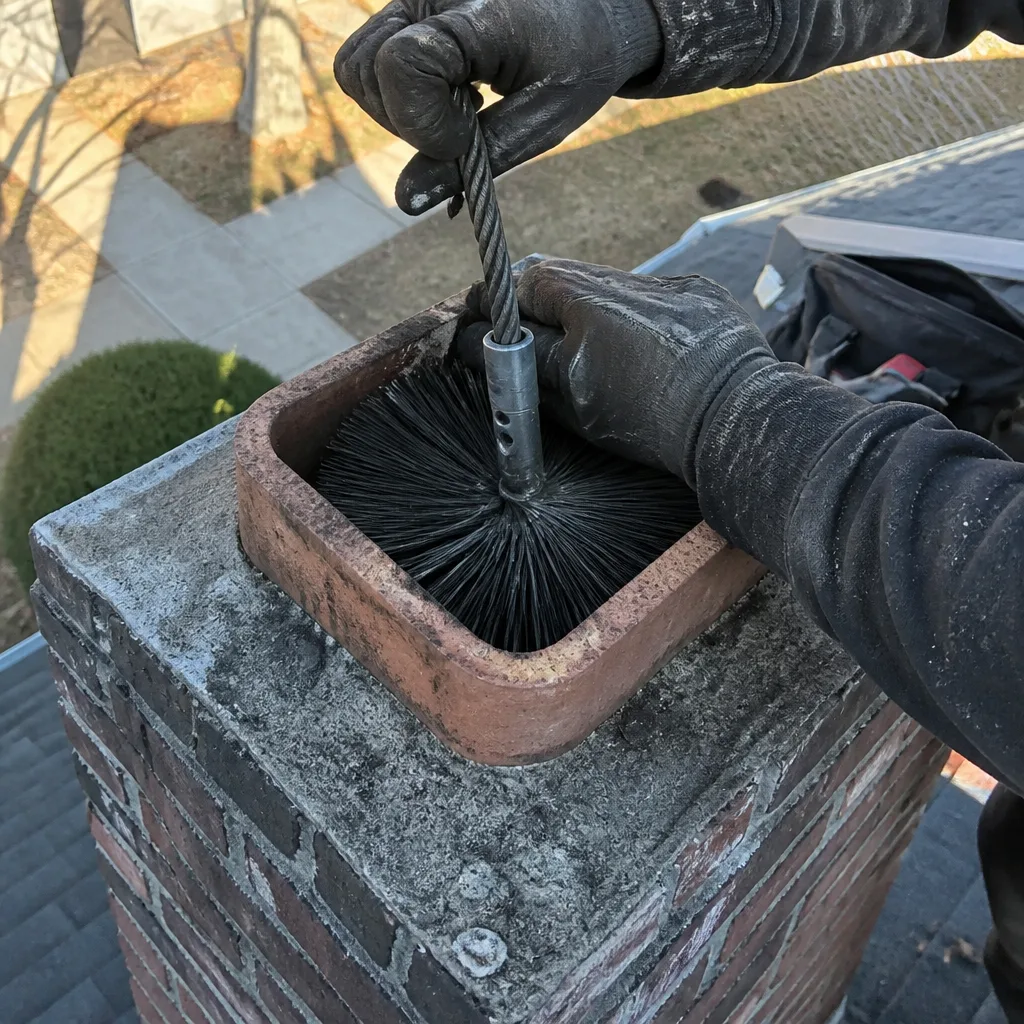
Let’s get specific about Boston’s Inspectional Services Department. Here’s the practical matrix for chimney work in the city:
Jobs that do NOT require a permit in Boston:
- Chimney sweeping: Removing creosote and soot. No permit. No inspection. Just book the sweep.
- Level 1 or Level 2 inspection: Visual or camera documentation of existing conditions. No permit. It’s diagnostic, not construction.
- Chimney cap installation: A cap sits on top of the flue. It’s an accessory, not a structural alteration, in most cases. ISD does not typically require a permit for a cap replacement.
- Minor mortar touch-up: Repointing a few loose bricks without rebuilding the stack. Small, cosmetic, non-structural. Often permit-exempt, though a large repointing project crosses into permit territory.
Jobs that DO require a Boston ISD permit:
- Flue liner installation or replacement: New stainless liner, cast-in-place liner, or clay tile liner = alteration = permit. This is the most common permit-triggering job in Boston.
- Chimney rebuild: Tearing down and rebuilding a chimney stack, whether partial or full. Structural work, full stop.
- Crown replacement or rebuild: The concrete cap at the top of the chimney is structural. Replacing it means a permit.
- Firebox or smoke chamber rebuild: The firebox is the combustion chamber in the fireplace. Any rebuild or parging of it is regulated.
- Repointing beyond cosmetic repair: If the work involves removing raked joints and replacing them across a substantial portion of the stack, ISD treats that as a structural repair.
Here’s what the permitting process looks like in Boston for a typical liner install:
- The contractor inspects the chimney with a camera and documents the current condition.
- The contractor or homeowner files a building permit application with Boston ISD, describing the scope: liner type, liner size, and the existing flue condition.
- ISD schedules a plan review if needed, then issues the permit.
- Work proceeds. The inspector comes to the site after the liner is installed and before the chimney is closed up, verifying the work matches the permit.
- The inspector signs off. The homeowner receives a certificate of completion.
That certificate is the document your insurer wants after the work is done. Keep it with your property records. When you sell the home, the buyer’s attorney will likely ask for it.
The Oil-to-Gas Conversion Gap: What Happened in the 2000s
This is a problem we see regularly in Boston’s older housing stock, and almost no one talks about it publicly. Between roughly 2000 and 2015, thousands of Boston homes converted from oil heat to natural gas. That’s a well-documented trend. What’s less documented: the conversion often meant the old oil furnace flue was repurposed for a new gas appliance, and in many cases, a stainless liner was installed without a building permit.
Why did it happen? The gas conversion market moved fast. Utility companies were offering conversion incentives, oil prices were volatile, and homeowners were signing contracts with plumbers and HVAC companies that bundled the appliance swap with a liner install. The liner was often specified correctly, sometimes not. But the permit was frequently skipped, because the contractor framed the job as an appliance swap rather than a chimney alteration, and the homeowner had no reason to know the difference.
The consequence is that a meaningful number of Boston homes now have chimneys with liner work that has no paper trail. No permit, no inspection, no documentation that the liner is the right size, the right material, or installed correctly. This creates two problems:
- Insurance risk: If a fire starts in or around that unpermitted liner, the homeowner may be unable to prove the work was done to code. The insurer can, and sometimes does, deny the claim on the grounds that the homeowner cannot demonstrate proper maintenance or compliant alterations.
- Resale problem: A buyer’s home inspector will often flag the lack of documentation for the liner. The buyer’s attorney then asks for a permit history. When nothing comes back from ISD, the seller either has to get retroactive compliance or take a price hit.
What do you do if you’re in this situation? The answer is not to panic. It’s to document. If you know your home was converted from oil to gas and you’re not sure whether the liner was properly permitted, the first step is a Level 2 camera inspection. The camera will show the liner’s current condition, material, and size. That report becomes the baseline documentation. If the liner is in good shape, the report may be all you need for an insurer or a buyer. If the liner is failing, the repair is a new permit, and this time, the paper trail is clean.
How a Level 2 Inspection Report Satisfies Code and Insurance Requirements
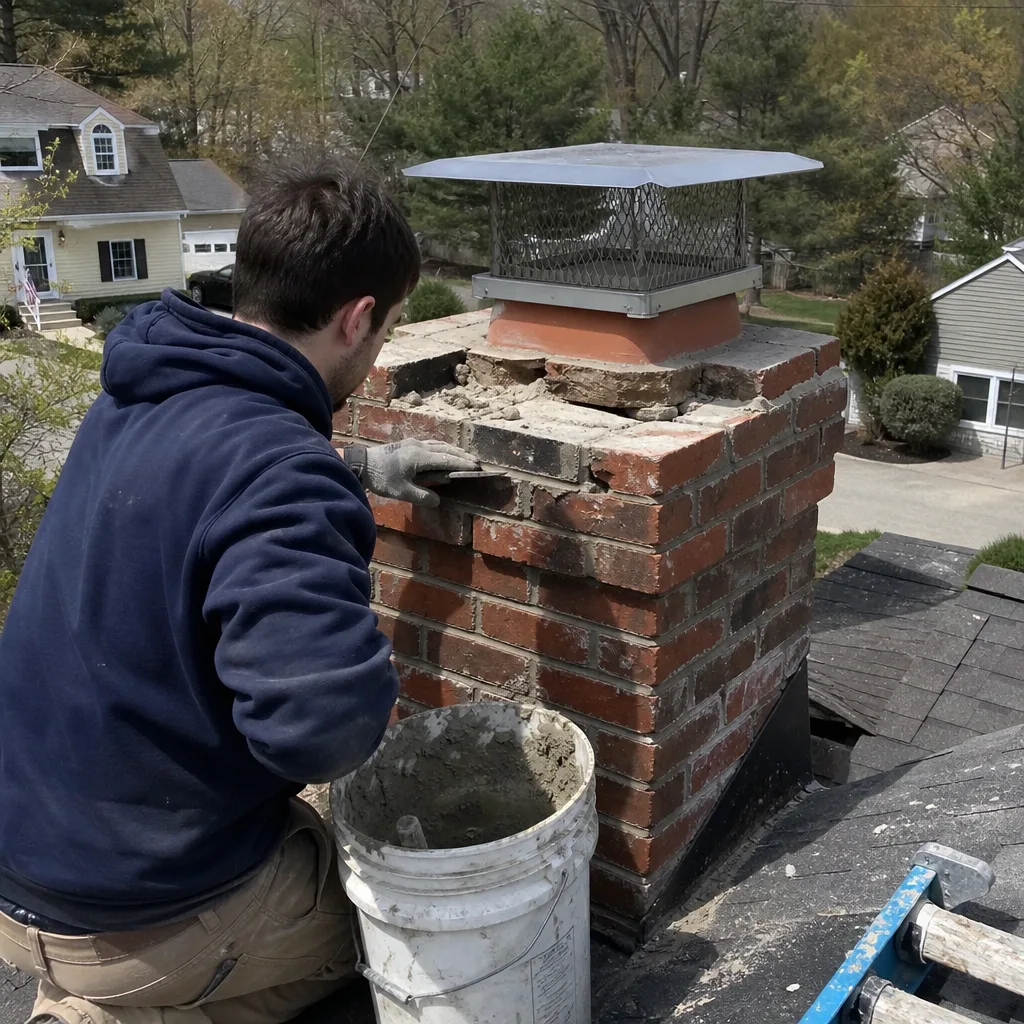
The documentation base for everything described above is the Level 2 inspection report. Here’s what a proper camera-scan report in Boston should include, and what it accomplishes:
- Still photos from the camera scan: Clear images of the interior of the flue, the smoke chamber, the damper area, and the crown. These are evidence. They show what’s actually there.
- Written description of the liner condition: Is the liner clay tile, stainless, or absent? If clay, are the tiles cracked, spalled, or missing? If the flue is unlined, does the mortar show signs of deterioration?
- Creosote classification: NFPA defines three classes of creosote: Class I (light, brushable), Class II (flaky, moderate), Class III (glazed, tar-like, flammable). The report should state which class is present, because Class III creosote is a fire hazard that no sweep can fully remove with brushes.
- Crown and flue top condition: Photos and a written note on whether the crown is cracked, spalled, or allowing water intrusion.
- Clearance documentation: Any place the flue passes within a certain distance of combustible framing should be noted, with measurements.
When a repair is needed, that report serves as the scope document for the permit application. ISD wants to know what condition the chimney is in before work starts, and the report answers that question with photographs, not assertions. When the work is done, the permit inspection closes the loop, and the combination of the pre-work report, the permit, and the completion certificate is the full documentary record a Massachusetts insurer or buyer will ask for.
This is why we’ve operated under the Haven Standard’s Clause 4 since 2009: a documented photo record on every job. It’s not an upsell. It’s the difference between a contractor saying the work was done right and the homeowner being able to prove it.
What a Boston Home Inspector or Insurer Will Ask For
Let’s walk through the two scenarios where chimney documentation actually matters in Boston, because these are the moments homeowners discover what they should have kept:
When you sell your home:
The buyer’s home inspector will almost always flag the chimney, especially in older Boston housing stock. The inspector looks at the visible portions: the crown, the flue cap, the firebox. If the chimney was converted for gas, the inspector will often note that the flue condition is unknown because it’s not accessible for visual inspection. The buyer’s attorney then asks for:
- The most recent chimney sweeping receipt or report
- The Level 2 inspection report, if one exists
- Permit history from Boston ISD for any liner or repair work
- Documentation that the liner was installed to current code
If none of those documents exist, the seller is negotiating from a weak position. The buyer can demand a credit, a repair, or a reduction. Documentation is worth real money at closing.
When you file an insurance claim:
If a chimney fire or structural failure leads to a claim, the insurer will assign an adjuster and often a fire investigator. They will ask:
- When was the chimney last swept? Do you have the receipt?
- Was a Level 2 inspection performed after the chimney fire, as NFPA 211 requires?
- If the chimney was relined or repaired, when, by whom, and under what permit?
- Was any alteration done without a permit?
The answers to those questions determine whether the claim is paid, denied, or reduced. This is not hypothetical. Massachusetts courts have upheld insurer denials where the homeowner could not demonstrate that chimney work was performed to code or that the chimney was properly maintained. The distinction between “the contractor did it wrong” and “the homeowner failed to document” collapses when neither the permit nor the contractor can be produced.
Common Mistakes to Avoid
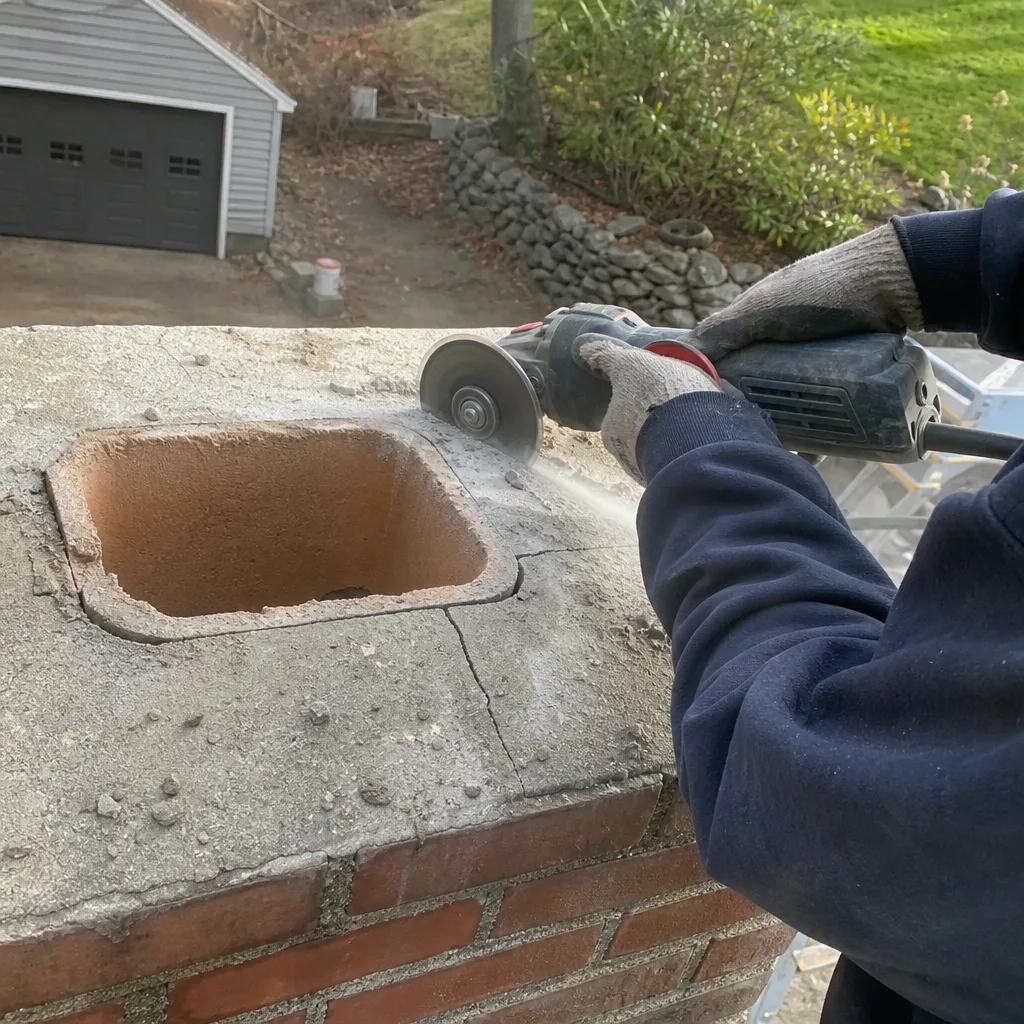
- Assuming a sweep covers you for everything. A sweep removes creosote. It does not document liner condition unless you specifically get a camera inspection. In Boston, many homeowners book the cheapest sweep and assume the flue was inspected, when it was not.
- Doing a liner replacement without a permit. It’s the most common permit-skipped chimney job in Boston. The contractor may say it’s fine, but the liability for unpermitted work lands on the homeowner, not the contractor, when a fire or sale brings it to light.
- Relying on a home inspection in place of a Level 2 chimney inspection. A home inspector does a visual check of accessible areas. They do not camera-scan the flue. A full Level 2 scan catches liner cracks, missing tiles, and hidden clearance problems that a flashlight from the roof never will.
- Ignoring the conversion gap. Homes converted from oil to gas in the 2000s often have undocumented liner work. If you’re in one of these homes, get the camera inspection and create the record now, before a sale or a claim forces the issue.
- Throwing away the documentation. The receipt, the report, the permit, the completion certificate. Keep all of it. When you sell, those papers are worth thousands in negotiation leverage.
- Assuming a cap installation fixes a bigger problem. A cap keeps rain and animals out. It does nothing for a cracked liner or a deteriorating crown. We’ve seen homeowners in Jamaica Plain install a cap and believe the chimney is “fixed” when the internal flue is still a fire risk.
- Waiting until October to book a sweep. Boston’s sweeping season compresses into the fall. By mid-September, the best sweeps are booked out. Book in the spring or summer, when availability is good and any repair has time to be done before burning season.
When to Call a Professional
Call a chimney professional in Boston when any of these situations apply. First, if you’ve never had a camera-scan inspection of your flue and you use your fireplace or wood stove. Second, if you bought your home after 2015 and the seller provided no chimney documentation. Third, if your home was converted from oil to gas and you don’t know whether the liner work was permitted. Fourth, if you see visible exterior damage: spalling bricks, missing mortar, a cracked crown, or a leaning chimney stack. Fifth, if you smell smoke or odors in the house when the fireplace is not in use, which often signals a draft or liner problem. Level Two Chimney Boston offers free estimates throughout Boston, and every job starts with a written price, written scope, and written warranty before anyone starts. Call (857) 567-8887 to book a Level 2 camera inspection, which includes a documented photo record under Haven Standard Clause 4.
Frequently Asked Questions
A standard chimney sweep in Boston typically runs between $175 and $300, depending on the flue size and whether the chimney has been recently maintained. A Level 2 camera inspection, which we recommend with every sweep, adds a line item that starts around $150. We quote a written price before any work starts, so the number on the page is the number you pay. Call (857) 567-8887 for an exact quote for your chimney.
No. Routine cleaning and sweeping are permit-exempt maintenance in Massachusetts, and Boston ISD does not require a permit for the sweep itself. The permit question only arises if the sweep uncovers damage requiring repair, because those repairs, like a liner replacement or a crown rebuild, are structural alterations under 780 CMR.
Massachusetts code requires that a chimney flue be properly lined and sized for the appliance it serves. Whether that liner is stainless steel, cast-in-place, or clay tile depends on the chimney and the appliance. For gas appliances, a stainless liner is typically the standard. For a wood-burning fireplace in a house with an unlined or deteriorated flue, a stainless liner from a brand like DuraFlex or Olympia Chimney is often the code-compliant fix. The specific requirement for your chimney is determined by a Level 2 inspection and the current 780 CMR chapter 92 provisions.
If the work is unpermitted and a fire or structural failure occurs, the loss is contestable by your insurer on the grounds that you cannot demonstrate the chimney was altered to code. You may also face difficulty selling the home, because a buyer’s attorney will request ISD permit history and flag the missing documentation. In some cases, Boston ISD can require the work be brought into compliance retroactively, which means opening up the chimney and redoing it correctly.
The National Fire Protection Association recommends sweeping when creosote reaches 1/8 inch of buildup, and most Boston homes with regular fireplace use fall on an annual cycle. For a structured approach to staying on top of these tasks, see our Chimney Cleaning & Sweep Maintenance Checklist for Boston Homeowners. A wood-burning fireplace used through the fall and winter should be swept every year. A gas fireplace or gas furnace flue can go longer, but should still be camera-inspected every few years. The climate in Massachusetts, with its freeze-thaw cycles, also stresses exterior masonry and crowns, so we recommend checking those each year even if the flue itself is clean.
The only honest answer is a Level 2 camera inspection. The camera shows whether the existing liner is cracked, spalled, separated at the joints, or absent entirely. If the flue is unlined or the liner is failing, replacement is typically required before the chimney can safely be used. We never recommend liner work without camera evidence the homeowner can see for themselves. The report comes with photos, and the written quote comes before any work starts.
The Bottom Line
Cleaning your chimney in Massachusetts requires no permit, but almost every repair does, and the documentation around that distinction is what protects you from insurance denials and resale problems. For more guides & resources on keeping your chimney legal, insurable, and safe, visit our blog. A Level 2 camera inspection is the evidentiary foundation for everything: it determines what’s actually in the flue, it becomes the scope document for any permit application, and it creates the record your insurer or a buyer’s attorney will ask for later. If your home has an undocumented oil-to-gas conversion in its past, that’s not a reason to panic; it’s a reason to create the documentation now. The standard is simple: written price before work, camera evidence of what’s found, permit when work is required, and a documented record when it’s done. That’s how a chimney in Boston stays legal, insurable, and safe to use.
Written by Corrine Halstead, Owner at Level Two Chimney Boston, serving Boston since 2009.