
Last updated September 20, 2026
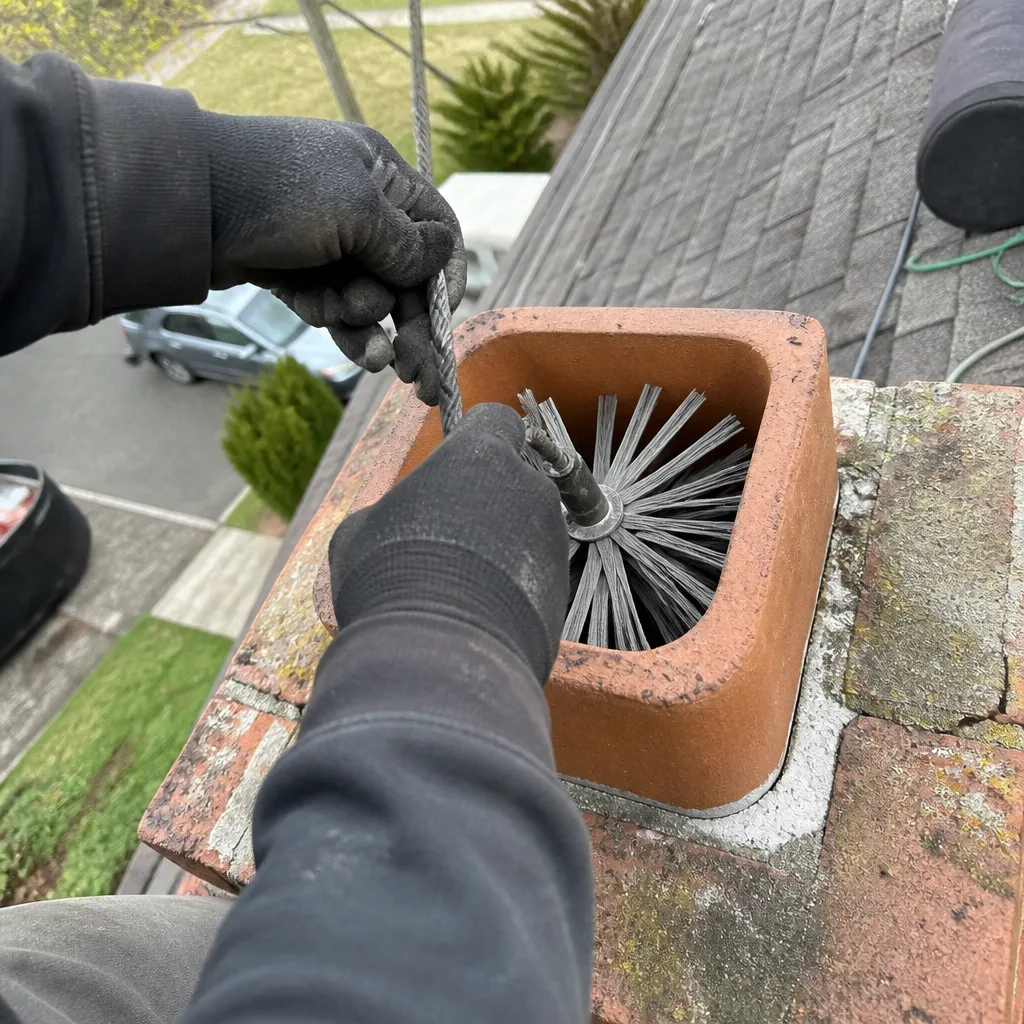
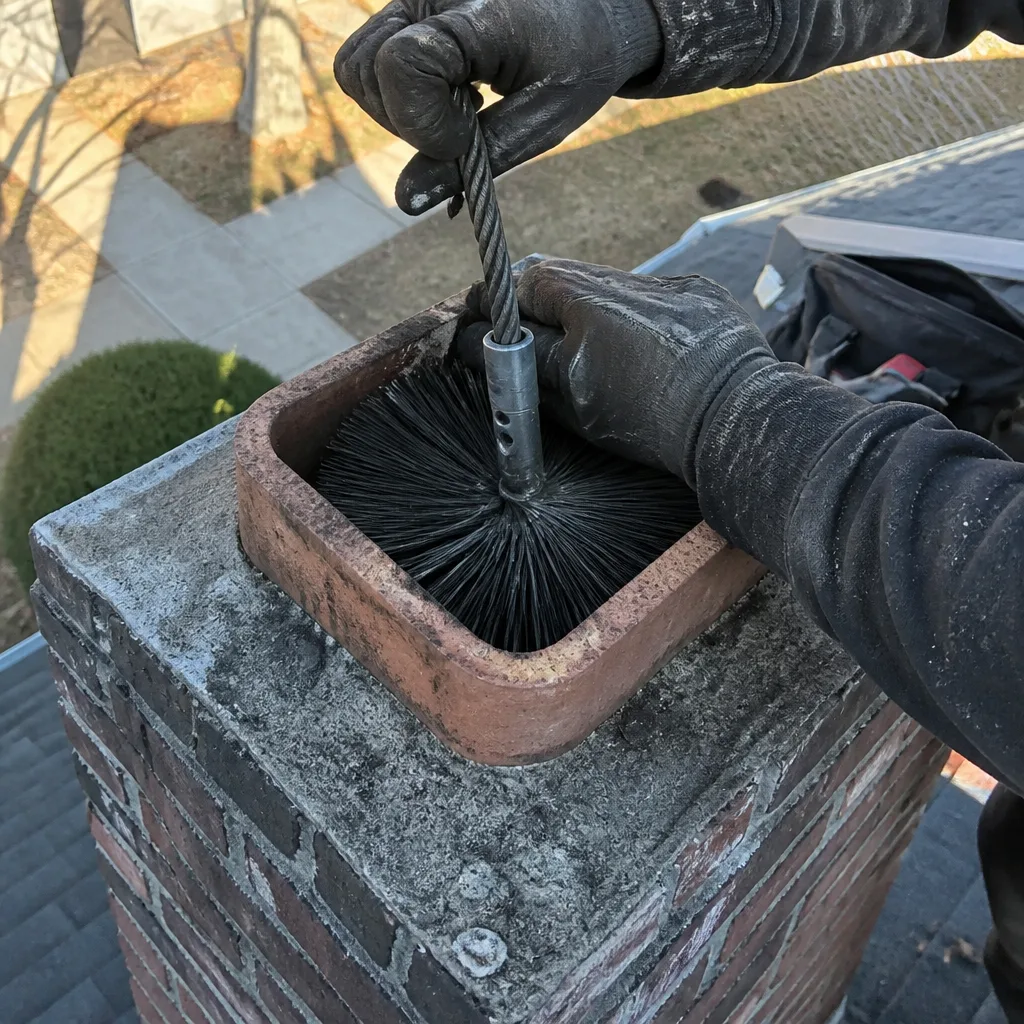
Level 1 sweep and inspection to the NFPA 211 annual standard - flue, crown, cap, and flashing checked and photographed
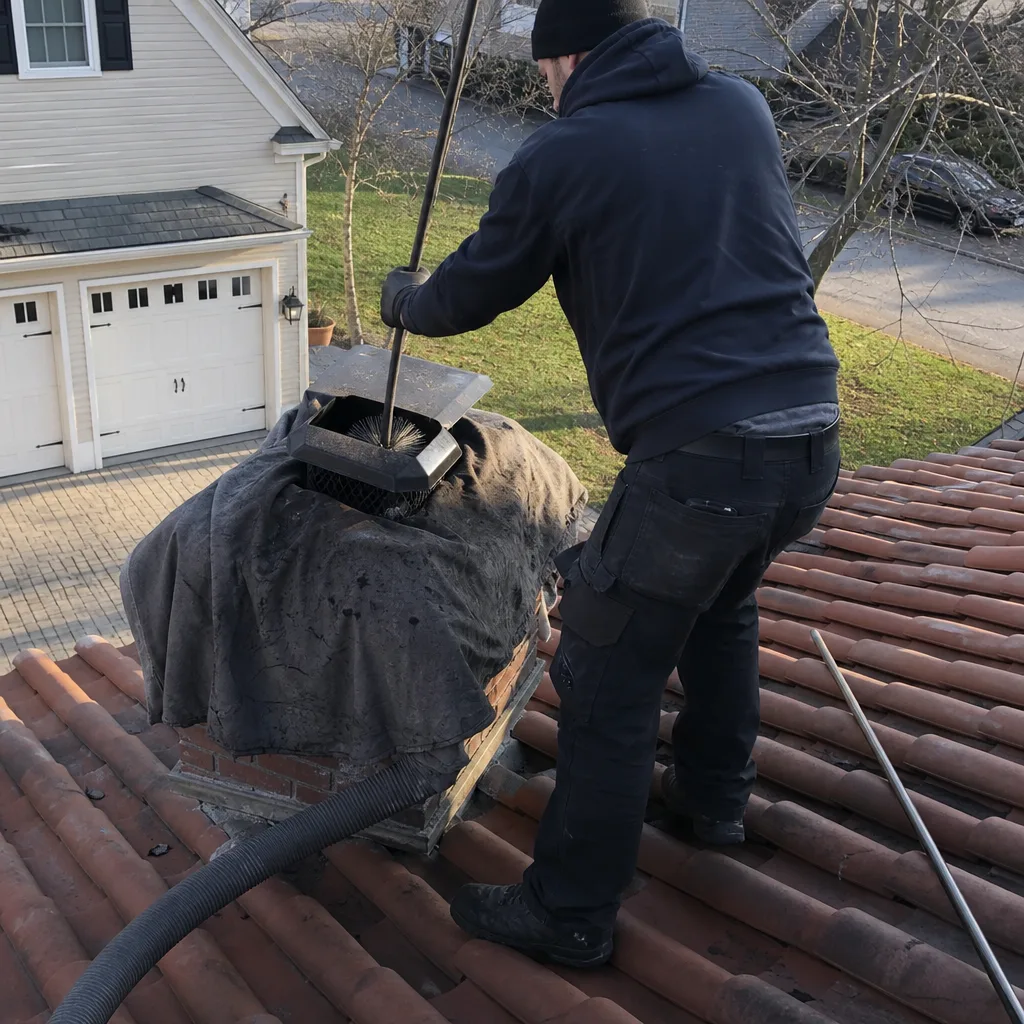
Chimney sweep logs do not sweep chimneys. They loosen some creosote - which then falls where a brush and vacuum still have to collect it.
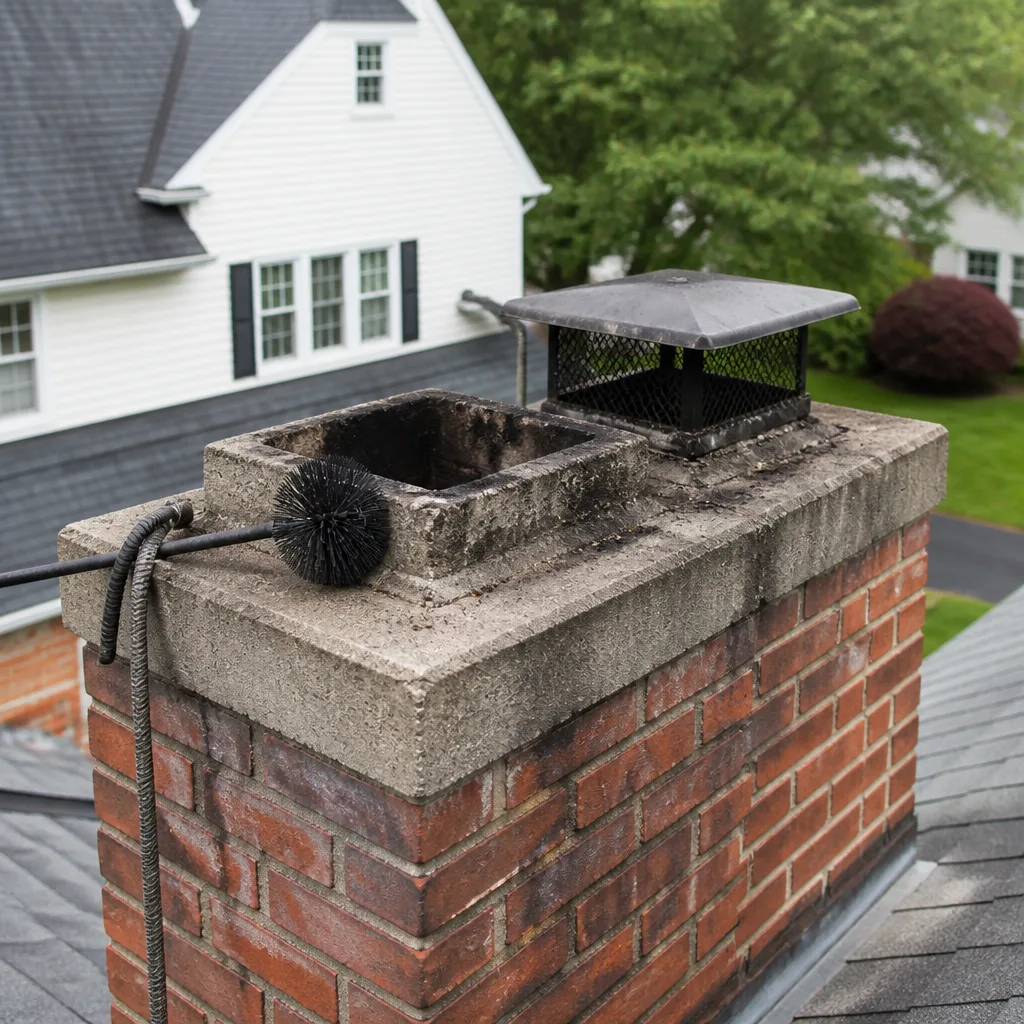
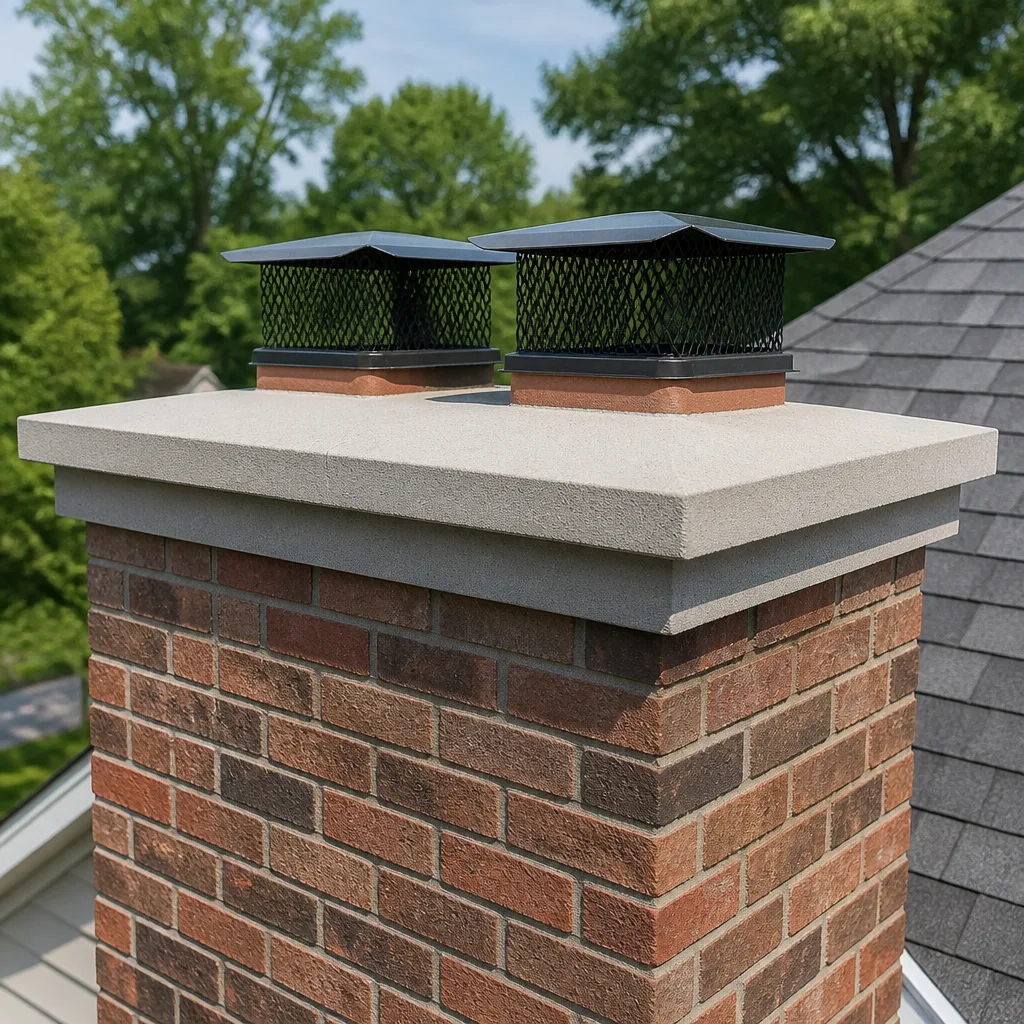
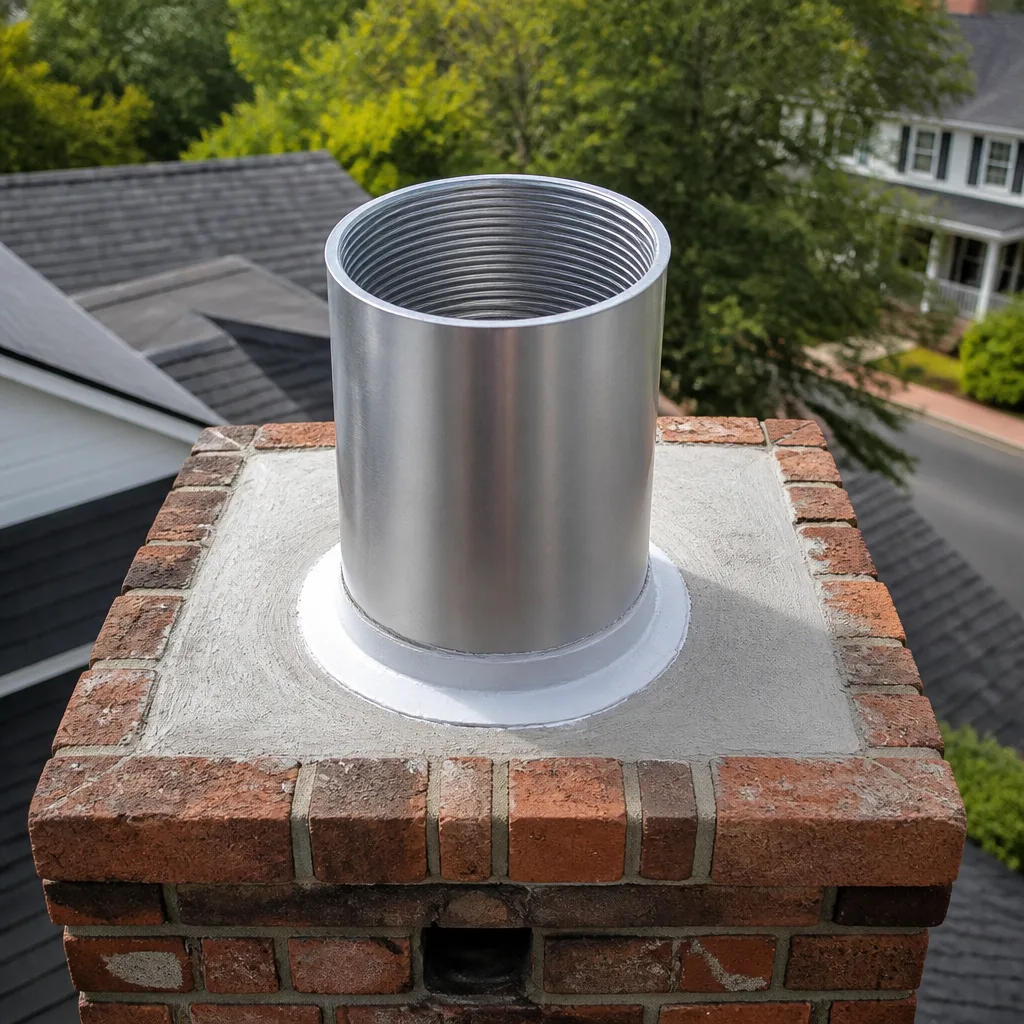
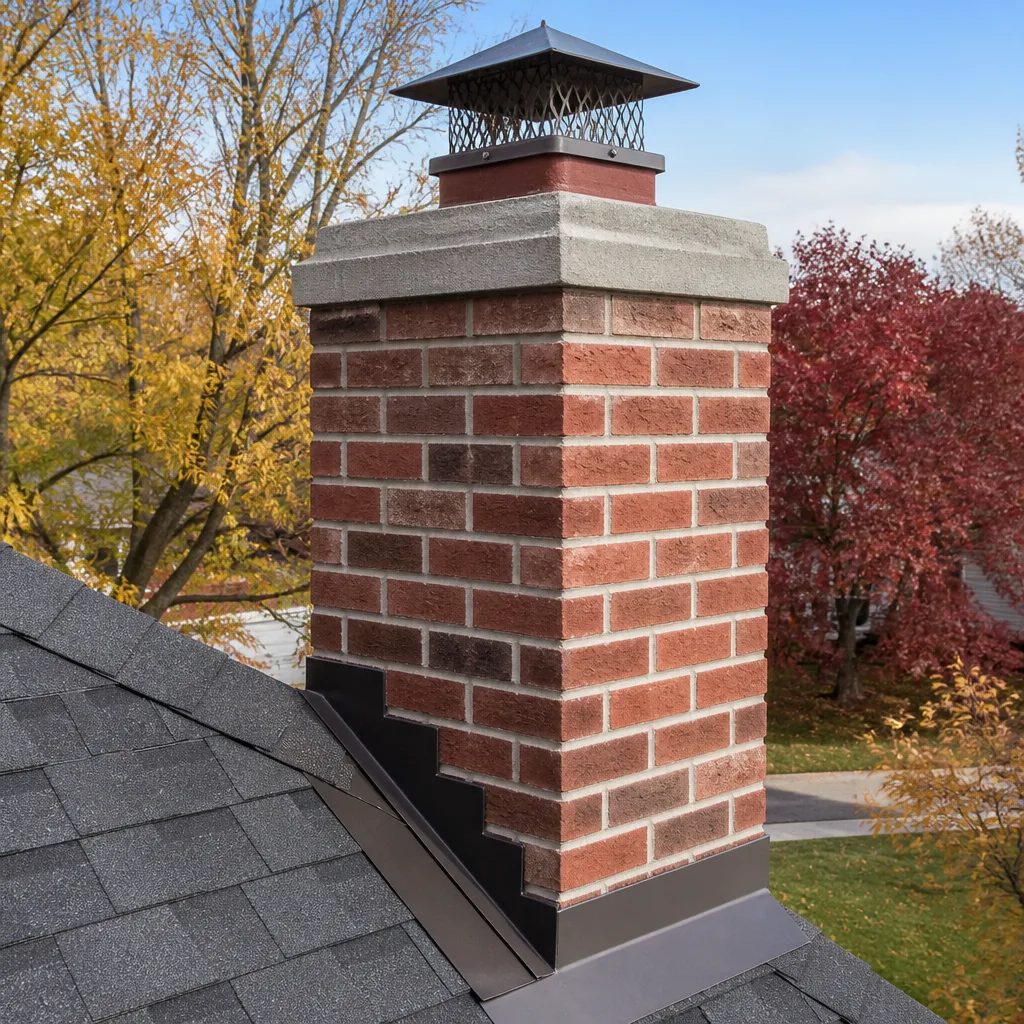
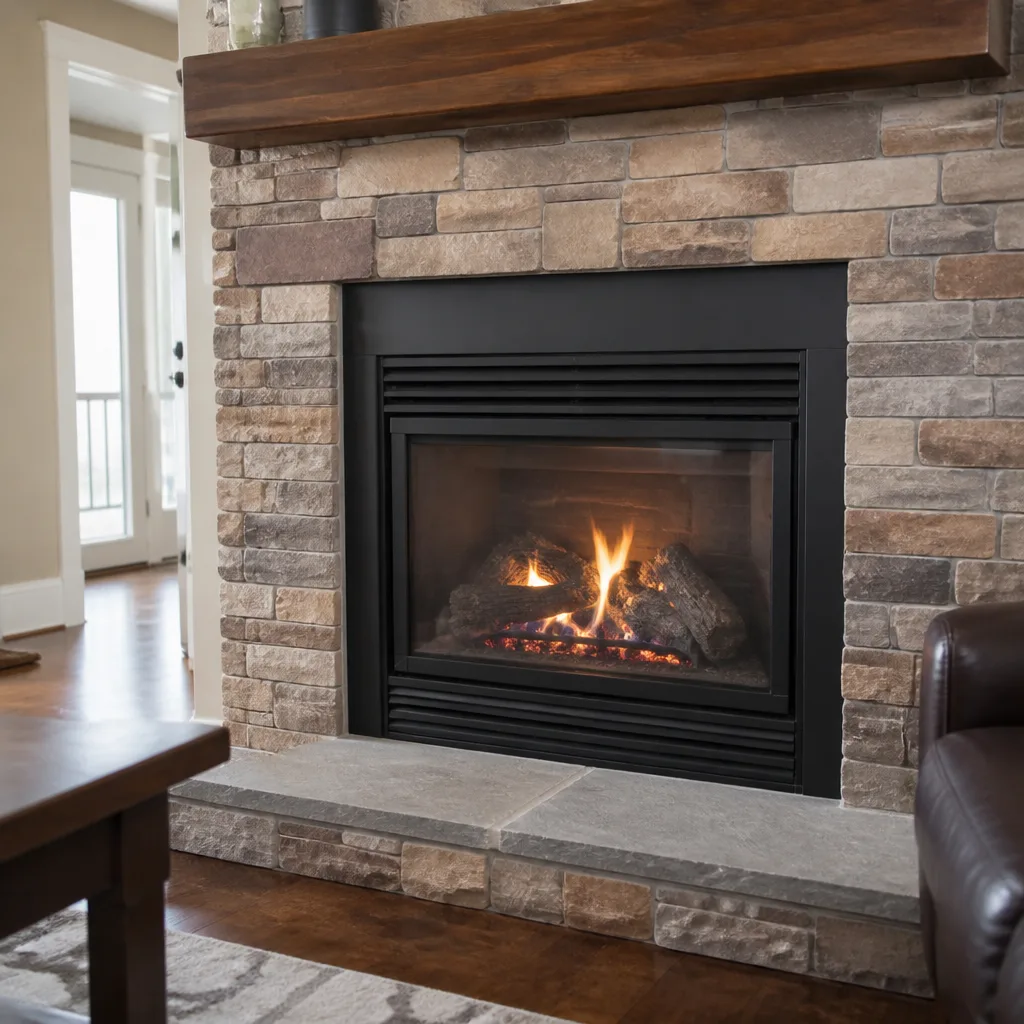
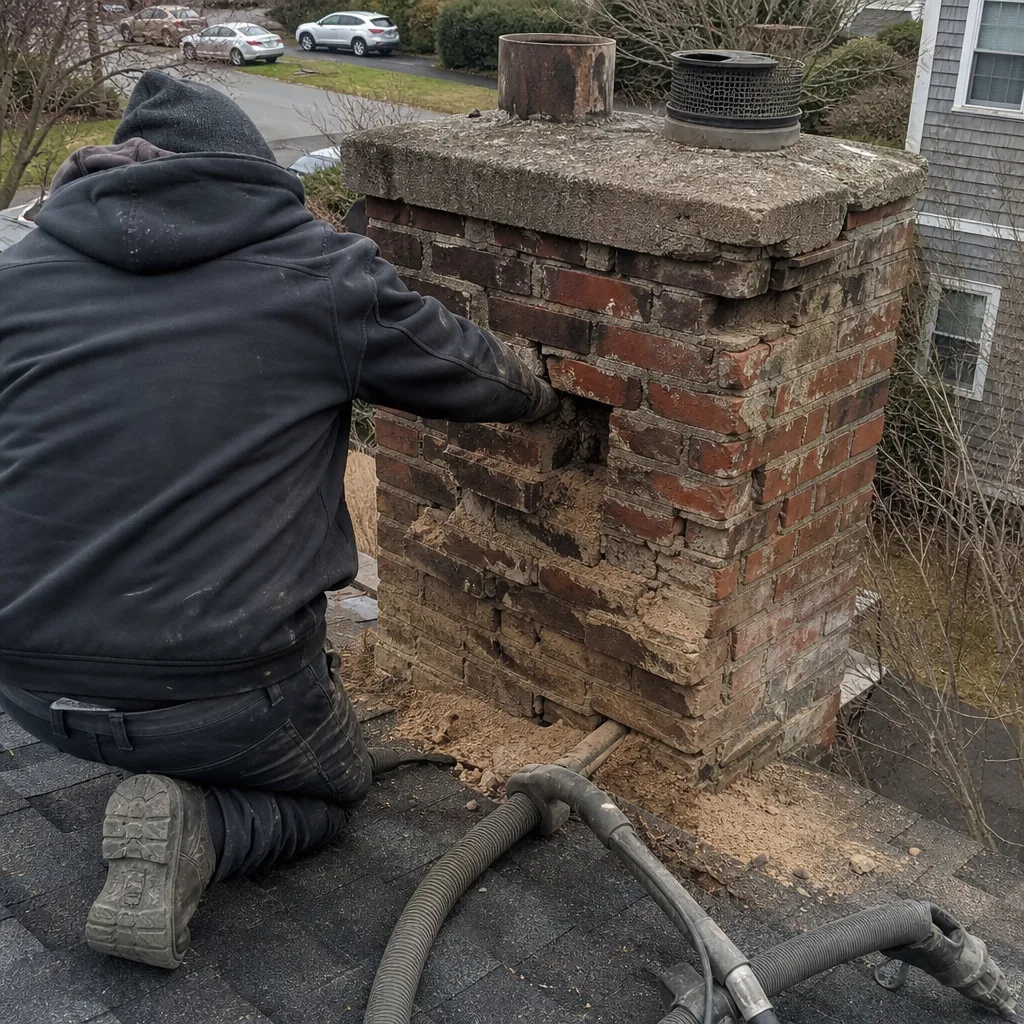 Before
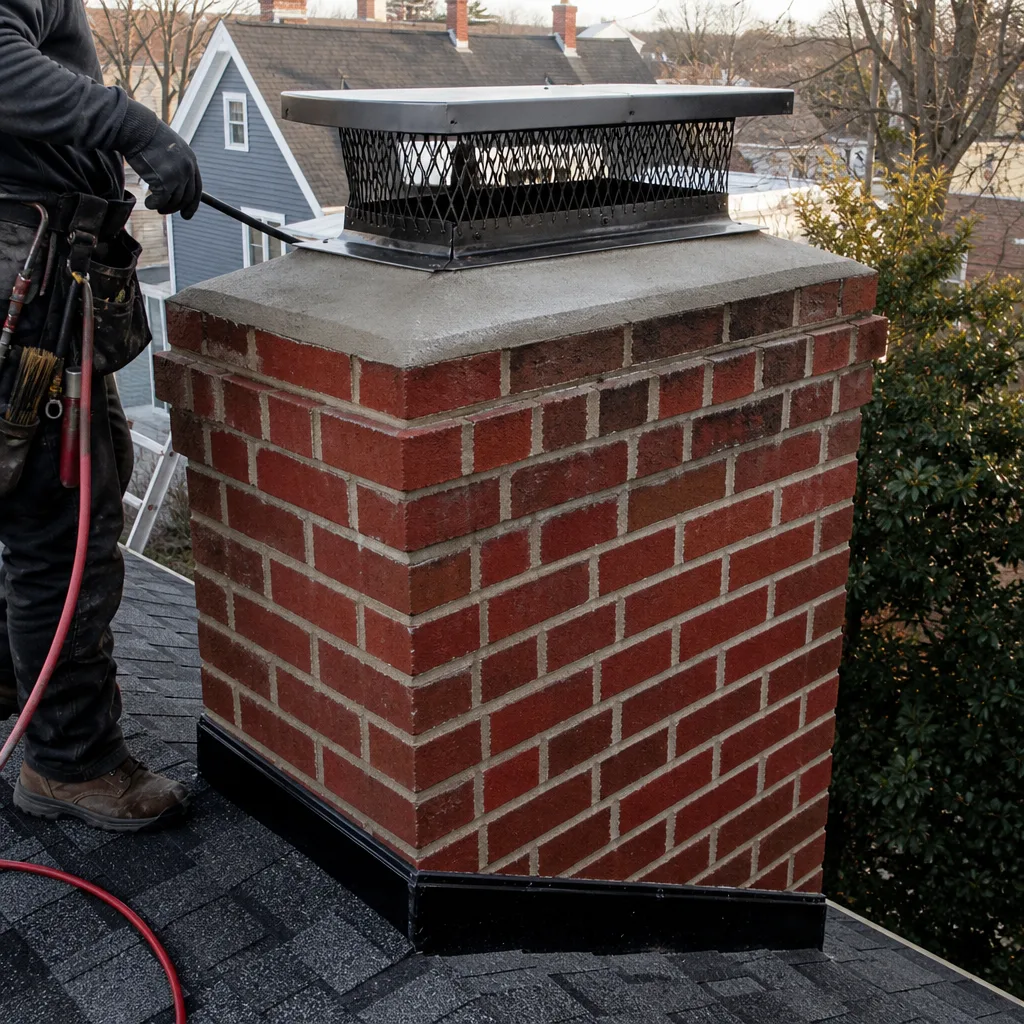 After
After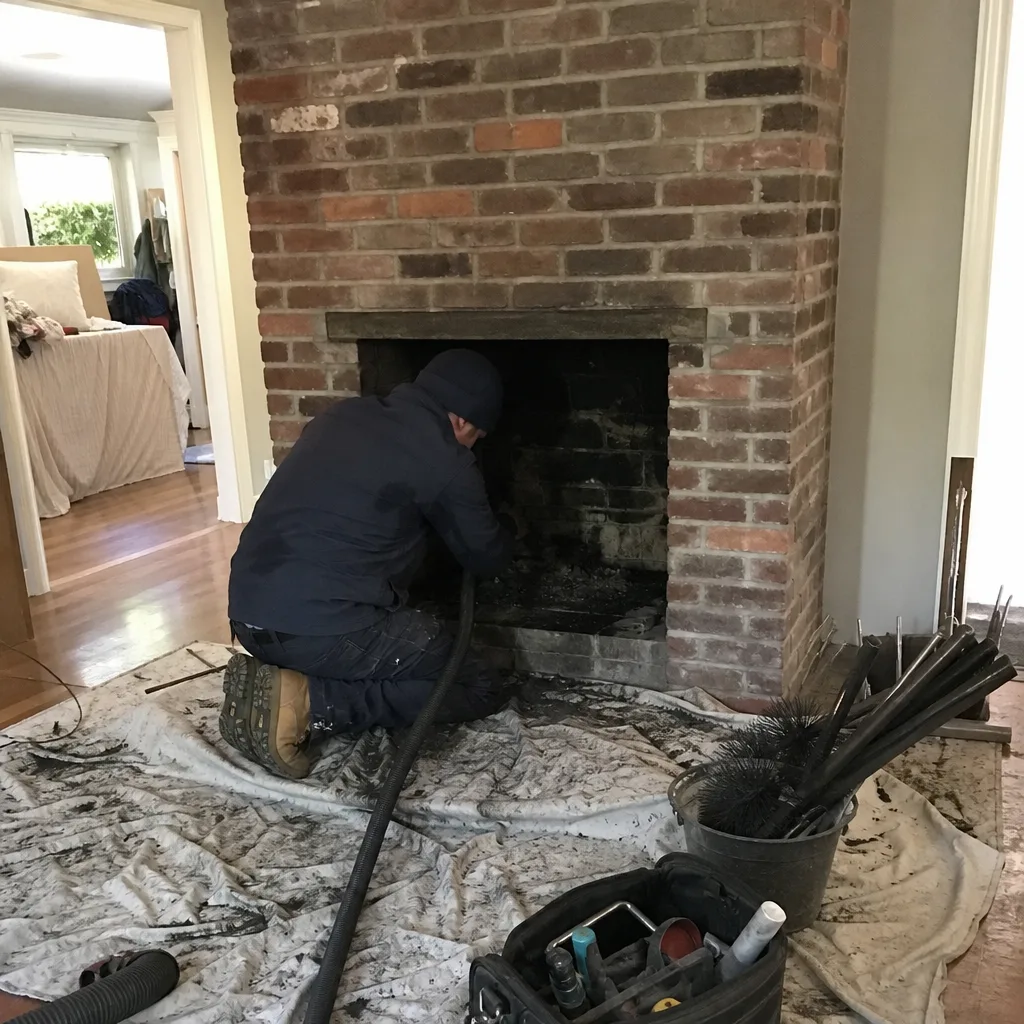 Before
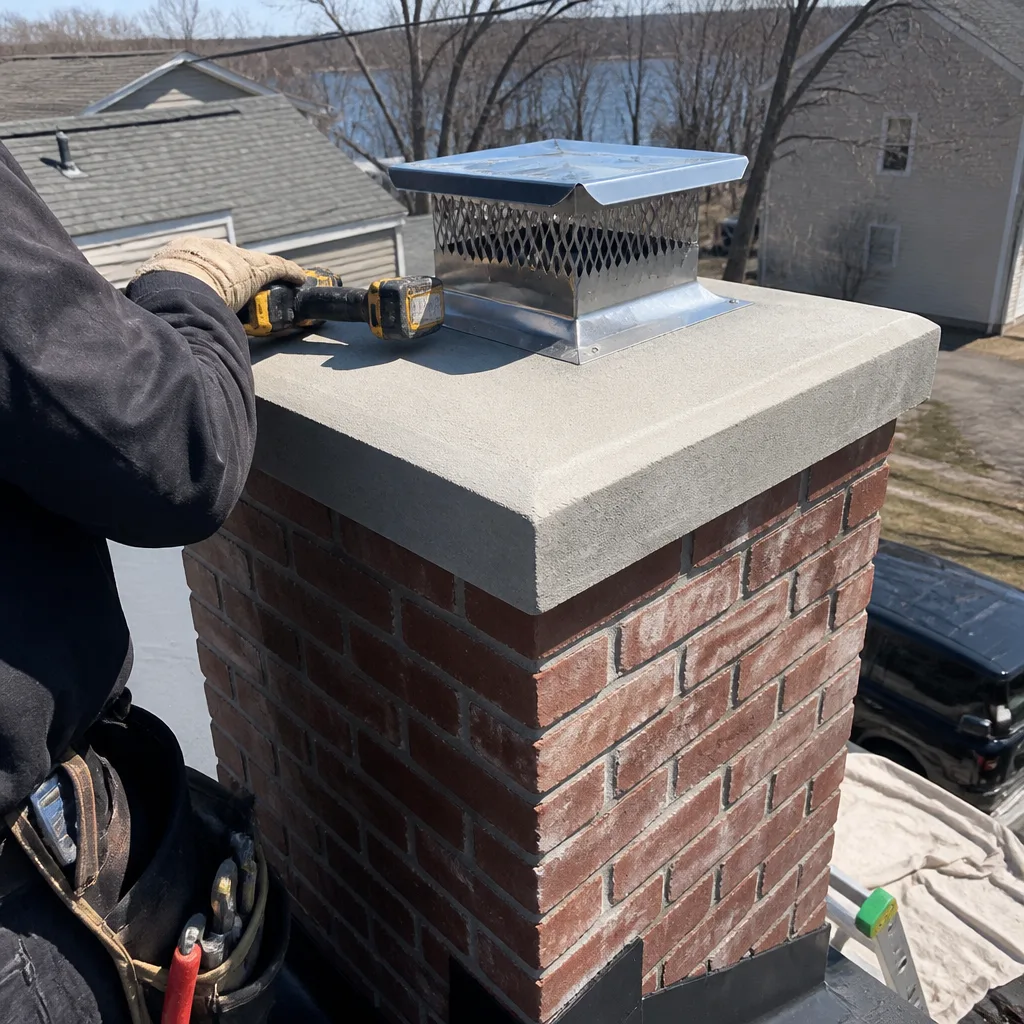 After
After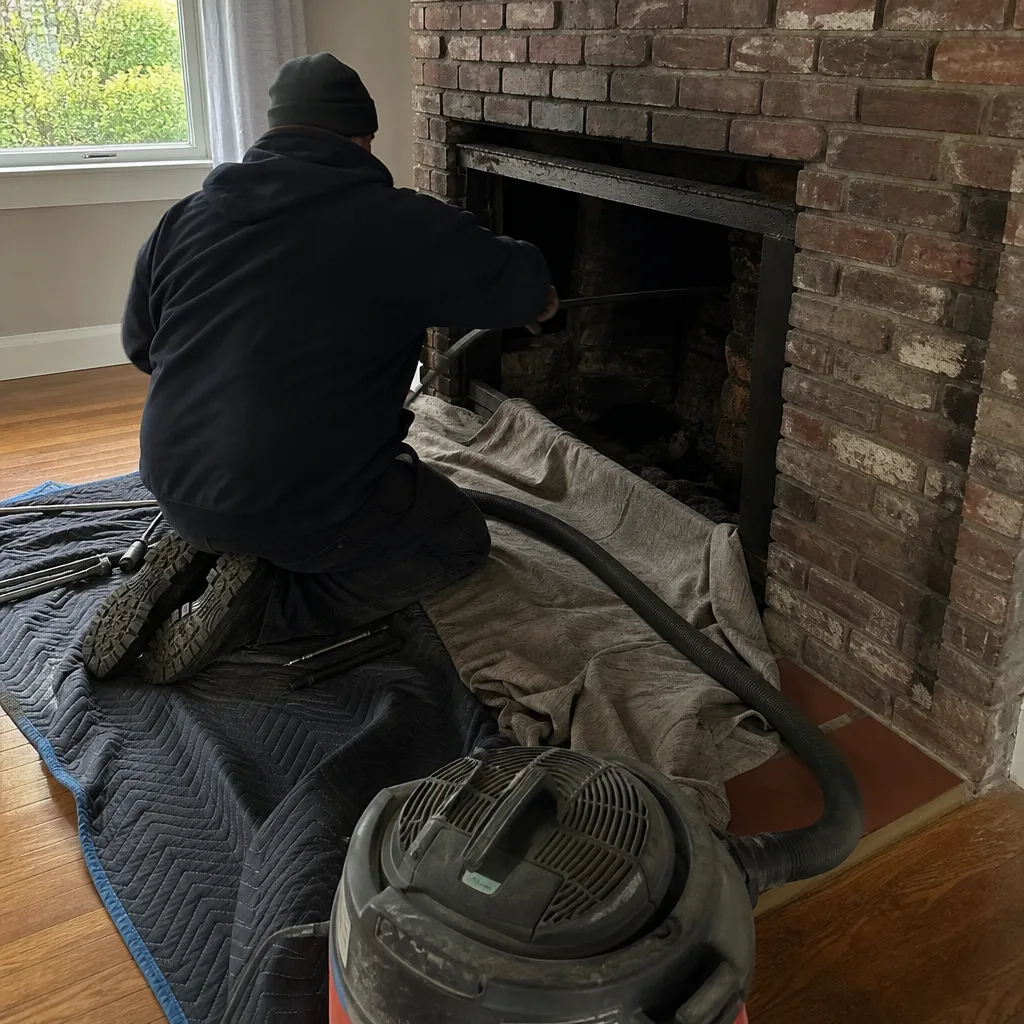 Before
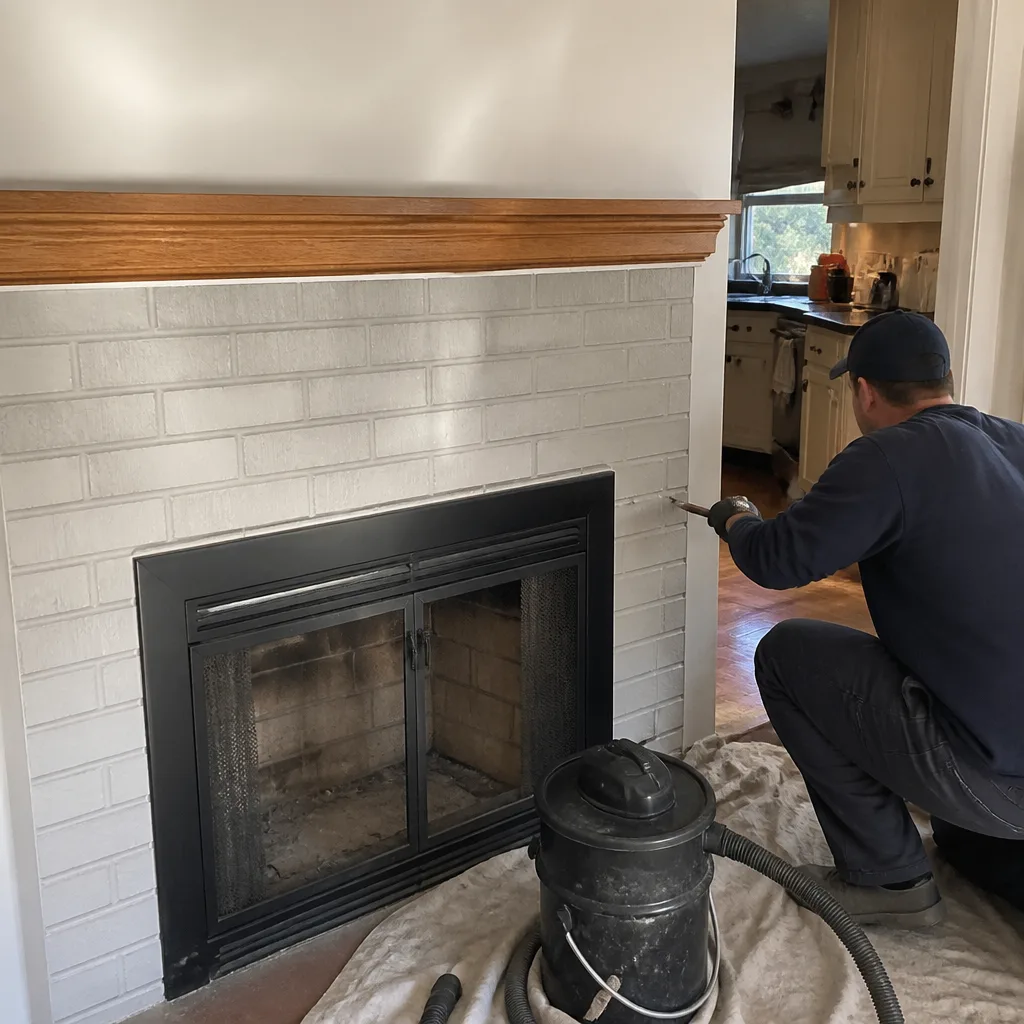 After
AfterChimney Cleaning Warning Signs: A Boston Homeowner’s Reference Guide
A white, chalky stain blooming across the face of a chimney looks like something you’d fix with a wire brush and a gallon of masonry paint. In Boston, homeowners paint over efflorescence every spring. But that stain is not a surface blemish. It is water moving through the masonry from the inside out, and water moving through a chimney means the flue liner, the barrier between combustion and combustibles, may already be compromised. This guide walks through every observable warning sign a Boston homeowner can catch, what each one indicates mechanically, how urgent it actually is, and what it costs to address before the burning season.
Quick Answer
The chimney warning signs that matter most in Boston are: visible efflorescence or staining on the exterior masonry, a fireplace smell that appears in humid weather or when the house is closed up, smoke spilling into the room instead of drafting up, debris falling into the firebox, and rust or water streaks on the damper or firebox walls. Any one of these warrants a Level 2 camera inspection. A sweep costs $229 and up in Boston depending on flue condition and creosote class, and a camera-scan inspection is how you learn whether the problem is clean-and-watch or stop-use-now. For a deeper look at what that decision involves, see our DIY vs Professional Chimney Cleaning: The Boston Homeowner’s Decision Guide.
Table of Contents
- Symptom-to-Cause Table: What Each Warning Sign Actually Means
- Efflorescence: The Warning Sign Boston Paint Can’t Hide
- Nor’easter and Freeze-Thaw Damage: Boston’s Seasonal Chimney Stressors
- The Gas Chimney Problem: No Visible Sign, Real Risk
- Clean It and Watch It vs. Stop Use Immediately: How to Tell the Difference
- What a Level 2 Camera Scan Finds That a Flashlight Can’t
- Which Inspection Level Does Each Warning Sign Need?
- What It Costs to Address Each Warning Sign in Boston
- Common Mistakes to Avoid
- When to Call a Professional
- Frequently Asked Questions
- The Bottom Line
BeforeAfterSymptom-to-Cause Table: What Each Warning Sign Actually Means
Most chimney checklists stop at “notice a smell? call someone.” That is not useful. Our Complete Guide to Chimney Cleaning in Boston goes further. A smell can mean three different things depending on when it appears and what it smells like. Same with staining, same with draft problems. Here is each common warning sign, the mechanical cause behind it, and the inspection level it genuinely warrants. We built this table from what we see in Boston homes, where the housing stock runs from 1880s triple-deckers in Dorchester to 2015 builds in the Seaport, and the failure patterns differ by construction era.
| Warning Sign | What It Indicates Structurally | Inspection Level |
|---|---|---|
| Cold fireplace smell on humid days | Creosote absorbing moisture and off-gassing; or water pooling in the smoke chamber | Level 2 camera scan |
| White staining (efflorescence) on exterior brick | Water migrating through masonry, carrying soluble salts to the surface; liner may be saturated behind it | Level 2 with moisture reading |
| Smoke spilling into room on startup | Cold plug in the flue, negative pressure in the house, or a partial blockage above the damper | Level 2 camera scan immediately |
| Debris, brick chips, or mortar crumbs in firebox | Spalling firebrick or deteriorating mortar joints in the smoke chamber; possibly a damaged flue liner higher up | Level 2 camera scan |
| Rust streaks or water marks on damper or firebox walls | Failed flashing, missing chimney cap, or cracked crown allowing direct water entry | Level 2 plus exterior inspection |
| Draft that was fine last year, weak now | Creosote buildup narrowing the flue cross-section; or a dislodged flue tile creating an offset blockage | Level 2 camera scan |
Notice a pattern: nearly every warning sign ends at a Level 2 camera inspection. A flashlight look from the firebox floor cannot see the upper third of the flue liner, the smoke chamber, or the offsets where blockages form. If someone’s inspection method has not changed since 1990, the findings are equally dated.
Efflorescence: The Warning Sign Boston Paint Can’t Hide
Efflorescence is the white, powdery or crusty deposit that appears on masonry when water moves through it and evaporates, leaving dissolved salts behind. It is the most frequently misread warning sign on Boston chimneys because it photographs like a cosmetic issue and gets treated like one. It is not cosmetic. Water inside a chimney structure does three things over time: it corrodes the flue liner, it expands by roughly 9 percent when it freezes which is the mechanism that cracks crowns and spalls brick faces, and it deteriorates mortar joints from the inside. In Boston’s freeze-thaw cycle, which can run thirty-plus cycles in a single winter, that expansion pressure is relentless.
The appropriate response when you spot efflorescence is not paint. Never paint over it. Paint seals moisture inside the masonry, which accelerates spalling, the term for brick faces breaking away in sheets or chunks. The response is a Level 2 inspection that includes moisture readings taken from the flue interior and the masonry around it. On older Boston chimneys, particularly those built before 1950 in the brick row houses of the South End and Back Bay, efflorescence on an exterior wall often tracks back to a failed crown or cracked flashing, not a leak higher up.
What we look for when we see efflorescence is whether the water entry is top-down, which is a cap, crown, or flashing problem, or lateral, which is masonry absorption in a chimney that was never parged and sealed. Top-down entry tends to be a straightforward repair once the entry point is documented. Lateral absorption is more involved because it means the liner may have been wet for years and the mortar joints are compromised behind the brick face. The documentation that distinguishes them is camera footage plus moisture readings with written numbers, not an inspector’s impression.
Nor’easter and Freeze-Thaw Damage: Boston’s Seasonal Chimney Stressors
Boston chimneys take a specific set of seasonal hits that homeowners in, say, Atlanta never see. Nor’easters drive rain horizontally against the chimney chase and crown at 40 to 60 miles per hour. That wind-driven water finds entry points that vertical rain never touches. After a nor’easter passes, the temperature in Boston routinely swings from wet to below freezing within 36 hours, and any water that got into a hairline crack becomes ice that widens it. Repeat that across a full winter and a cap that was loose in October is displaced by March.
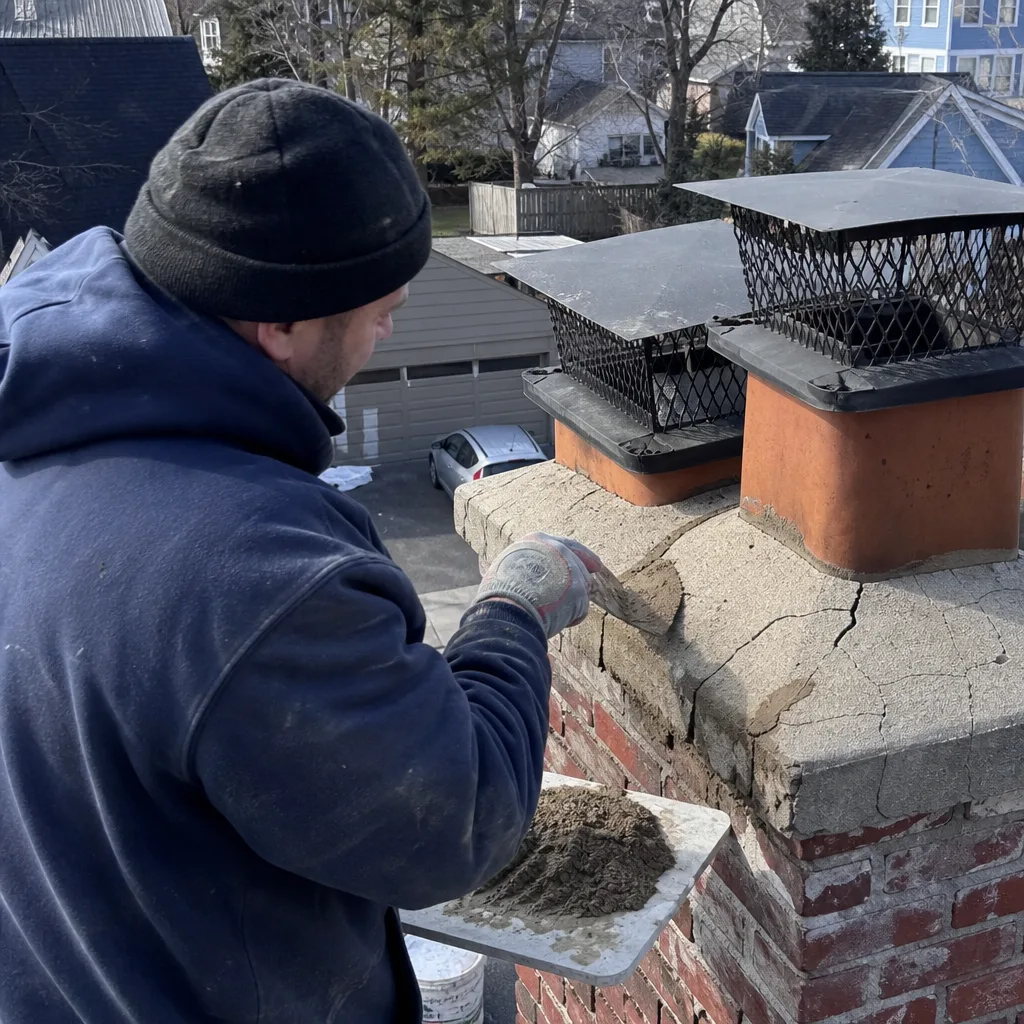
There are three post-storm checks any Boston homeowner can do from the ground without climbing anything. First, look at the flashing line where the chimney meets the roof. If you can see daylight, lifted metal, or a gap that was not there last season, that is direct water entry. Second, look at the crown, the mortar or concrete slab on top of the chimney. Cracks wider than a quarter-inch, or crown pieces missing at the edges, are freeze-thaw damage. Third, check the cap. A chimney cap that is tilted, rusted through, or sitting off-center means it is no longer doing its job, which is keeping rain, snow, and spark arrest from entering the flue.
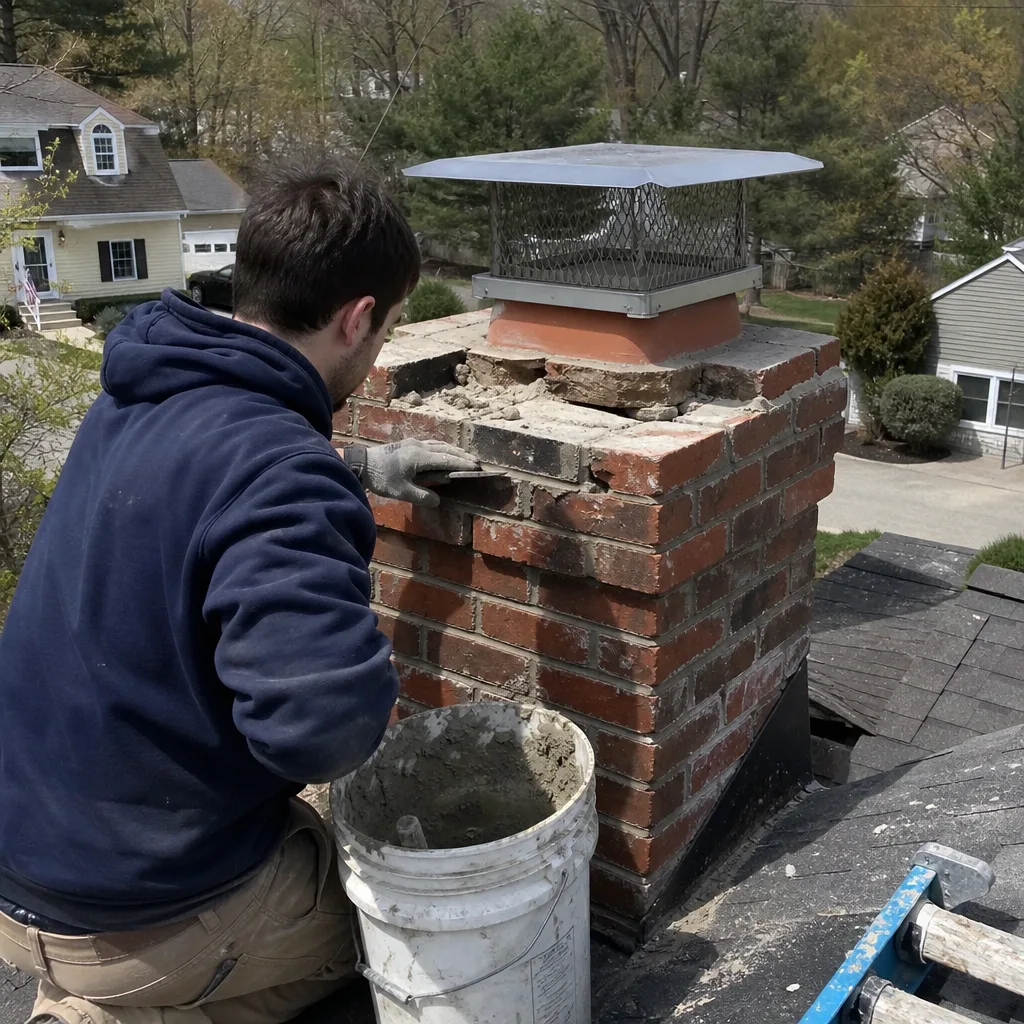
Flashing repair on a Boston chimney runs $350 to $850 on a typical single-story roofline, more for steep-pitch roofs in neighborhoods like Roslindale or West Roxbury where access adds labor time. Crown repair or full recasting runs $450 to $1,200 depending on whether we are patching cracks or removing and rebuilding the crown. A replacement stainless cap from Olympia Chimney or Copperfield runs $280 to $650 installed. None of these should be deferred through a second Boston winter if you plan to use the fireplace.
The Gas Chimney Problem: No Visible Sign, Real Risk
Here is the warning sign most guides miss completely: a gas fireplace or gas furnace venting into a chimney can show no visible warning at all while still venting combustion gases into living space. No creosote odor, no smoke, no debris. Carbon monoxide is odorless, and the gases moving through a gas flue are lower temperature than wood exhaust, which creates a condensation cycle that degrades terracotta liners in a different failure mode than wood burning does. The liner cracks not from heat shock but from acidic condensate eating the mortar joints from inside.
In Boston, gas conversion fireplaces are common in older homes where a coal or wood chimney was repurposed for a gas insert or gas log set. Those chimneys were sized for coal or wood draft volume, not gas. When a gas appliance vents into an oversized flue, the exhaust cools too quickly on the way up, condenses, and the resulting acidic moisture sits in the liner. Over years, that degrades the liner from the inside without ever producing a visible sign on the firebox or exterior masonry.
Monitoring that detects this is specific and non-negotiable: carbon monoxide detectors on every floor, including the room with the gas appliance, with digital readouts if possible, and battery backups in case of a power-outage season. CO detectors are not a substitute for inspection; they are the last line of defense. The inspection method that actually detects liner degradation before it becomes a CO event is a Level 2 camera scan with the liner joints inspected on the full footage, not just a live view. Live view misses joint separation in the upper flue because the camera moves too quickly on the way up. We record the full descent and review it frame by frame. Clause 4 of the Haven Standard has required a documented photo record on every job since 2009, which is how we know a liner condition from three years ago versus today.
Clean It and Watch It vs. Stop Use Immediately: How to Tell the Difference
Nobody wants to be told a chimney needs thousands of dollars of work. This is the single biggest hesitation Boston homeowners bring to the phone call: the fear that a sweep company will manufacture a liner replacement scare. Our answer to that is documentation. We do not recommend anything without camera evidence the homeowner can see. And the truth is, many findings are genuinely clean-it-and-watch-it. The distinction between categories is specific and defensible.
A clean-it-and-watch-it finding is documented, measured, and has a clear threshold. For example: Class II creosote buildup at 1/8 inch thickness on a liner that is otherwise intact with no joint separation visible on camera. The appropriate response is a sweep, a camera re-scan after the sweep, and a re-evaluation next season. We will tell you that in writing. A stop-use-immediately finding is structural, not scenic: a flue liner with a visible crack extending through a full tile segment, liner joint separation that leaves a gap in the flue wall, a blockage that reduces the flue cross-section by more than 50 percent, or a smoke chamber with collapsed parging that is dumping debris into the firebox.
The documentation that distinguishes these two categories is camera footage with timestamps and a written report that names the specific flue segment, the measurement, and the threshold. “We found X at Y location, which means Z” is a document. “Chimney needs work” is not. When we issue a stop-use recommendation, we are prepared to show you the frame from the camera scan and explain exactly what you are looking at. If someone cannot show you the evidence, you are being asked to take a finding on faith, and you should not.
What a Level 2 Camera Scan Finds That a Flashlight Can’t
The flashlight inspection, mirror, and “looks good from here” pass has been the industry baseline in Boston for a long time. It is also the reason so many chimney problems get discovered late. A flashlight from the firebox floor reaches maybe three feet up a flue before the beam scatters. It sees the smoke shelf and the bottom of the first flue tile. It does not see the upper two-thirds of the flue, any offset where the flue changes direction, or the smoke chamber walls behind the damper.
Two specific findings that consistently appear on Level 2 camera scans and never appear on a flashlight check are flue liner joint separation and offset blockages. Joint separation happens when the flue liner tiles shift, usually from freeze-thaw movement of the chimney structure or from water damage to the mortar between tiles. The result is a gap in the flue wall, which means combustion gases can exit the flue into the void between the liner and the masonry, and that void connects to the house. Offset blockages happen where the flue changes direction, typically just above the smoke chamber in older Boston chimneys. Creosote and debris collect at the offset because it is a horizontal surface in a vertical pipe, and a partial blockage there narrows the draft path silently.
Both findings are fully documented on a camera scan. We can show you the frame. We have done this for more than 38,000 chimneys since 2009, and the photo archive is not a marketing artifact, it is a service record. Clause 4 of the Haven Standard requires it on every visit, whether it is a $229 sweep in Quincy or a full liner replacement in Brookline.
Which Inspection Level Does Each Warning Sign Need?
The National Fire Protection Association’s NFPA 211 standard defines three inspection levels. The Level 1 inspection is a visual check of the accessible parts of the chimney and fireplace, no tools, no camera, appropriate when the chimney is in continuous service and nothing has changed. The Level 2 inspection is a camera scan of the full flue interior plus the accessible exterior, and it is required by NFPA 211 whenever the house is being sold, whenever a change is made to the appliance or the flue, and after any event that could have damaged the chimney: a chimney fire, a nor’easter, a lightning strike, an earthquake. The Level 3 inspection involves opening concealed areas, removing building components, and is reserved for cases where a Level 2 scan indicates a serious structural problem that needs invasive access to assess.
Here is the practical Boston mapping:
- Buying a house in Boston? A Level 2 is not a nice-to-have. It is what NFPA 211 requires at property transfer, and a surprising number of home inspectors do a visual check and call it done. Ask for camera footage, not a checkbox.
- Smoke smell, odor, or draft change? Level 2. A smell means something changed inside the flue, and the only way to see what changed is a camera.
- Visible efflorescence, rust, or water staining? Level 2 plus specific water-entry investigation. Moisture readings and exterior inspection together.
- Routine yearly sweep with no changes? Level 1 inspection plus sweep. That is the standard.
- Gas appliance venting into the chimney, no visible symptoms? Level 2 camera scan of the liner, even if the gas appliance has been running fine. The degradation mode is invisible until it is not.
The cost difference between a Level 1 and Level 2 is real but modest in the context of what each one sees. A Chimney Cleaning & Sweep in Boston with a Level 1 check runs $229 and up. A Level 2 camera inspection runs $289 and up. The camera sees the upper flue, the offsets, the joint conditions. The difference between those two inspections is the difference between finding a cracked liner in March and discovering it in December when you are lighting the first fire.
What It Costs to Address Each Warning Sign in Boston
Here are the current prices for the most common remediation work we perform in Boston, written the way we quote them, which is a flat price before work starts, not an estimate that becomes a surprise:
- Chimney sweep with Level 1 inspection: $229 to $329 depending on flue height and creosote class.
- Level 2 camera inspection with documented photo record: $289 to $389.
- Chimney cap replacement: $280 to $650 installed, depending on cap size and flue count. We source caps from Olympia Chimney and Copperfield.
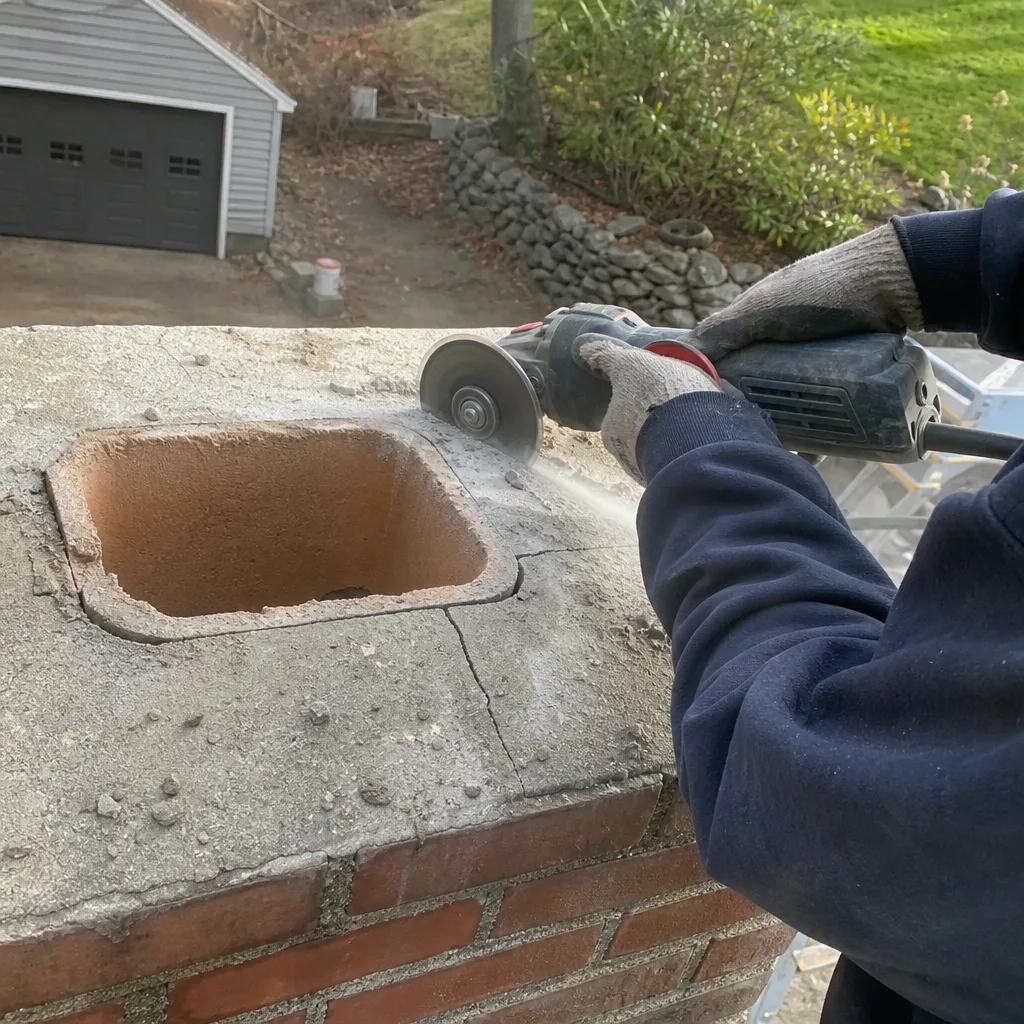
- Crown repair or recast: $450 to $1,200 depending on whether we are sealing cracks or rebuilding from scratch.
- Flashing repair or replacement: $350 to $850 on a standard Boston roofline; higher for steep-pitch or multi-story access.
- Flue liner repair using HeatShield resurfacing: $1,800 to $3,500 depending on flue length and damage extent.
- Full stainless liner installation: $3,200 to $7,500 depending on chimney height, access, and whether the smoke chamber needs parging. Liners are sourced from DuraFlex and Famco.
- Complete chimney rebuild from the roofline up: $12,000 to $30,000 depending on height, brick matching, and scaffold requirements.
These are real numbers from real Boston jobs, not national averages from someone who has never scaffolded a three-story brick chimney in a Back Bay alley. Prices on liner work vary with the condition of the existing structure: an older chimney with uniform, sound masonry but a failed liner is a straightforward reline. A chimney where the freeze-thaw damage has spalled the brick faces and degraded the mortar joints is a rebuild candidate, not a reline candidate, and the two paths cost very differently.
We write the price before work starts, in writing, with a written scope and a written warranty, on every job. That is Clause 1 of the Haven Standard: H.A.V.E.N., Have it in writing. You do not get a verbal number that becomes a surprise invoice. You get the number, the scope, and the warranty in a document before anything begins.
Common Mistakes to Avoid
- Painting over efflorescence. Masonry paint seals moisture in and accelerates spalling. The stain is a diagnostic, not a blemish. Leave it visible until the water source is found and fixed.
- Skipping the camera scan because the chimney “looks fine from the ground.” Boston flue liners fail from the inside. The exterior can look pristine while the liner has a gap at joint three. Ground-level sight lines tell you nothing about the flue interior.
- Hiring a sweep based on the lowest phone quote without a written scope. A cheap sweep that ends with “you also need a liner, trust me” is not cheap. A written scope written before work starts is the only protection against the add-on surprise.
- Waiting until October to book in Boston. Every sweep company in the metro is overbooked from October through December. A March or April sweep is the same service without the scheduling crunch, and it gives you the full summer to address any findings before burning season.
- Using a gas fireplace without annual CO detector testing. The carbon monoxide detector is the only sensor between you and a degraded gas flue. Test it monthly, replace it per the manufacturer’s lifespan, and never silence it without investigating.
- Ignoring a damp smell in spring because “it goes away in winter.” A smell that appears when the humidity rises means moisture is already inside the flue. It does not go away; it gets worse while you are not using the chimney, which is exactly when the damage compounds.
- Assuming the home inspector’s “chimney okay” note means the chimney is actually okay. Home inspection standards call for a visual check. A visual check cannot see a liner crack. Insist on a Level 2 if you are buying in Boston.
When to Call a Professional
Call a professional when any of these are true: you see efflorescence that keeps returning or expanding, your fireplace develops a smell that was not there before, smoke spills into the room during startup or wind events, debris falls into the firebox, the draft feels weaker than last season, or your gas appliance chimney has not had a camera inspection in more than three years. Not sure who to trust? Read How to Hire a Chimney Cleaning Contractor in Boston: A Step-by-Step Guide. You should also call before you paint over any chimney stain, after any storm that drove wind-driven rain against the chimney, and before you buy any house in Boston. Level Two Chimney Boston offers free estimates in Boston. Call (857) 567-8887 and a live person answers.
Frequently Asked Questions
A chimney sweep in Boston typically costs $229 to $329 depending on flue height, creosote class, and access difficulty. That includes a Level 1 inspection and a written record of the work. Level 2 camera inspections run $289 to $389. If a company cannot give you a fixed price over the phone before scheduling, that is a flag. Call (857) 567-8887 for an exact written quote.
NFPA 211 says chimneys should be swept when soot and creosote accumulation reaches 1/8 inch, and the practical translation in Boston is once per burning season for a wood-burning fireplace used regularly. Seasonal use patterns matter: a fireplace used two nights a week from November to March will accumulate enough creosote to warrant an annual sweep. A gas appliance flue should be inspected annually even though it does not produce creosote, because the condensation degradation happens regardless.
Creosote accumulates in layers on the flue liner walls. When the creosote layer reaches a flammable thickness, Class II or Class III, a hot fire or a chimney fire can ignite it. A chimney fire can exceed 2,000 degrees Fahrenheit inside the flue, which is the temperature at which terracotta liners crack and mortar joints fail. Once the liner is cracked, combustion gases can enter the wall cavities and living space. Skipping one season is usually fine. Skipping three seasons on a heavily used fireplace is how chimney fires begin.
You need a new liner if the camera scan shows a crack extending through a full tile segment, joint separation that leaves a gap in the flue wall, or spalling that reduces the liner’s structural integrity. You should be shown the camera frame before anyone asks you to pay for a liner. If someone recommends a liner replacement without camera evidence, get a second opinion. We offer a free second opinion on any written estimate, no camera charge for the review. Call (857) 567-8887 and bring us the written quote.
Humidity activates the creosote and soot deposits inside the flue and smoke chamber, releasing an odor that travels down the chimney and into the house. The smell is worse in Boston’s summer humidity because the moisture content in the air is high enough to penetrate the flue deposits. The fix is a sweep to remove the odor source, and if the smell returns quickly after a sweep, the likely cause is water intrusion into the chimney structure, which needs a Level 2 inspection to locate.
Read the three-star reviews. They tell you more than the five-stars. A three-star review usually includes a specific detail about what went wrong, and a company’s response, if it exists, tells you how they handle the problem. Then ask the company directly: do you write the price before work starts, do you do a camera scan on a Level 2, and do you give me the photo record after the job? We answer yes to all three, and Level Two Chimney Boston home has the documentation to prove it.
Massachusetts law does not mandate a chimney-specific inspection at property transfer, but NFPA 211 requires a Level 2 inspection whenever a property changes hands. Sellers and agents do not always volunteer this. If you are buying in Boston, ask for the camera footage, not a home inspector’s checkbox. A Level 2 camera scan costs under $400 and catches liner joint separation and offset blockages before they become your problem. Read more about what a full Fireplace Services in Boston inspection includes before you close.
The Bottom Line
The warning signs that matter in a Boston chimney are observable and specific: efflorescence, odor that appears with humidity, smoke spillage, debris in the firebox, rust on the damper, and draft changes. Each one maps to a structural cause, and nearly every cause is only visible on a Level 2 camera scan, not a flashlight look. Gas chimneys break the visible-sign rule entirely, which is why CO detectors are non-negotiable and camera documentation is the only true monitor. The action that protects you from both real hazards and industry scare-selling is the same: demand camera evidence, demand a written price before work starts, and demand a written record when the job is done. For more guides & resources on keeping your Boston chimney safe, visit our blog. Level Two Chimney Boston has done exactly that on 38,000+ chimneys since 2009. When you are ready, call (857) 567-8887 and we will put a time on the calendar.
Written by Corrine Halstead, Owner at Level Two Chimney Boston, serving Boston since 2009.