
Last updated September 20, 2026
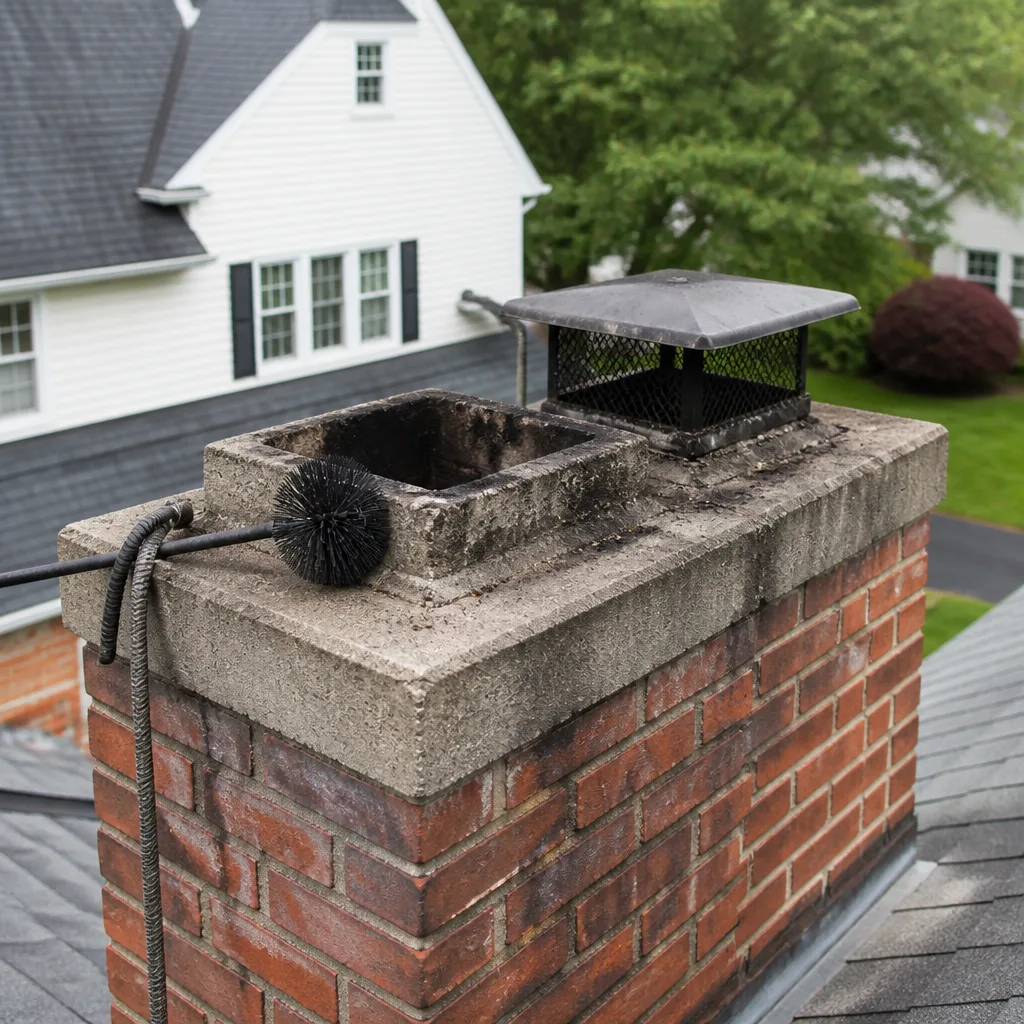
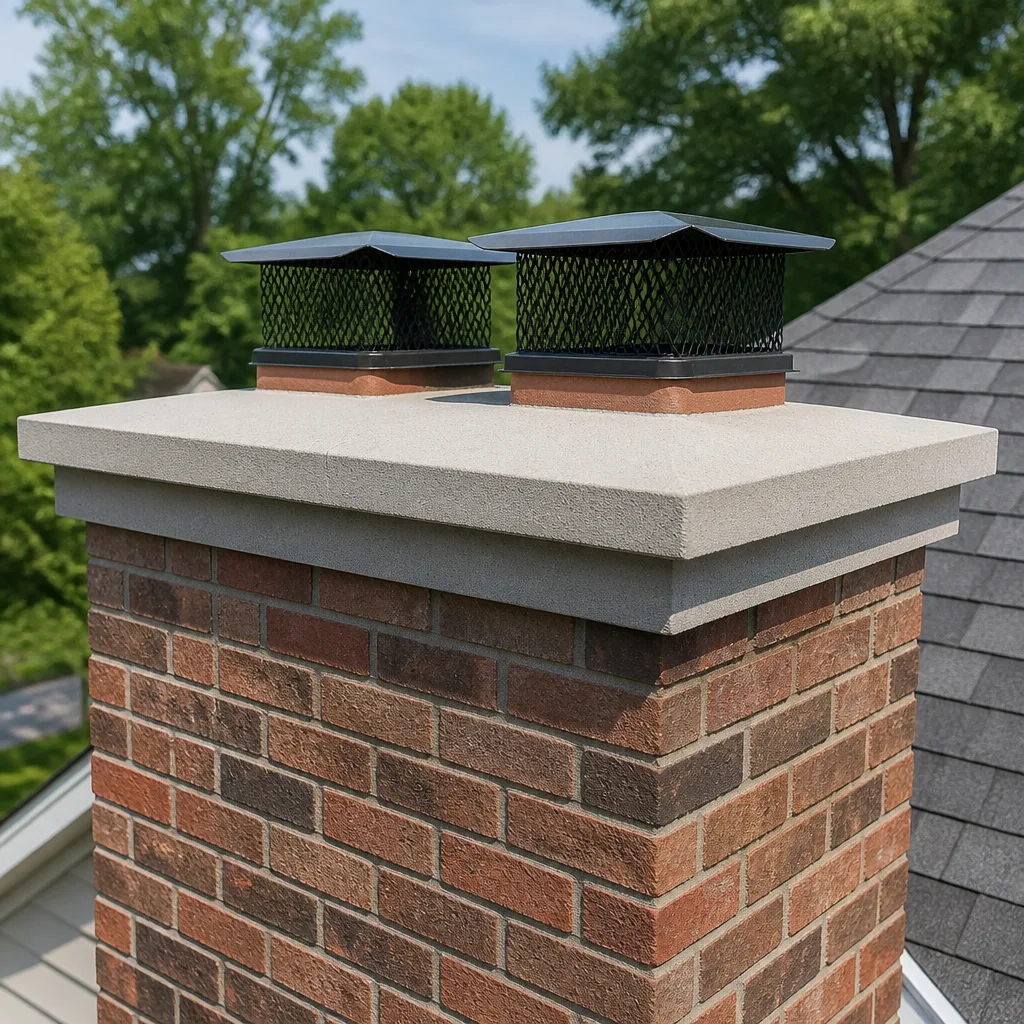
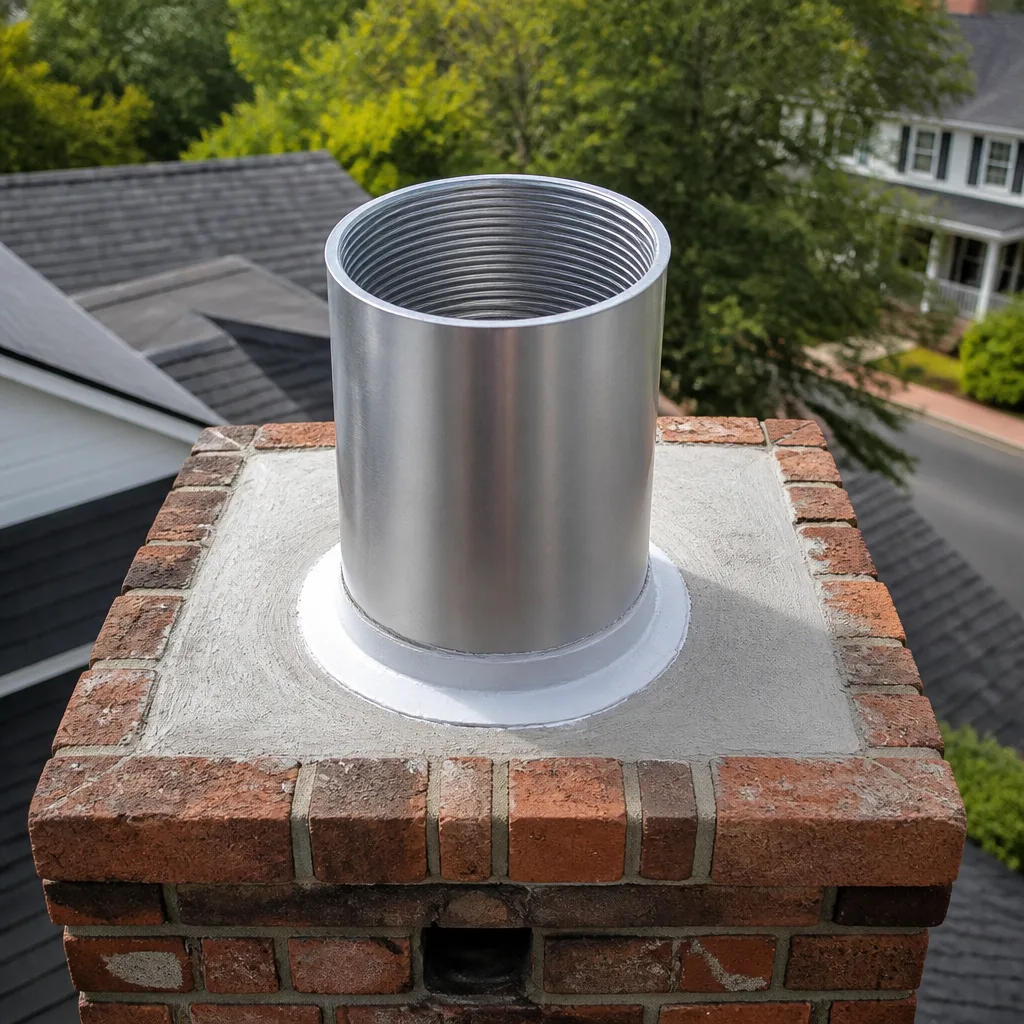
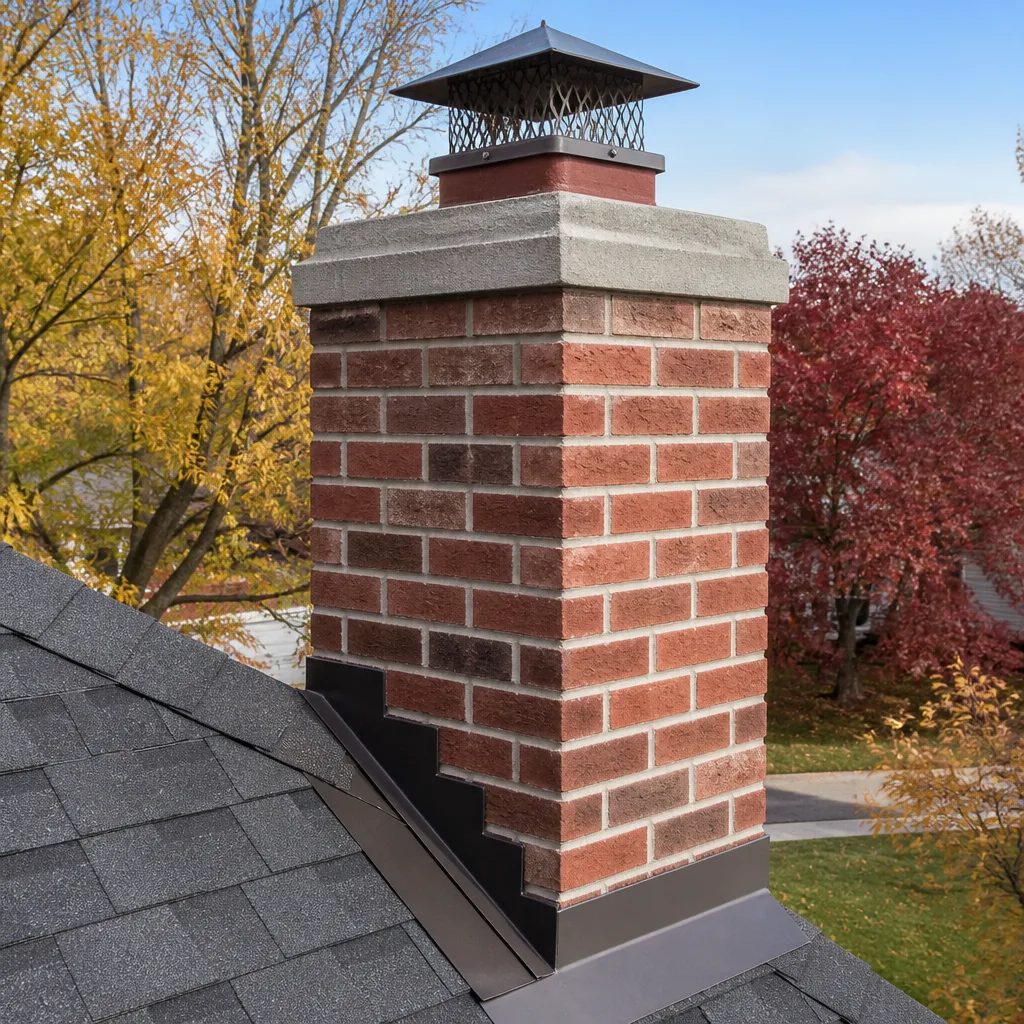
Level 1 sweep and inspection to the NFPA 211 annual standard - flue, crown, cap, and flashing checked and photographed
Chimney sweep logs do not sweep chimneys. They loosen some creosote - which then falls where a brush and vacuum still have to collect it.
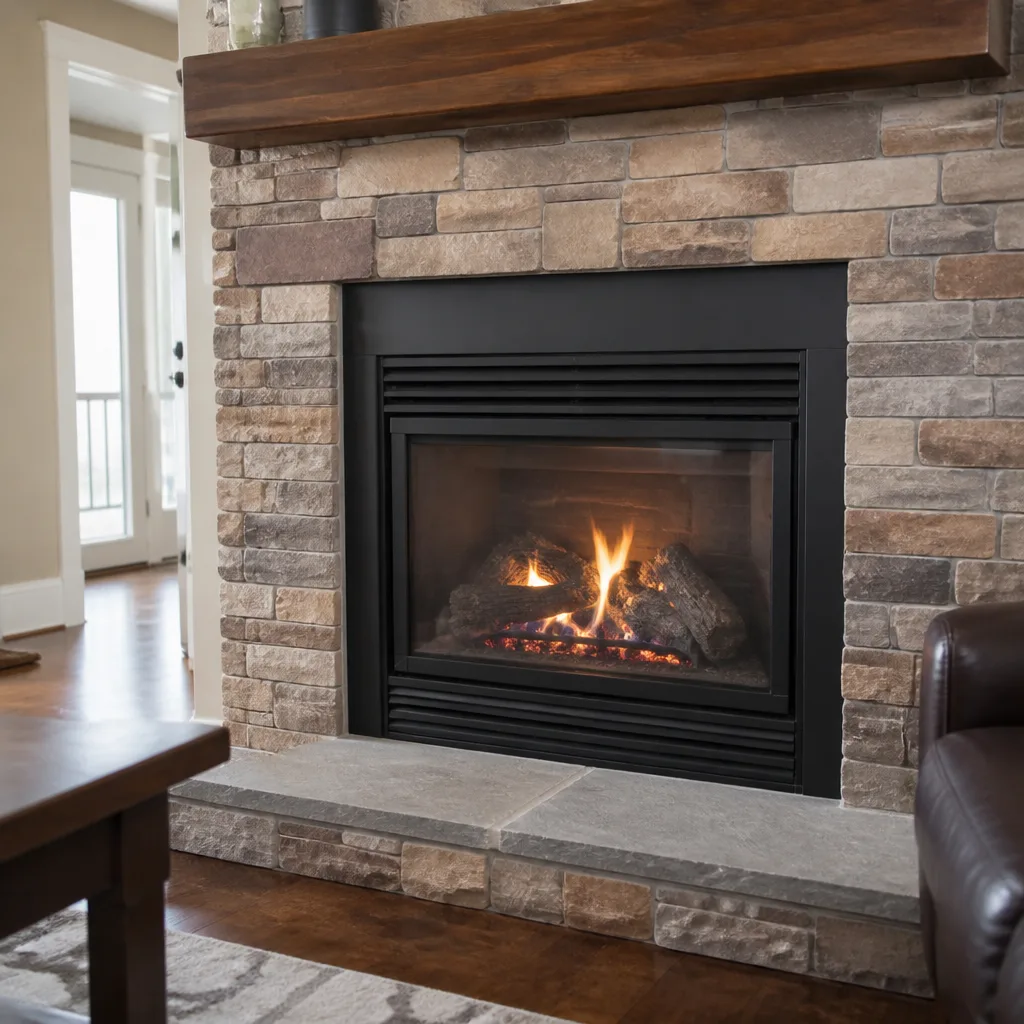
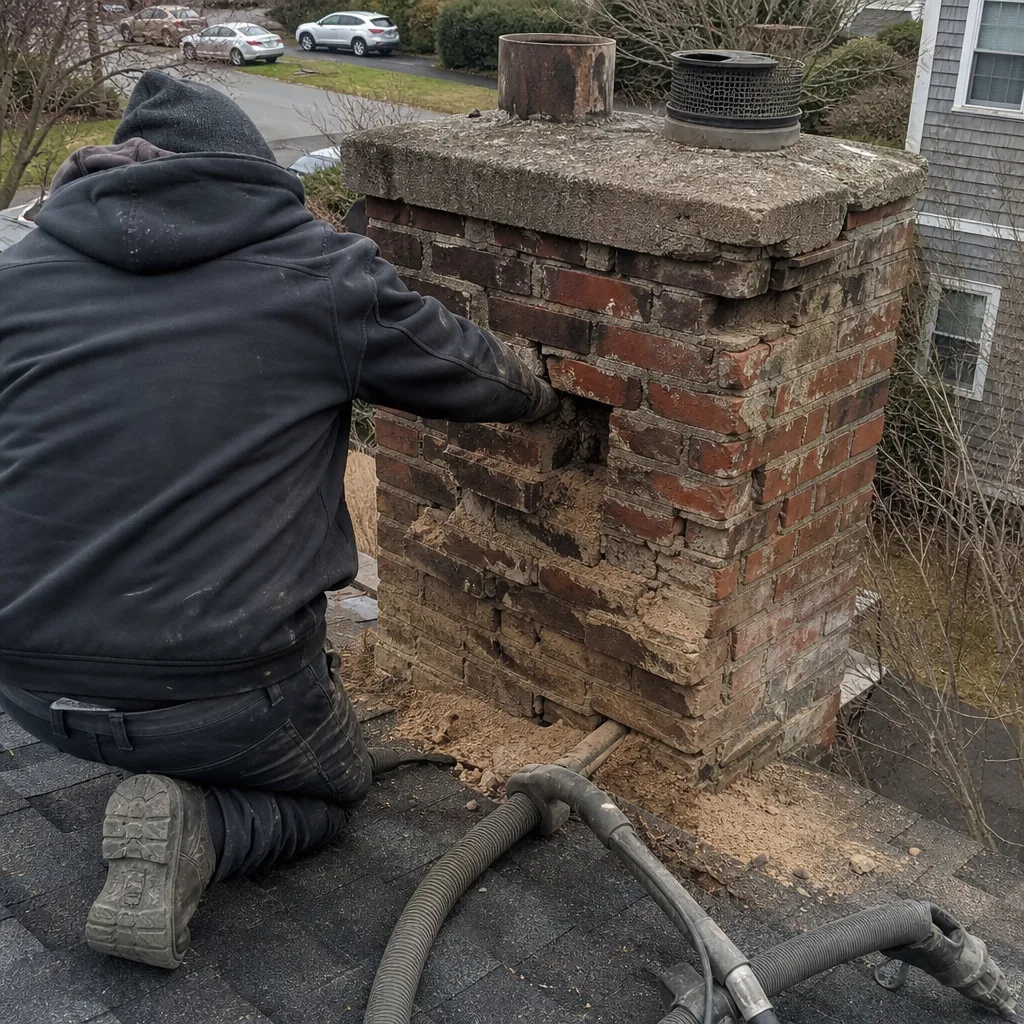 Before
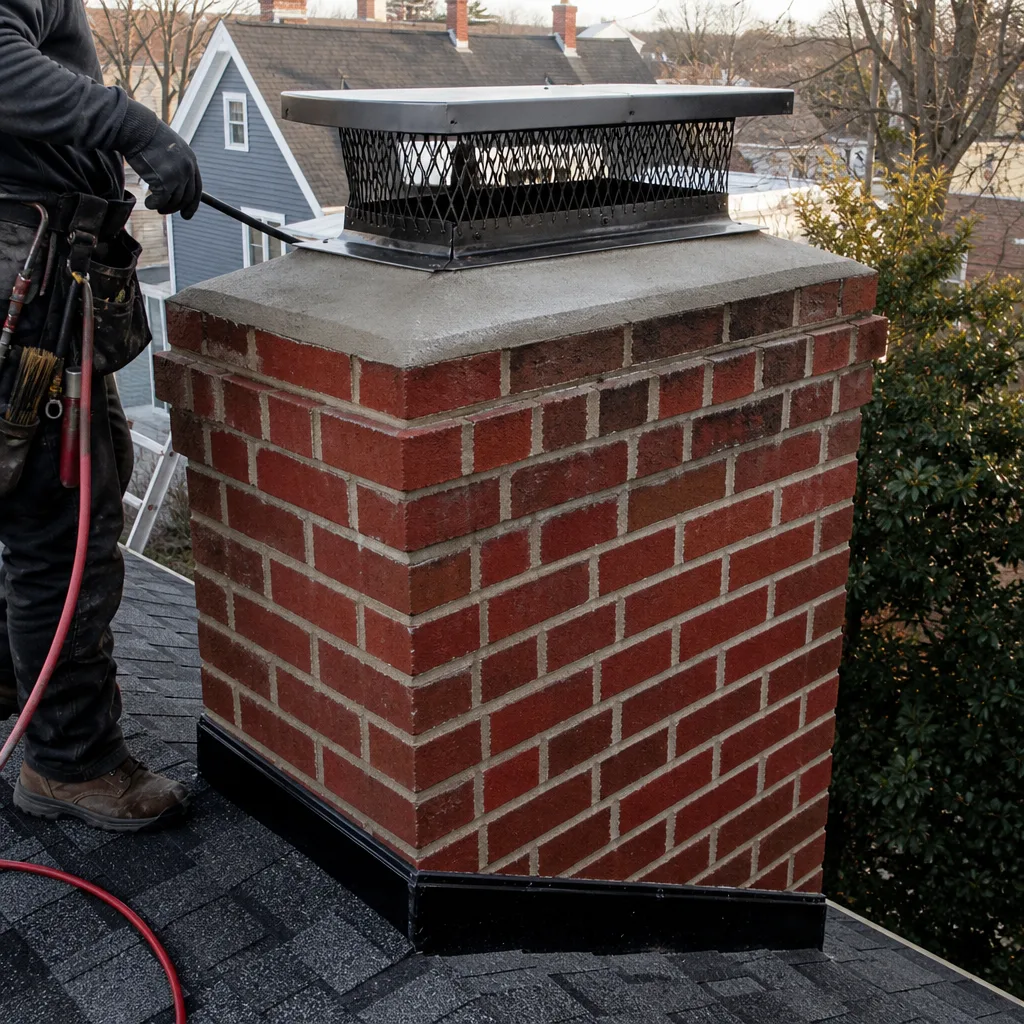 After
After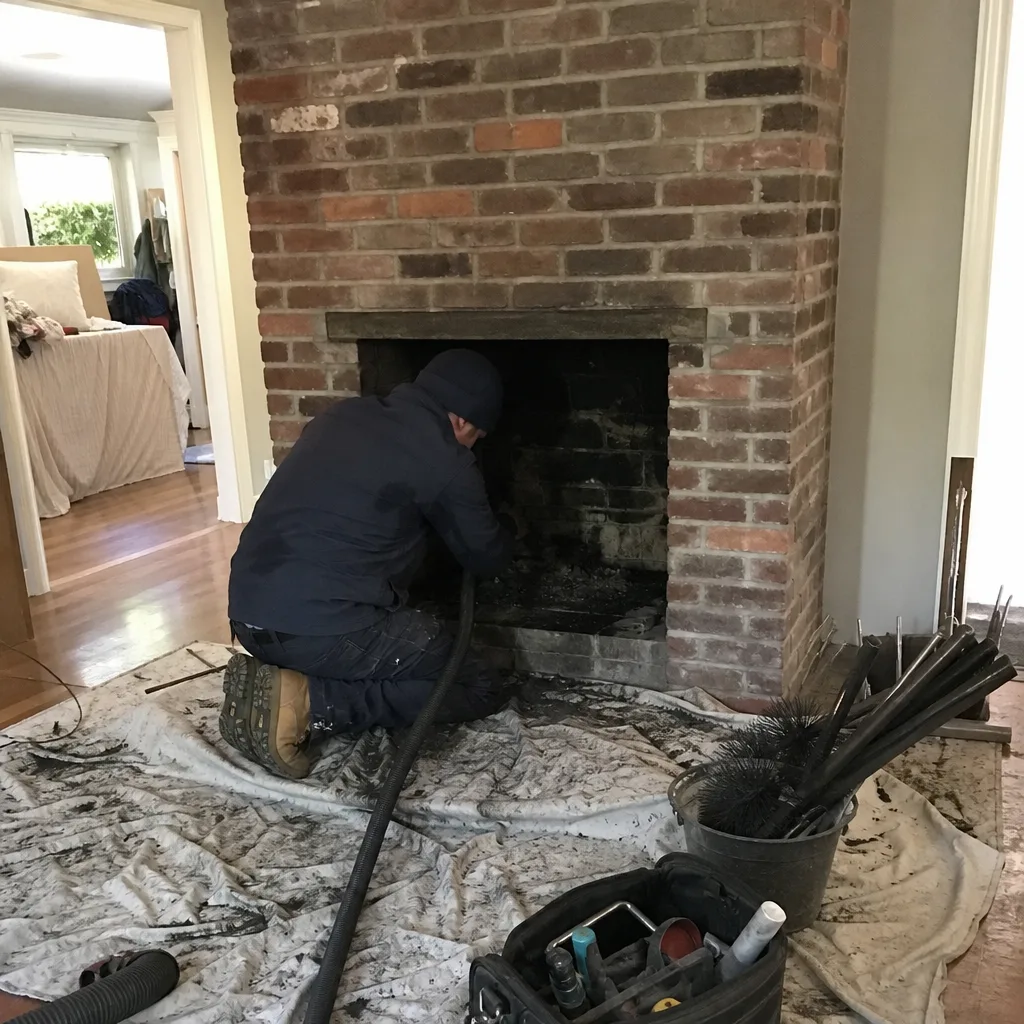 Before
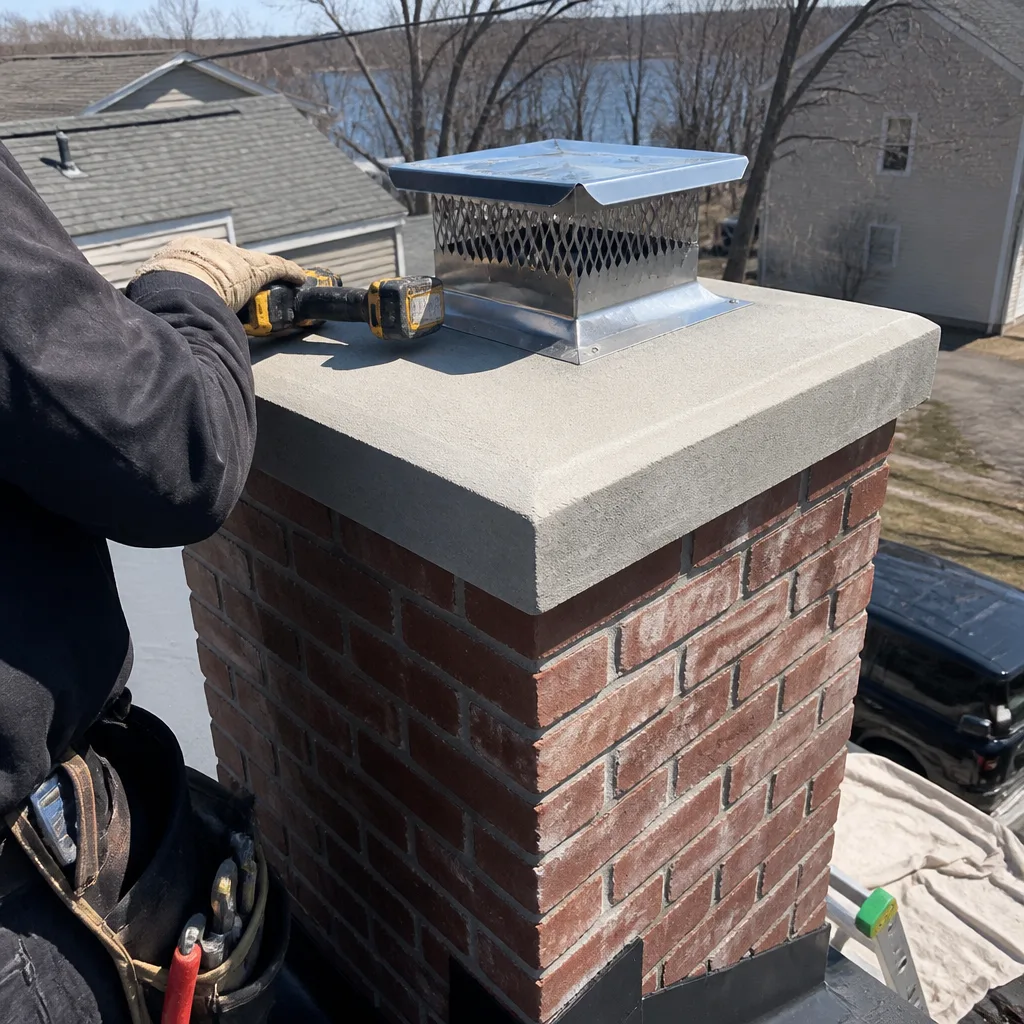 After
After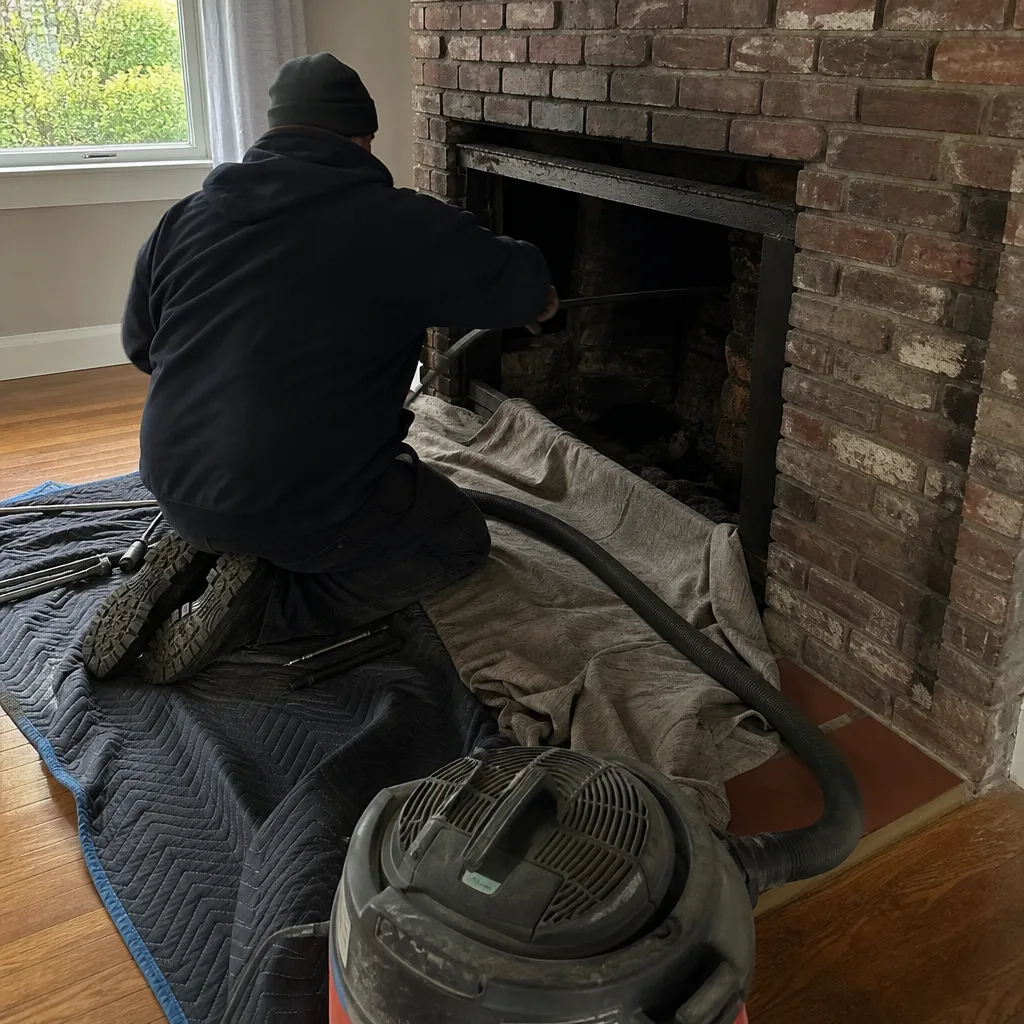 Before
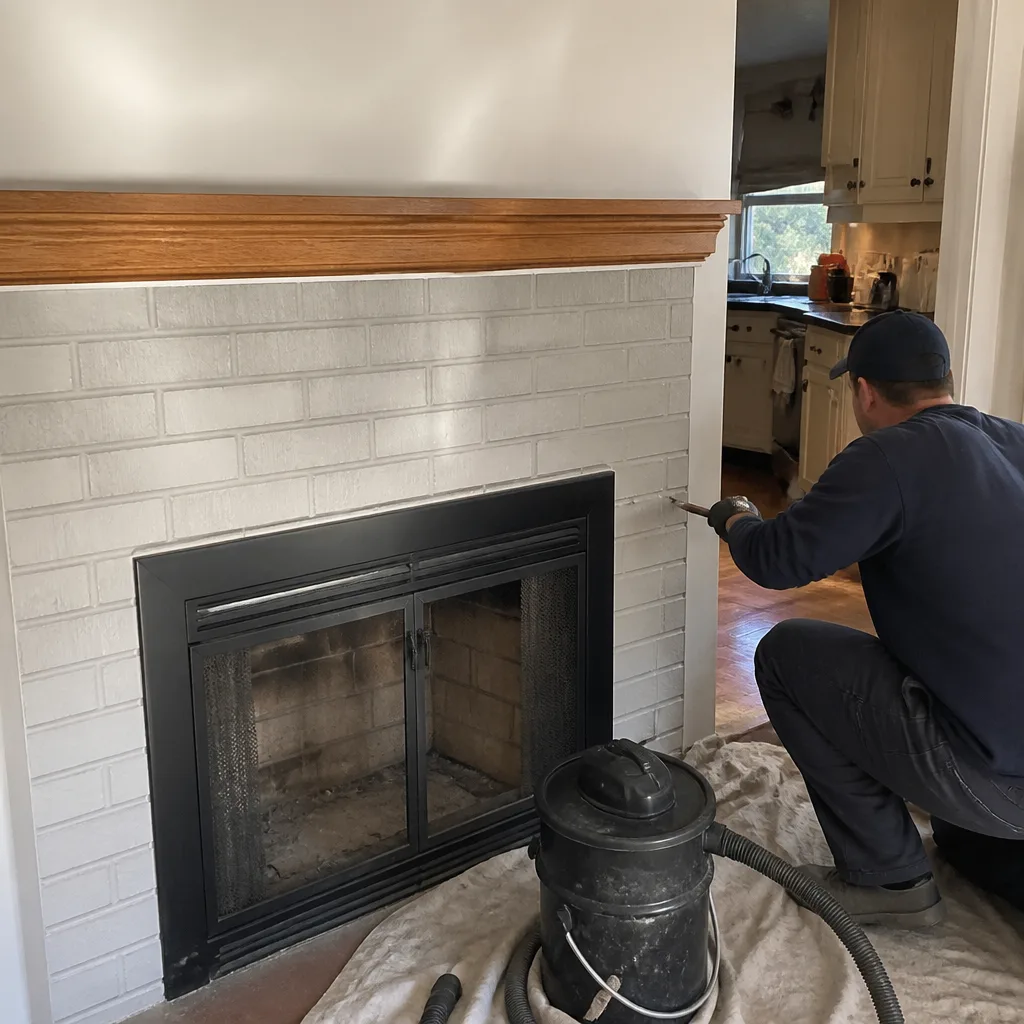 After
AfterDIY vs Professional Chimney Cleaning: The Boston Homeowner’s Decision Guide
Chimney brushing kits are sold at hardware stores and they work. They remove loose soot from a straight, intact, single-appliance flue. The problem is that you can’t see whether your flue is straight, intact, or single-appliance without a camera, which means you’re cleaning a system whose condition you’ve already decided to assume. In Boston, where the median home predates 1940 and fuel conversions were common in the 1970s and 1980s, that assumption is wrong often enough to matter. This guide draws the line precisely between what a homeowner can safely do and what requires a camera, a trained eye, and a written record, so you can make an informed decision rather than a flattering one.
Quick Answer
DIY chimney cleaning can remove loose soot and light creosote dust from a straight, intact, single-appliance flue, but it cannot detect or address the structural and safety issues that cause chimney fires and carbon monoxide events in Boston homes. If your home was built before 1980, uses a converted or shared flue, or hasn’t had a camera-scan inspection in the last three years, the DIY kit is the wrong first step. A professional chimney cleaning in Boston has two distinct outcomes: the flue is cleaned AND its condition is documented, and it’s the documentation that protects your insurance claim and your family. For guidance on selecting the right professional, see our How to Hire a Chimney Cleaning Contractor in Boston: A Step-by-Step Guide.
Table of Contents
- What DIY Brushing Actually Accomplishes
- What Brushing Cannot See
- Boston Housing Factors That Change the Risk
- The Insurance and Legal Dimension of Self-Cleaning
- The Real Cost Comparison: DIY vs Professional
- The Smart Middle Path: DIY Maintenance Between Camera Scans
- Common Mistakes to Avoid
- When to Call a Professional
- Frequently Asked Questions
- The Bottom Line
BeforeAfterWhat DIY Brushing Actually Accomplishes
A chimney brush mounted on flexible rods removes three things, and only three things. It removes loose soot that has not yet bonded to the flue wall. It removes powdery Stage I creosote, the light gray or brown dust that forms in flues that run at reasonable temperatures. It removes small debris - bird nesting material, a few fallen leaves, the occasional squirrel hoard - from the accessible length of the flue.
That’s the full list. A brush does not remove Stage II creosote, which looks like black cornflakes bonded to the flue wall and requires mechanical tools and often chemical treatment to break up. It does not remove Stage III creosote, which is a thick, tar-like glaze that forms when flue temperatures stay low, as they do in the external chimneys common to Boston’s triple-deckers and brick rowhouses. Stage III creosote is hardened fuel. It’s the condition that produces the hot, persistent chimney fires that crack flue liners and spread to framing.
In our work across neighborhoods from Southie to Jamaica Plain to Dorchester, we see a pattern worth understanding. Homes where the prior owner used an open fireplace as a secondary heat source, and the current owner mostly doesn’t, accumulate creosote in layers. The top layer is loose enough to brush. The layer beneath is baked, from years of moderate fires followed by long cool-downs. Brushing removes the top layer, the homeowner sees black dust in the cleanup below, and reasonably concludes the flue is clean. The bonded layer remains.
That’s the central problem with the hardware-store approach, and it bears saying plainly: DIY chimney cleaning gives you the feeling of a completed job without giving you any information about whether the job actually improved your safety.
What Brushing Cannot See
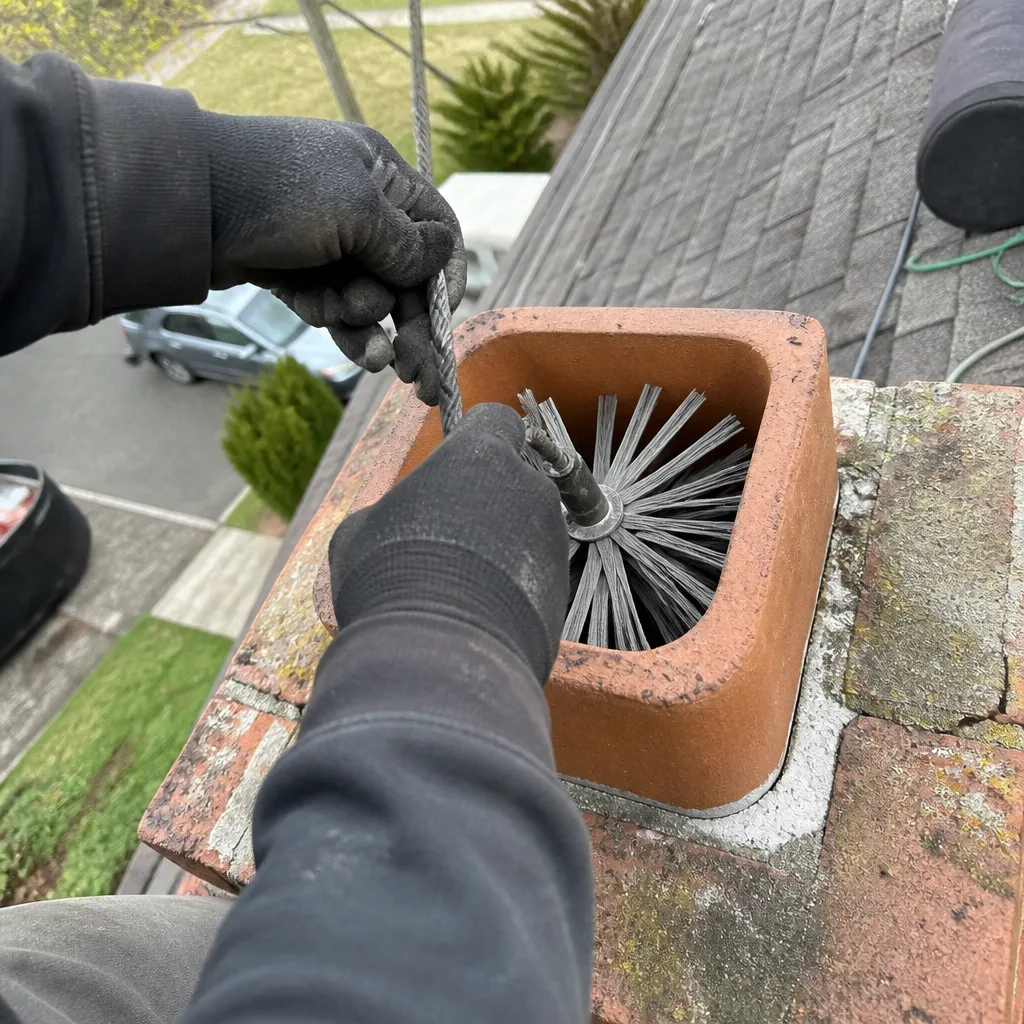
The physical act of brushing is not the problem. In a straight, modern, stainless-lined flue, a conscientious homeowner with a properly sized brush can genuinely remove surface soot. The problem is that the brush cannot report back. It cannot tell you that the flue tile behind the bonded creosote is cracked. It cannot tell you that the liner has separated at a mortar joint three feet above the smoke shelf. It cannot tell you that a previous owner’s oil-to-gas conversion left an abandoned unlined chase sharing the same masonry core.
What a camera-scan inspection finds is not the same list, and it’s a list worth reading closely if you live in a Boston home built before 1960:
- Cracked or spalled flue tiles. Terracotta liner sections crack when chimney fires happen, when moisture freezes and thaws, or when the house settles. A cracked tile is a direct path for flue gases to reach combustible framing.
- Separated mortar joints. The gap between flue tile sections opens over decades. Gas escapes through the gap directly into the masonry, which is why a chimney that “looks fine from outside” can be actively leaking carbon monoxide into wall cavities.
- Deteriorating parging in the smoke chamber. The smoke chamber above the damper is a funnel-shaped area where creosote and debris collect. Parging cracks there and chunks fall behind the fireplace, leaving channels for gas movement.
- Hidden blockages. An animal nest, a fallen flue tile, or a rusted damper plate can partially obstruct the flue. Brushing from the top or bottom may pass around the blockage without dislodging it, and you won’t know it’s there.
- Undersized or improperly connected appliance flues. If a furnace or water heater is vented into a flue that was sized for a fireplace, the gas cools too quickly and condenses, producing acidic residue that eats the liner from the inside.
Clause 4 of the Haven Standard was written specifically because of this gap between what brushes do and what safety requires. Every Level Two Chimney Boston visit includes a documented photo record of the camera-scan inspection, not because homeowners demanded it pre-2009 but because we watched too many homeowners act on assumptions a camera would have corrected in thirty seconds. That photo record is the difference between “the sweep says it’s fine” and “I can see the liner, the joints, and the smoke chamber myself.”
The direct answer to the obvious question: yes, you can brush your own flue. No, you cannot inspect your own flue without a camera, and the inspection is the part that prevents fires and carbon monoxide events, not the brushing.
Boston Housing Factors That Change the Risk
Boston is not a city of new construction. The most recent Five-Year American Community Survey puts the median owner-occupied housing age in Suffolk County at over 80 years, and in specific neighborhoods the stock is much older. At Level Two Chimney Boston home, the homes we inspect in Dorchester, Roslindale, Hyde Park, and West Roxbury fall into a few repeating architectural patterns, and each pattern has a specific chimney risk profile that bears on the DIY question.
The converted triple-decker. Boston’s triple-deckers were built for wood or coal, converted to oil, then many converted again to natural gas. Each conversion changed the flue temperature profile, and in many cases the same masonry core was reused for a new fuel without relining. That means the flue you’re brushing was not designed for the appliance currently connected to it. Gas furnaces run cooler than oil or wood, which produces more condensation, which accelerates liner deterioration from the inside. Brushing a flue in this condition is like washing a car with a cracked engine block - the cleaning is real, but it’s not the problem.
The rowhouse with a shared wall. In South Boston, Charlestown, and the North End, chimneys run through party walls. The flue serving your fireplace may share a masonry core with a flue serving your neighbor’s heating appliance, or the flue may actually be larger than it appears because it serves multiple appliances across multiple units. A DIY brush removes soot from the path it can reach. It cannot tell you whether the flue is technically shared, whether the shared portion is intact, or whether your neighbor’s converted heating system is venting acidic exhaust through your chimney’s masonry.
The 1990s-2000s cul-de-sac colonial or gambrel. In outer neighborhoods like West Roxbury and Readville, the stock runs newer but carries a different risk: original prefabricated fireplaces with air-cooled flue pipe, installed when codes were looser, now reaching end of service life. These systems often fail where the pipe sections connect, up inside the attic or roof chase where neither the homeowner nor a top-down brush can see. A camera-scan inspection is the only way to inspect these joints without dismantling the chase.
The renovated Center Entrance Colonial. Renovation history matters more than most homeowners expect. If a previous owner moved a wall, added a second-floor bath, or changed a fireplace surround, the smoke chamber and flue connections may have been altered. We have seen flues shaved to fit around new framing, flue tiles broken during demolition and hidden behind drywall, and abandoned flue openings capped with plywood directly against the smoke chamber. No amount of top-down brushing reveals any of this.
The takeaway for a Boston homeowner standing in the hardware store aisle with a brush kit in one hand: the kit presumes conditions you cannot verify without equipment you don’t own. In newer, simpler homes, the assumption holds often enough to make DIY defensible. In Boston’s housing typology, the assumption fails in ways that produce fires and CO events, and you won’t know which category you’re in until a camera shows you.
The Insurance and Legal Dimension of Self-Cleaning
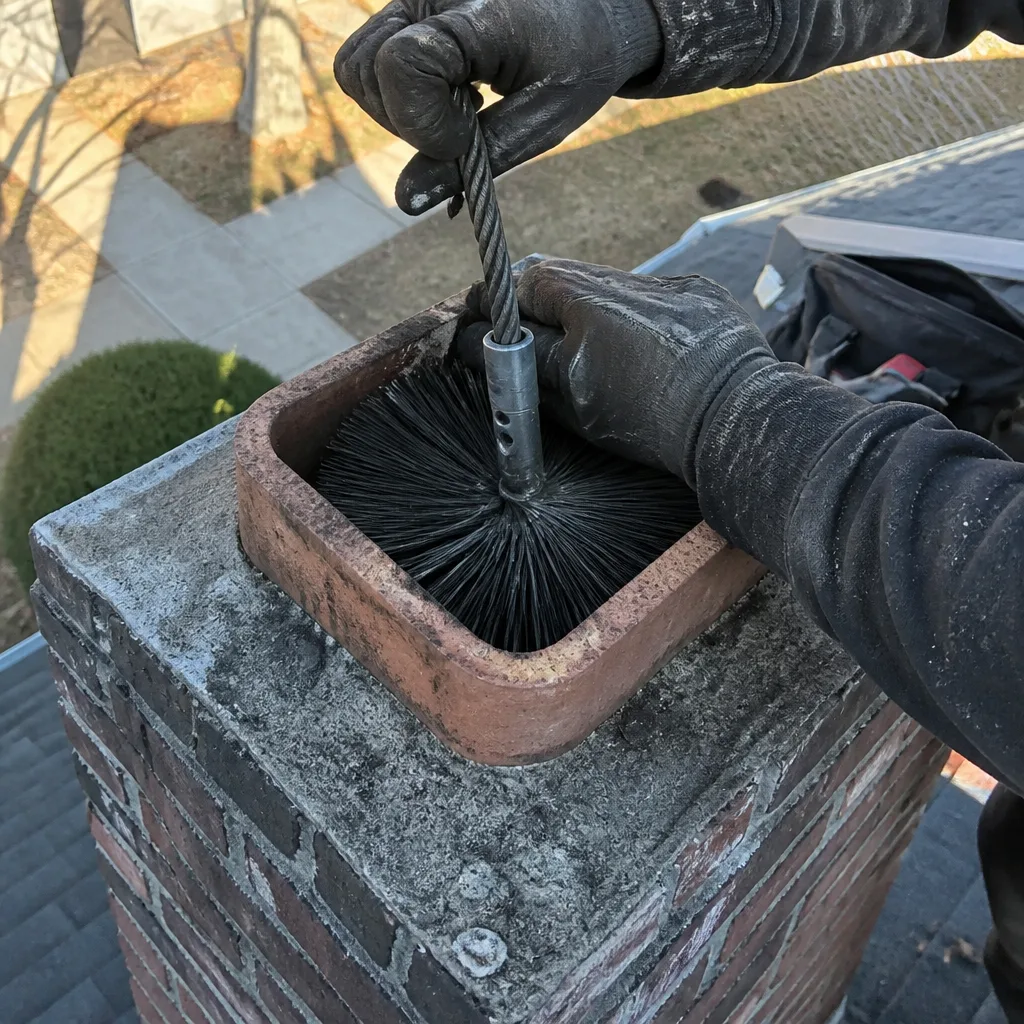
Here’s a conversation we have with homeowners regularly: a chimney fire occurs, the fire department responds, the insurance adjuster arrives, and the first question is “when was the chimney last cleaned, and by whom?” If the answer is “I clean it myself,” the next question is “do you have a record of that?”
Homeowners insurance policies in Massachusetts generally require that chimneys be maintained in safe condition. “Maintained” is not an ambiguous word in the claims context. It means cleaned at an interval appropriate to the fuel and usage, and inspected thoroughly enough to catch defects that cleaning doesn’t address. When a claim involves a chimney fire or a carbon monoxide event, the adjuster is not hostile and not naive. They know that a homeowner-brushed chimney that has never had a camera inspection is a chimney whose liner condition is unknown, and unknown liner condition is a reasonable basis for a denial.
We are not suggesting that self-brushing voids your insurance automatically. It doesn’t. But a denied or reduced claim after a chimney fire usually turns on one of two factors: the flue hadn’t been cleaned at the documented interval, or the flue had a structural defect that reasonable maintenance would have found. Structural defects are found by inspection, not brushing. If you brush your own chimney for six years and never have it camera-inspected, your maintenance record is the absence of a record, and the adjuster’s presumption will be that the defect predated the fire and that you should have known.
There is a legal dimension as well. If you sell a Boston home and the buyer asks, as many do now, whether there’s a chimney inspection on file and whether the fireplace is safe to use, “I cleaned it myself” is honest but thin. Homeowners in Massachusetts have a duty to disclose known material defects. A camera-scan inspection record is the difference between knowing and guessing, and the difference matters when the sale price is being negotiated and the home inspector looks up the chimney with a flashlight and shrugs.
The counterpoint is fair: you could argue that a conscientious homeowner with a brush is doing more than the neighbor who never thinks about the chimney at all. That is true. The homeowner who brushes is removing loose creosote, and that’s not nothing. But the question isn’t whether brushing is better than neglect. The question is whether brushing without inspection is an adequate safety and liability practice, and for a Boston home with an older or reused flue, the honest answer is no.
The Real Cost Comparison: DIY vs Professional
Let’s put actual numbers on the table, because the price comparison is usually the first and last thing anyone asks, and most online discussions of it are unserious. For a detailed breakdown, see our Chimney Cleaning Cost Breakdown: The Boston Homeowner’s Reference for 2026.
A hardware-store brush kit costs between $40 and $80. The kit includes a brush sized to your flue, four to six fiberglass rods, and sometimes a tarp. If your flue is straight and your roof is walkable, and you own a ladder tall enough to reach the chimney cap safely, your total equipment cost is that $40 to $80, plus three or four hours of your time the first year, somewhat less after you learn the rhythm.
But the comparison collapses from there, because the professional service is not a more expensive version of the same thing. It is a different thing:
- Professional chimney cleaning in Boston typically costs between $180 and $350, depending on flue configuration, fuel type, and accessibility. The range is wide because a straight single-flue sweep on a one-story ranch in Readville is a simpler job than a three-flue triple-decker in Dorchester with rooftop access through a locked bulkhead.
- The professional visit includes the brush work AND the camera-scan inspection AND the written record AND the photo documentation. The brush work alone is worth perhaps a third of the fee. The information is the rest, and the information is what you cannot obtain with a kit.
- Most homeowners clean annually if they burn often, every two to three seasons if they burn occasionally. Over a five-year window, DIY brushing saves roughly $600 to $1,200 in service fees, against the risk-adjusted cost of one undetected liner defect. The undetected defect is not a hypothetical - it is the thing camera scans have found in roughly one in five older Boston homes we inspect.
There is also a time-and-physical-cost calculus that online DIY guides gloss over. You’ll be on your roof in Boston, which means the roof is pitched and the surface is either wet leaves, frost, or old asphalt shingles slick with pollen. You’ll be reaching over a chimney cap holding a rotating rod while standing on a ladder. The fall risk is real and it is the reason professional sweeps are insured and trained for roof and ladder work. A sprained ankle or a fall from a one-story roof costs more than a decade of professional cleanings, and that’s before touching the question of whether your flue needed a liner replacement the whole time.
Here is the honest math as we would present it to any homeowner in the Boston area:
- If your flue has been camera-scanned in the last two years and the report shows an intact liner, a clean smoke chamber, and a single-appliance connection, and you want to brush between inspections - that’s reasonable. Your annual cost drops to the price of the brush kit and your time.
- If your flue has never been camera-scanned, or the last scan was years ago, the professional fee isn’t $180 to $350 for cleaning. It’s $180 to $350 for cleaning plus the inspection that tells you whether the flue is safe to use at all. The second thing cannot be replicated with a brush.
- If the inspection finds Stage III creosote, a cracked tile, or a failed liner, you did not overpay for the cleaning. You found a problem before it found you, and the fix is a known, written, warrantied price rather than a fire department visit and an insurance negotiation.
We use materials from DuraFlex and HeatShield on the repair side - these are not brand names we throw around for credibility. DuraFlex stainless liners are the standard we install when a flue is relined, and HeatShield’s ceramic resurfacing is the mastic-reinforced option for clay tile repair. Mentioning the brands matters because the materials affect the warranty, the cost, and the lifespan, and you deserve to know what your money buys.
The Smart Middle Path: DIY Maintenance Between Camera Scans
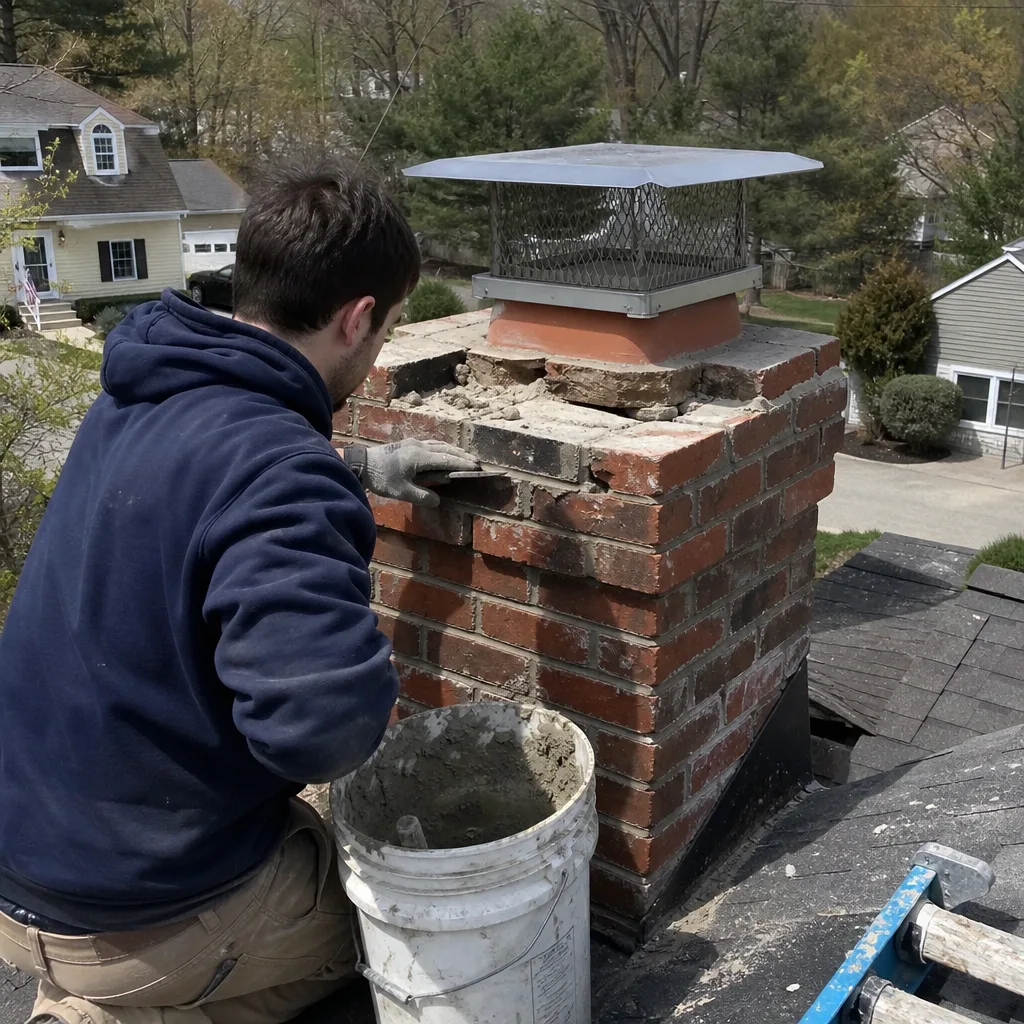
The DIY-versus-professional debate usually assumes an either/or choice, as if hiring a sweep means you never touch anything yourself and buying a brush kit means you never hire anyone. The sensible approach for many Boston homeowners is both, in sequence, with clear boundaries.
Here’s the model we recommend to homeowners who want to be involved without becoming their own GC:
- Get a baseline camera-scan inspection. This happens once, and it establishes what you’re working with: liner material and condition, smoke chamber state, flue configuration, and whether any appliances share the flue with the fireplace. Without this baseline, any DIY maintenance is guesswork layered on assumption.
- Brush surface soot between inspections, if you’re comfortable on the roof and your flue is straight. The baseline report will tell you whether your flue is actually straight and single-appliance. If it is, a homeowner brush once or twice a season, between annual or biennial professional visits, keeps loose soot from building up into harder deposits. Use a brush sized exactly to the flue dimensions noted in the report.
- Keep a dated maintenance log. Write down what you did, when, what came out, and anything you noticed - a change in draft, unusual odor, or flaking material in the firebox. This log serves two purposes: it tells the professional sweep what has changed since the last visit, and it becomes part of your documentation file for insurance or resale.
- Watch the firebox between professional visits. The firebox tells you a lot if you know what to look for: white staining on the firebrick means moisture penetration. Flaking or spalling brick means water damage behind the wall. An odor of sulfur or the smell of flue gas in the room when the fireplace is not in use means a draft reversal or a blockage, and that means stop using the fireplace until a camera can look.
- Never attempt to remove bonded creosote, repair a liner, replace a crown, or tuckpoint the smoke chamber yourself. Stage II and III creosote require mechanical and chemical treatment, and the chemicals are not sold at a big-box aisle. Liner and crown work involves roofing, masonry, and apprentice-level knowledge that cannot be compressed into a video.
This middle path keeps your out-of-pocket cost close to the DIY-only model while keeping your safety evidence close to the professional-only model. A note on what we observe: most homeowners who start with a camera-baseline inspection and then brush seasonally tend to stay on schedule, because they know exactly what they’re maintaining. The homeowners who skip the baseline and brush for years tend to drift, because maintenance with no information behind it eventually feels like a chore rather than a duty.
For Boston homeowners, the Chimney Cleaning & Sweep in Boston service we run always includes the camera-scan standard. If you’re going to maintain between professional visits, get the baseline report first and use it as your guide.
Common Mistakes to Avoid
- Buying a brush without knowing your flue dimensions. Brushes come in sizes matched to flue liners - 6-inch, 8-inch, 10-inch, and larger. Using a brush one size too small polishes the creosote instead of removing it, and too large jams. The flue size is in your fireplace manual or your camera-scan report, not on the chimney cap.
- Brushing from the bottom with the damper open and no tarp. Soot falls down, and without a sealed tarp and a helper holding it, it fills the room. A proper setup includes a tarp taped over the fireplace opening with a small slit for the rod, plus a shop vac running the whole time.
- Concluding the chimney is clean because the brush came down dirty. The brush removes what it reaches. What it reaches is only part of the flue in any home with a smoke chamber, a curved connection, or an offset. Dirty brush means you removed material, not that you removed all of it.
- Skipping the cap inspection because “the brush went through fine.” The chimney cap is where water gets in when it’s damaged, and water is what causes spalling brick and cracked crowns. A brush passes through the cap without telling you the cap’s mesh is rusted through or the cap is loose.
- Treating a cool flue gas smell as a simple draft issue. If you smell flue gas when the fireplace is not in use, that indicates a chimney that’s not venting properly. It could be a blockage, negative pressure in the house, or a liner defect. The correct response is to stop using the fireplace and get a camera-scan inspection, not to burn hotter.
- Using chemical creosote logs as a substitute for mechanical sweeping or inspection. The logs can reduce Stage I creosote in some flues. They do not remove Stage II or III deposits, they don’t inspect anything, and they produce fumes that some Boston homeowners with respiratory conditions find unpleasant. They are not maintenance, they are a supplement at best.
- Postponing a chimney inspection after a renovation. Renovations change the house’s pressure dynamics and sometimes the chimney’s connection to the framing. If you’ve done major work since the last inspection, get the camera back in before you light the next fire.
When to Call a Professional
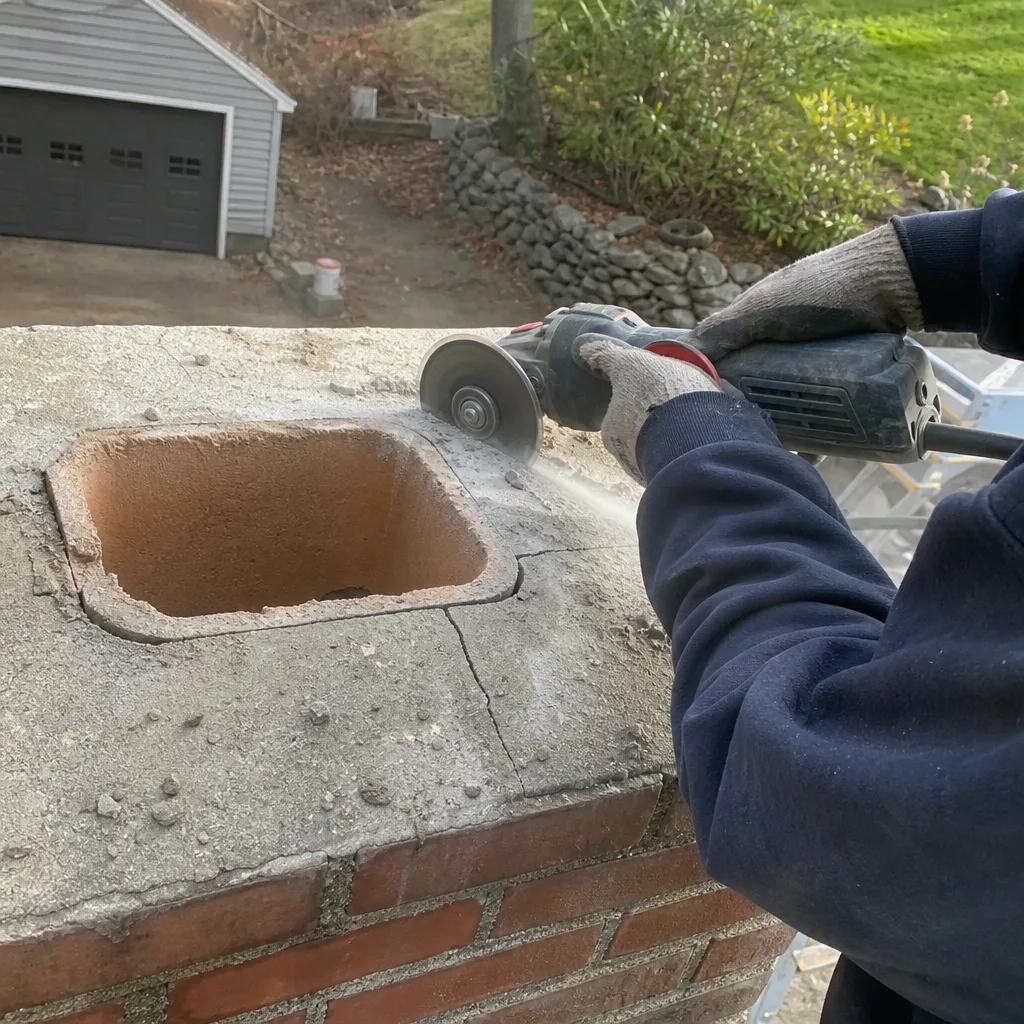
Call a professional chimney sweep if any of the following describes your situation: your Boston home has never had a camera-scan inspection; it’s been more than three years; you’ve switched fuel type since the last inspection; you bought the home in the last two years and inherited an unknown chimney history; you smell flue gas indoors when the fireplace isn’t in use; you see white staining, spalling brick, or water in the firebox; or you have an oil-to-gas converted system venting through an older masonry flue. These are not maintenance questions. They are safety questions, and they require a camera, not a brush.
Level Two Chimney Boston offers free estimates in Boston - call (857) 567-8887 and we’ll give you a written price before any work starts. Our camera-scan inspection is included on every visit, and Clause 4 of the Haven Standard means you walk away with a photo record of what we found, not a verbal summary.
Frequently Asked Questions
In Boston, a wood-burning fireplace used regularly during the heating season should be cleaned annually, while occasional users can go every two to three seasons. For a complete schedule tailored to local conditions, see our Seasonal Chimney Cleaning Care for Boston: Year-Round Homeowner’s Guide. Homes with oil or gas appliances venting through the same flue need cleaning on the appliance’s schedule, typically annually, because gas condensation accelerates liner wear even without visible soot. The National Fire Protection Association standard is “whenever creosote buildup reaches 1/8 inch or more,” which a camera-scan measures directly. Call (857) 567-8887 for a written quote on a cleaning and camera inspection in the Boston area.
A professional chimney cleaning in Boston typically costs between $180 and $350, with the final price depending on flue configuration, fuel type, roof access, and whether the flue needs more than standard brushing. That fee includes the camera-scan inspection and the written photo record that DIY brushing can’t provide. Homes with Stage III creosote or a damaged liner will need additional work quoted separately, always in writing before anything starts.
Yes, you can remove loose soot and Stage I creosote dust from a straight, intact, single-appliance flue with a hardware store brush kit, provided you’re safe on your roof and use the correct brush size. What you cannot do with that kit is determine whether the flue is actually straight, intact, and single-appliance, or detect the structural defects and hidden blockages that cause chimney fires and carbon monoxide leaks. For Boston’s older housing stock, skipping the camera inspection is the risky part, not the brushing itself.
A regular sweep without a camera inspection is a cleaning, not an inspection. The camera is what shows cracked flue tiles, separated mortar joints, deteriorated parging, and hidden blockages - conditions that occur invisibly over time and that no brush can reach or detect. In Boston homes built before 1960, these findings are common enough that we made the camera-scan standard practice back in 2009, and we’ve documented the condition of every flue we’ve touched since.
DIY cleaning doesn’t automatically void your insurance, but it can weaken your claim. If a chimney fire or carbon monoxide event occurs, an adjuster will ask when the flue was last cleaned and inspected, and whether you have records. A homeowner who brushed but never had a camera inspection may be deemed to have maintained the flue inadequately, especially if the fire was caused by a defect that an inspection would have found. Documented professional visits are your strongest position in a claims discussion.
Chimney Repair in Boston pricing depends on what the camera finds, but you should never accept a repair recommendation you can’t see. A legitimate company shows you the camera footage and the photo record, explains what the defect means in plain terms, and gives you a written price before any work starts. Level Two Chimney Boston includes the photo record on every visit under Haven Standard Clause 4, and we offer a Free Second Opinion on any written estimate - bring us a competitor’s quote and we’ll review it honestly. For fireplace-specific questions, our Fireplace Services in Boston page covers tune-ups, gas log installation, and repair work.
The Bottom Line
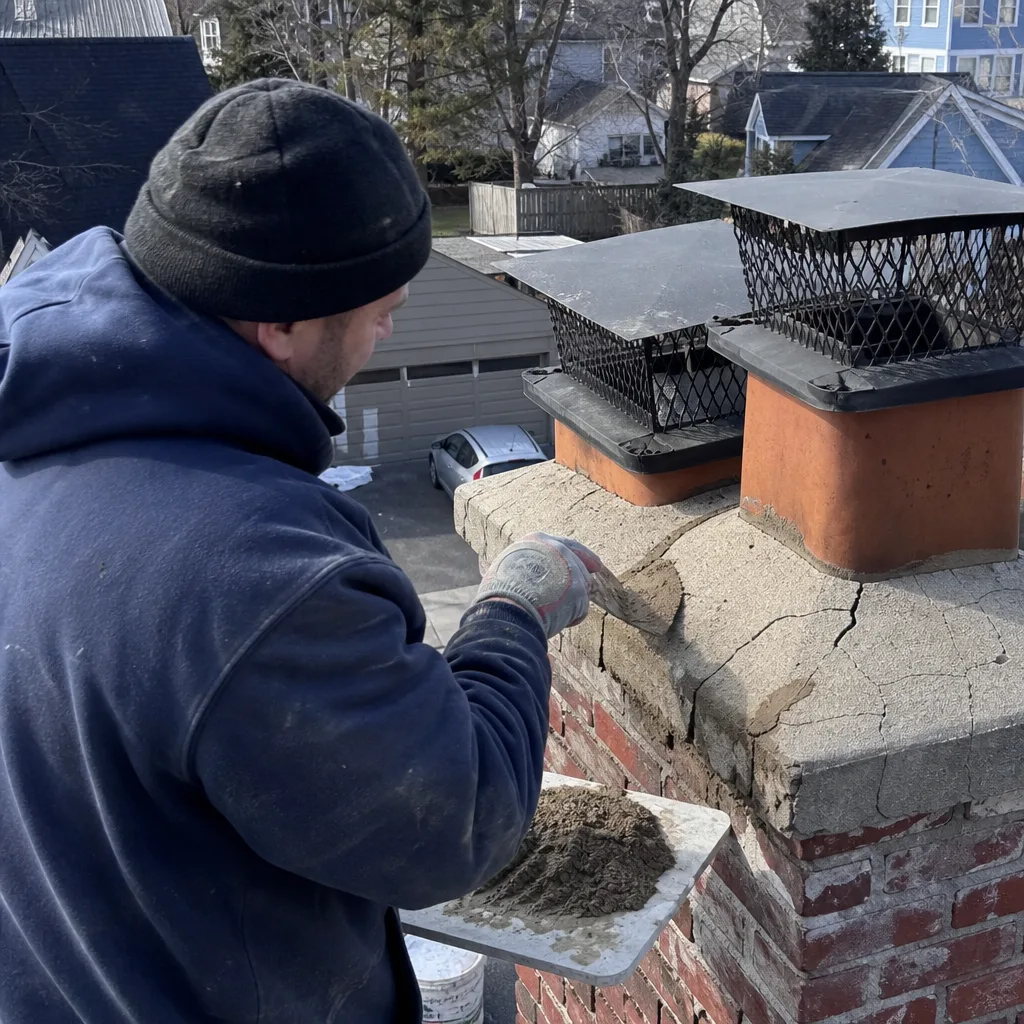
The DIY chimney cleaning question is not really about whether homeowners can brush a flue. Many can. The question is what brushing doesn’t find, and in Boston’s older housing stock, what brushing misses is what causes fires and carbon monoxide events. A brush removes loose soot; it doesn’t report on cracked liners, separated joints, shared flues, or hidden blockages. The smartest Boston homeowners get a camera-scan baseline, then decide how much DIY maintenance makes sense between professional visits, using the written record as their guide. For more guides & resources on chimney safety and maintenance, explore our blog. The annual cost is modest, the record is the protection, and the call to start is (857) 567-8887. You’ll get a written price before any work begins, a photo record when it’s done, and the whole picture, not just the part a brush can show you.
Written by Corrine Halstead, Owner at Level Two Chimney Boston, serving Boston since 2009.