
Last updated September 20, 2026
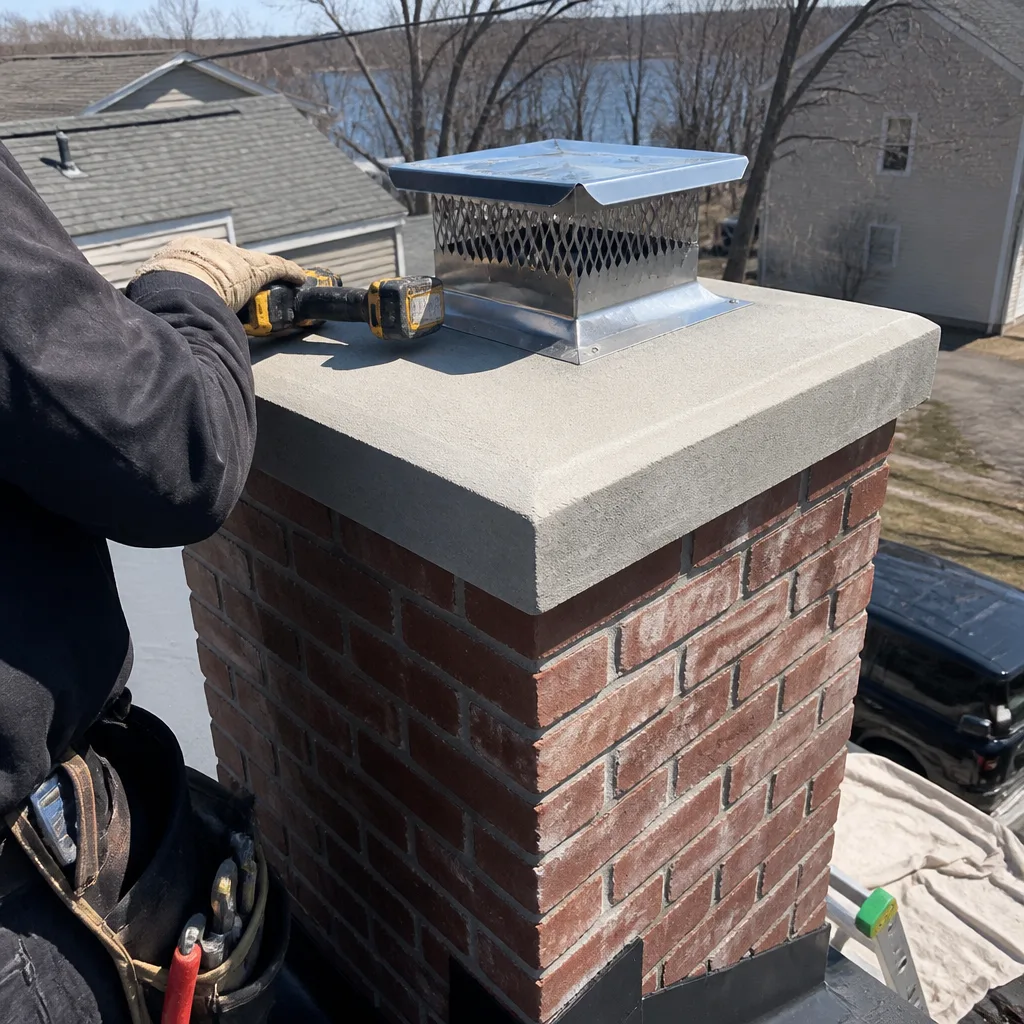
Level 1 sweep and inspection to the NFPA 211 annual standard - flue, crown, cap, and flashing checked and photographed
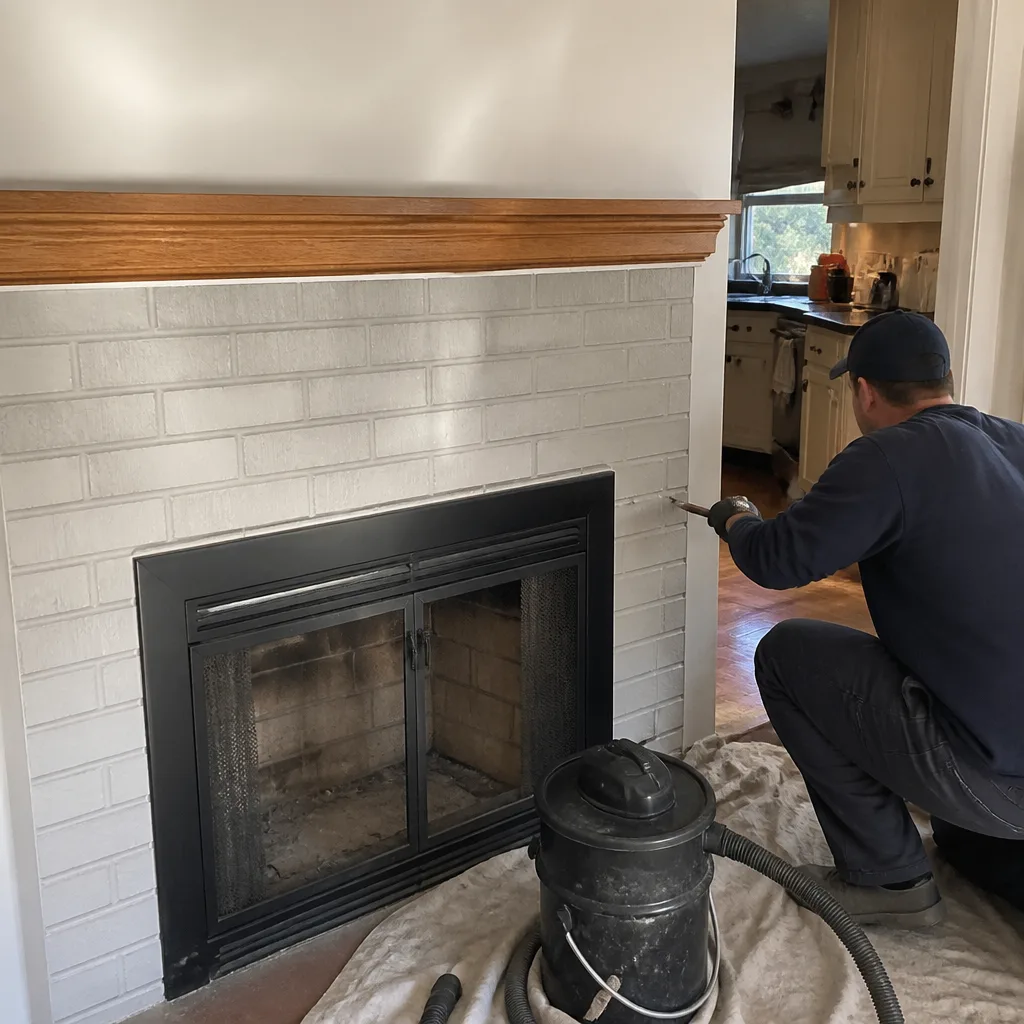
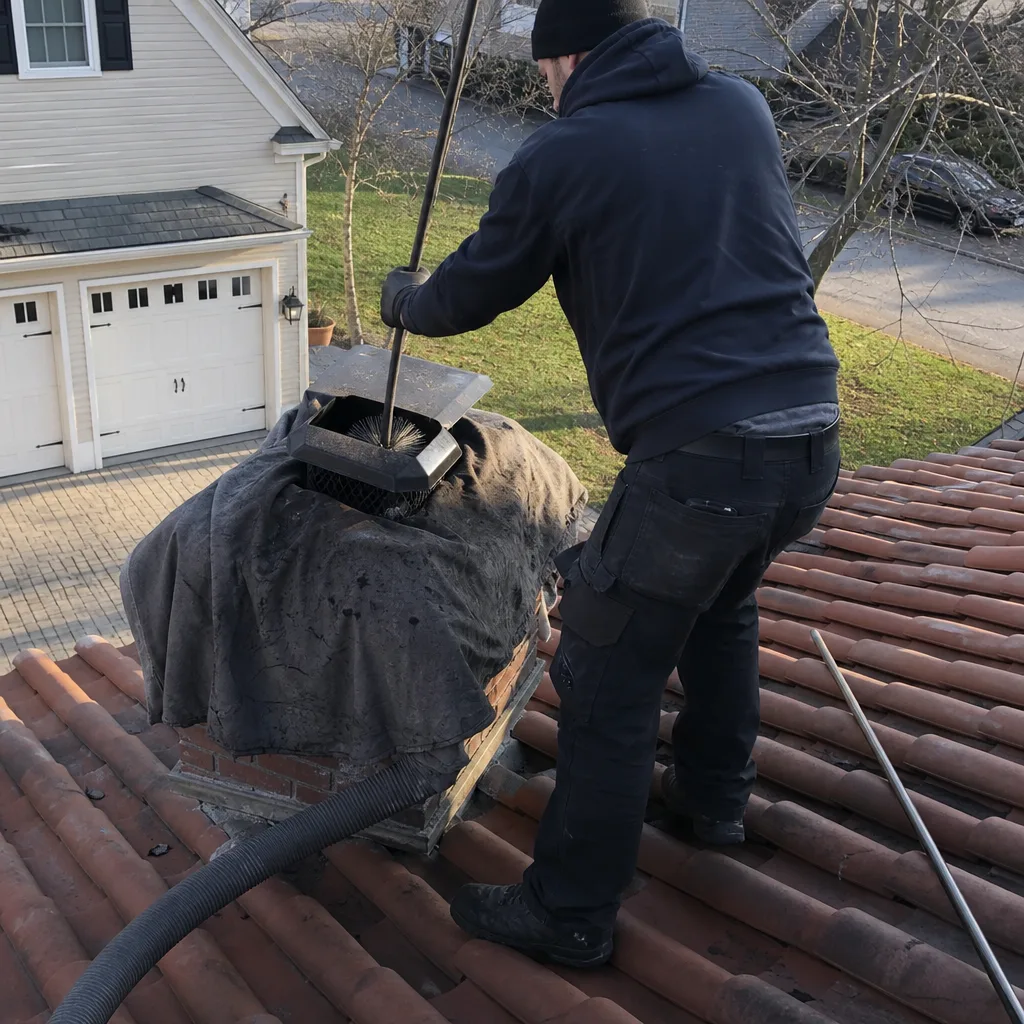
Chimney sweep logs do not sweep chimneys. They loosen some creosote - which then falls where a brush and vacuum still have to collect it.
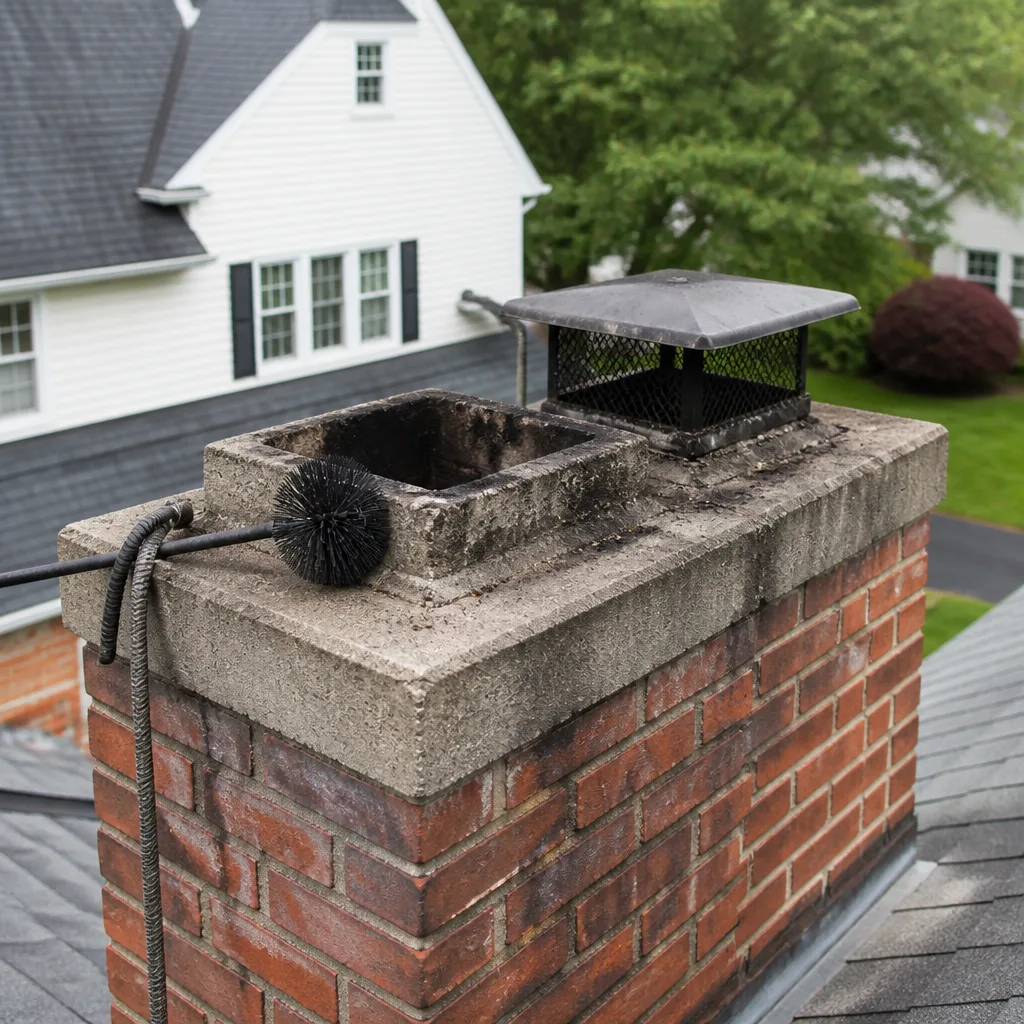
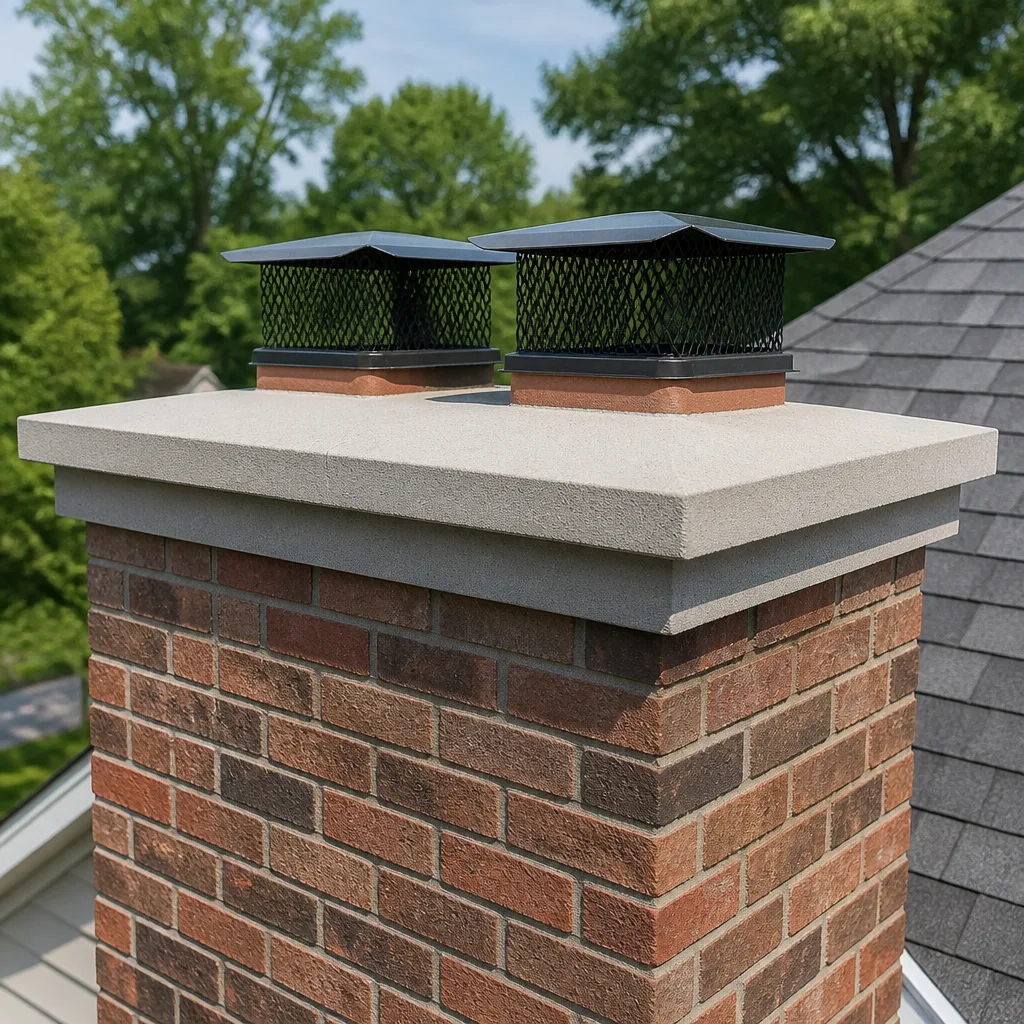
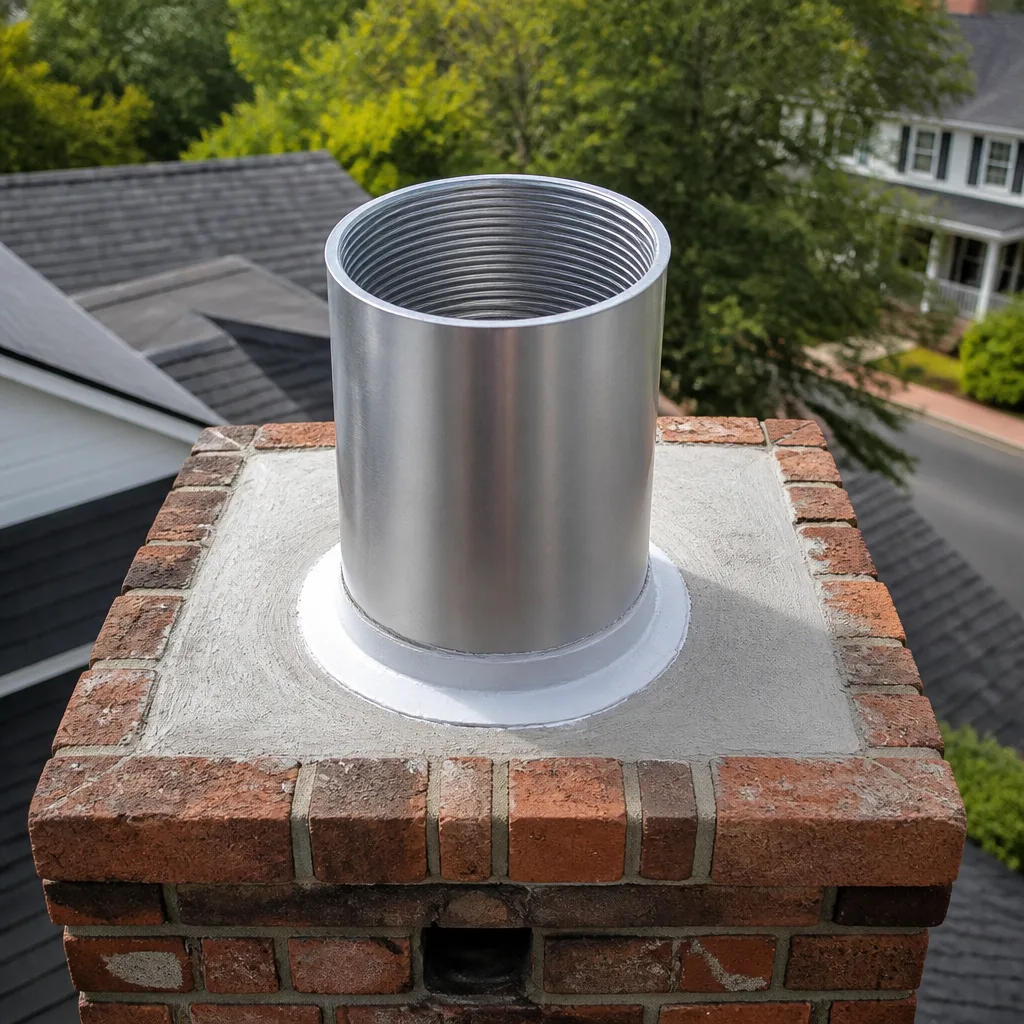
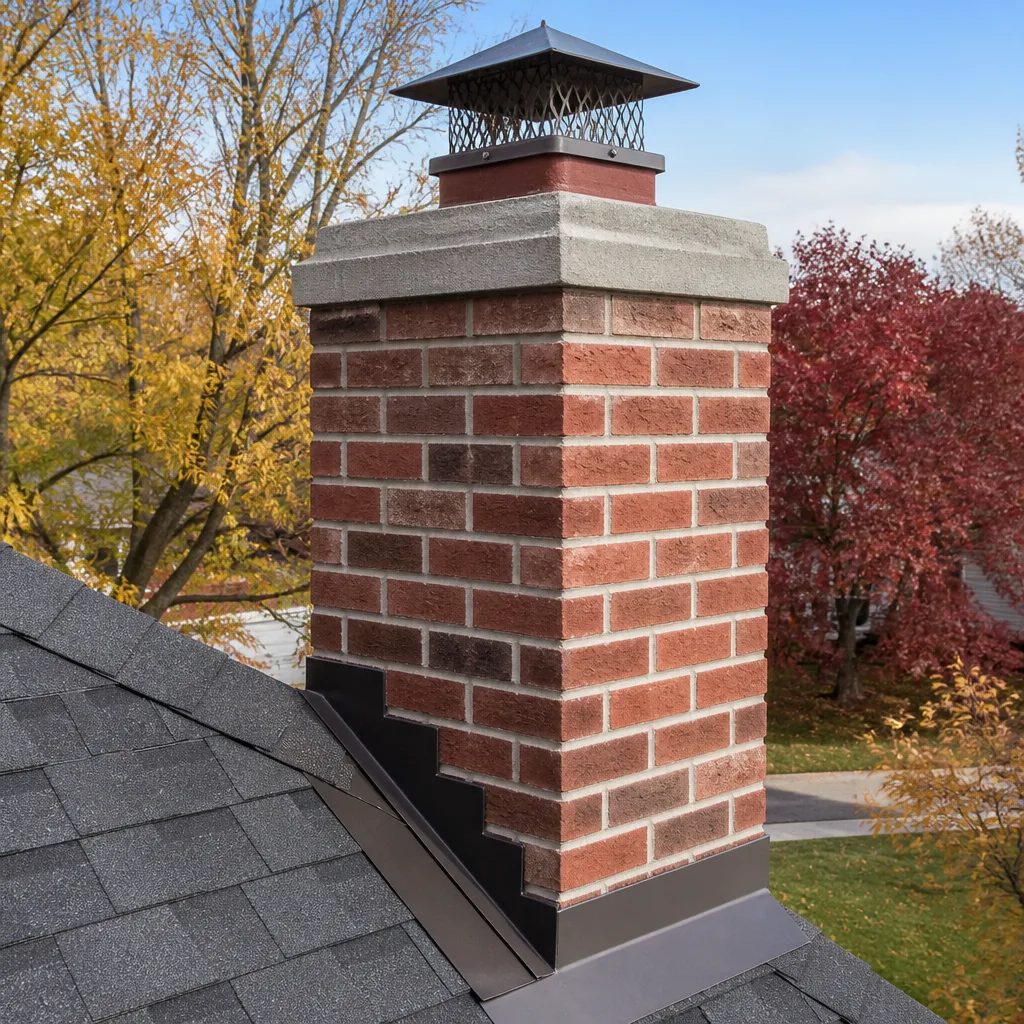
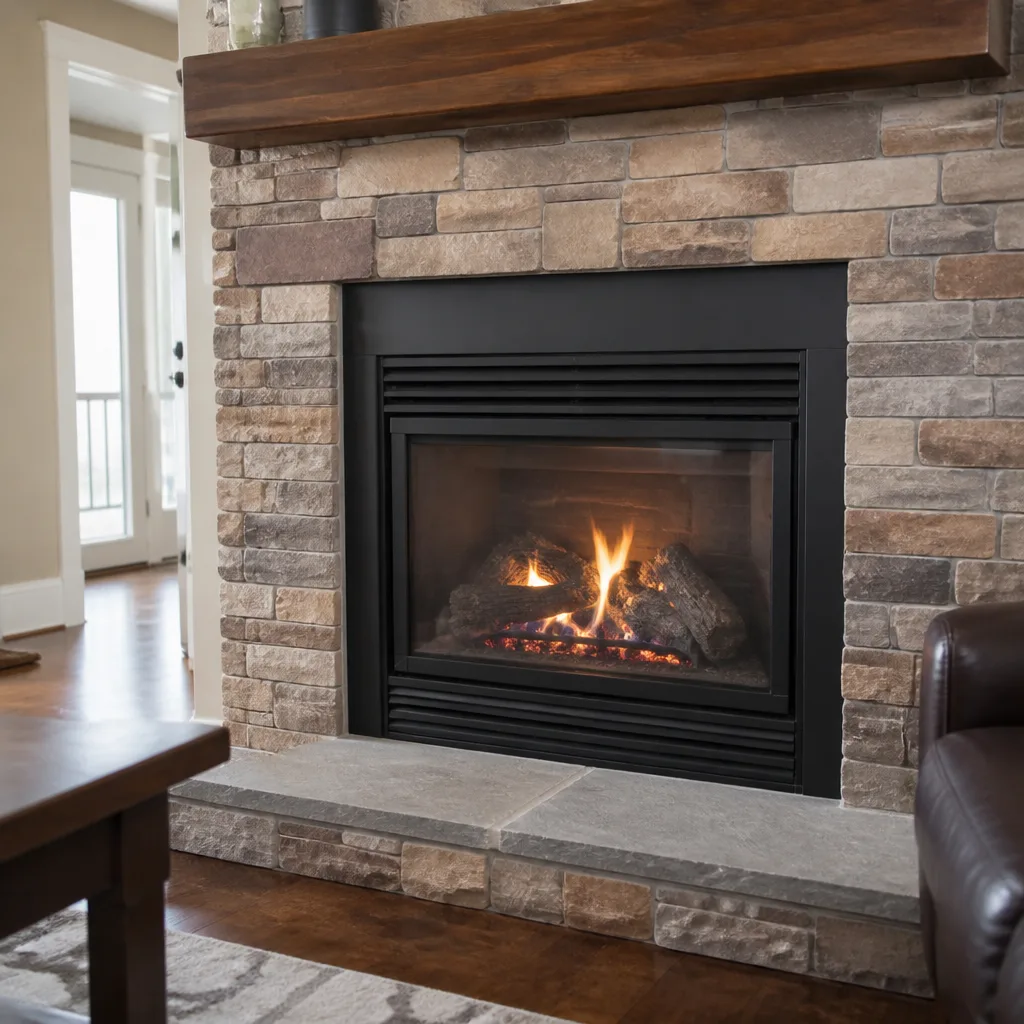
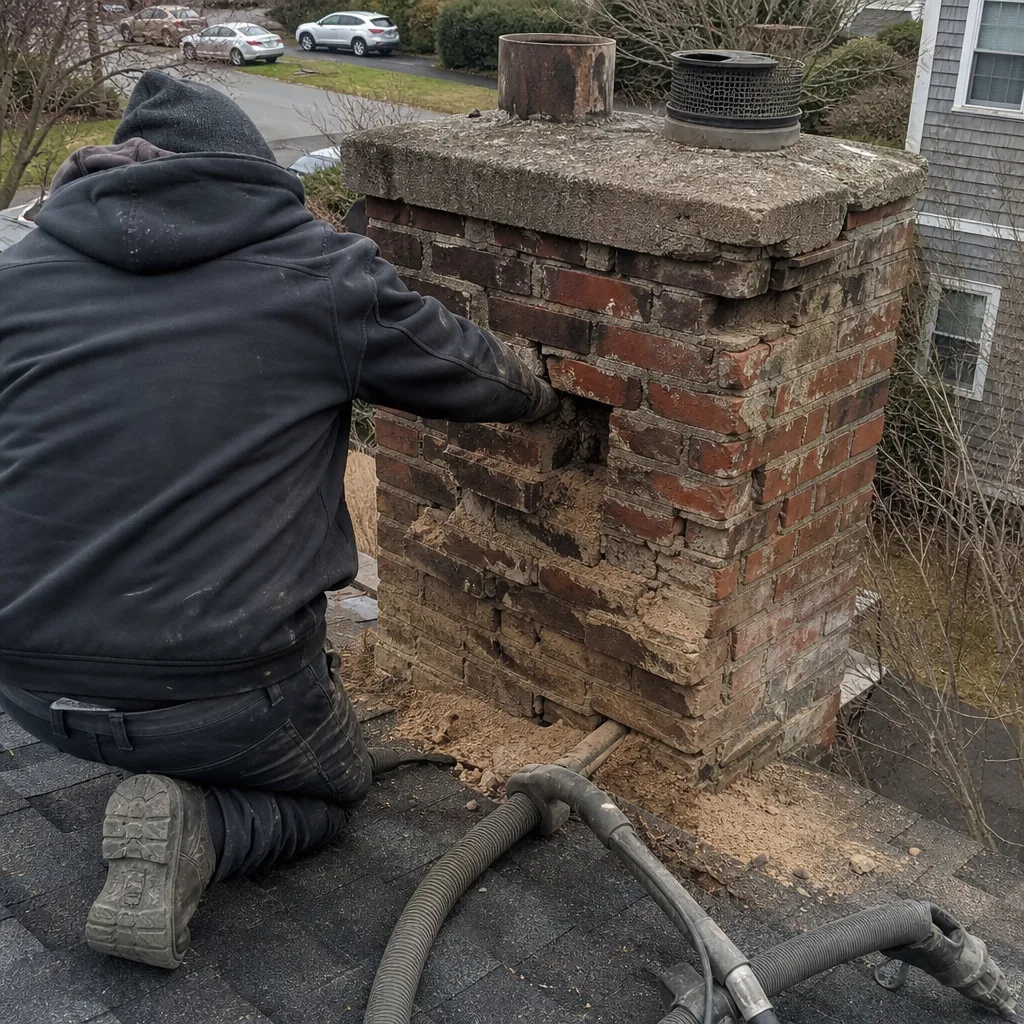 Before
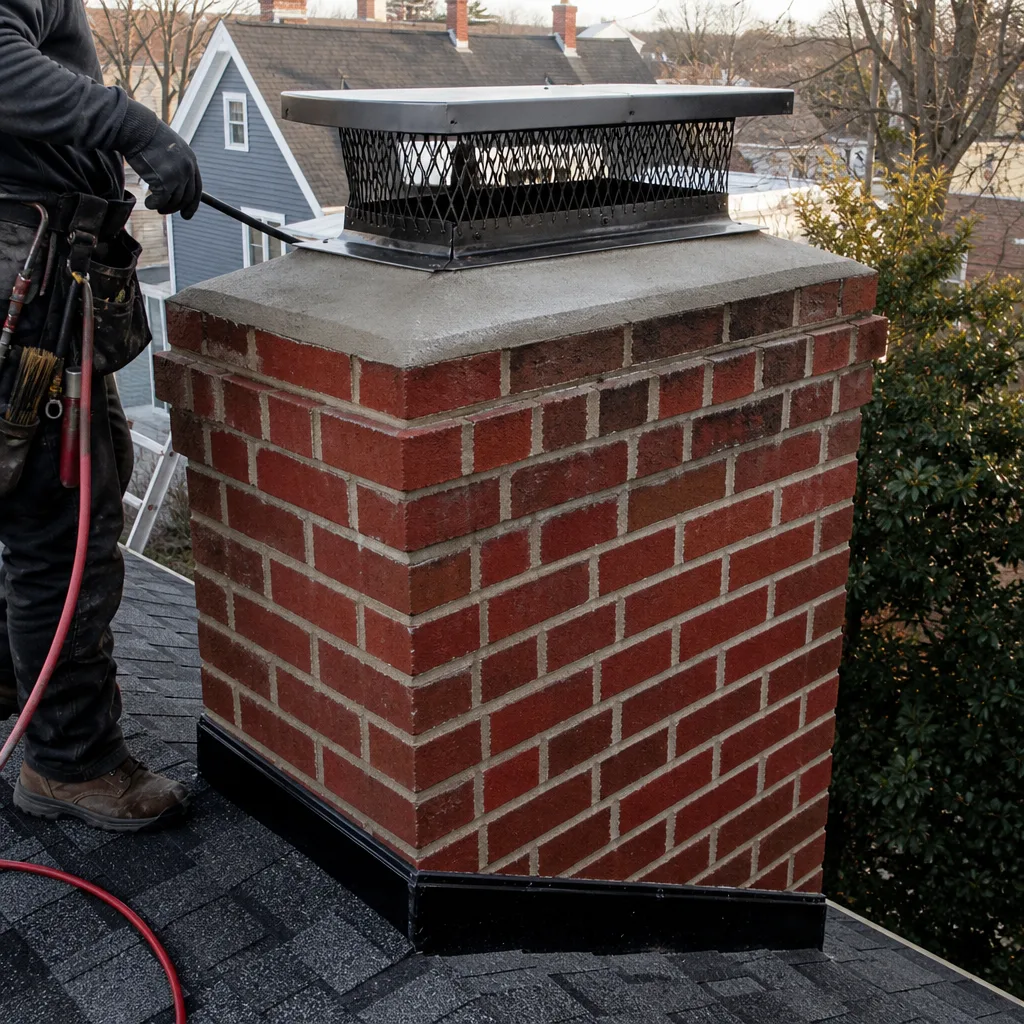 After
After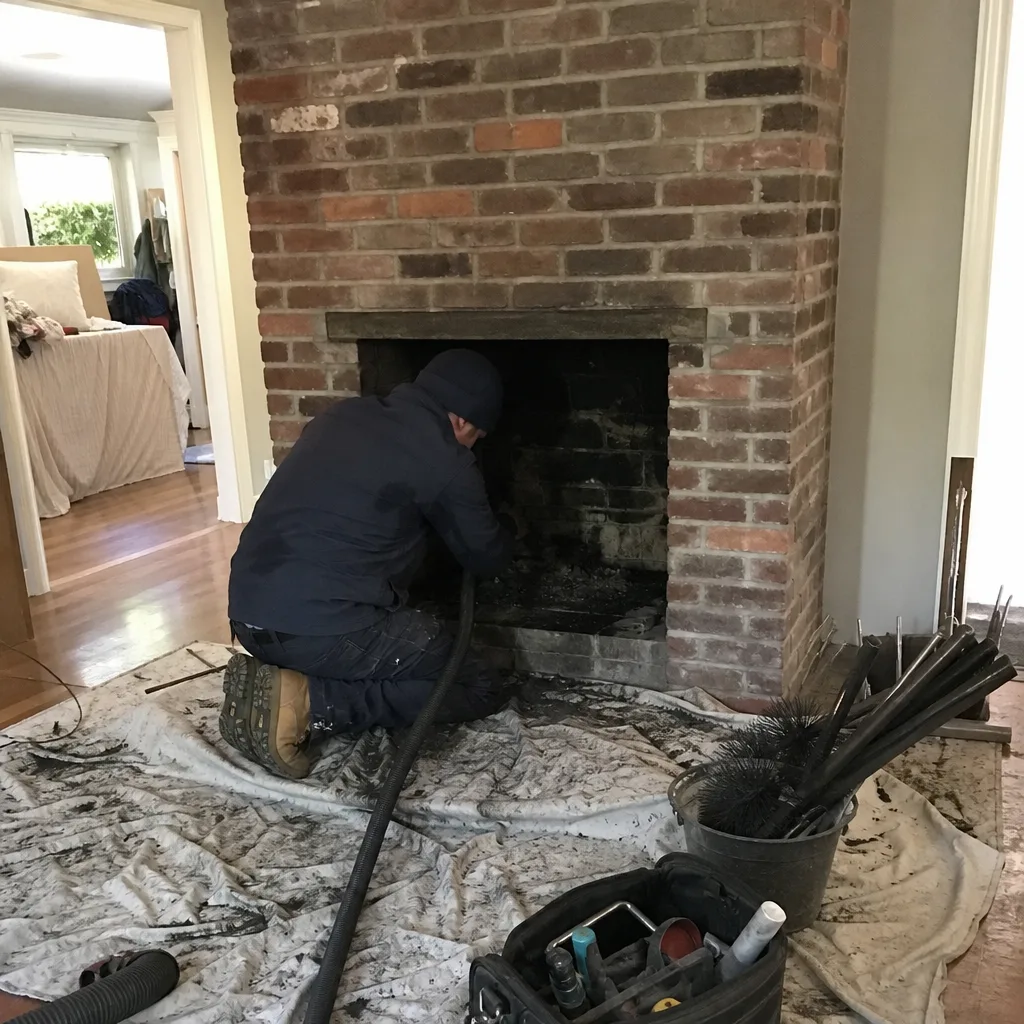 Before
 After
After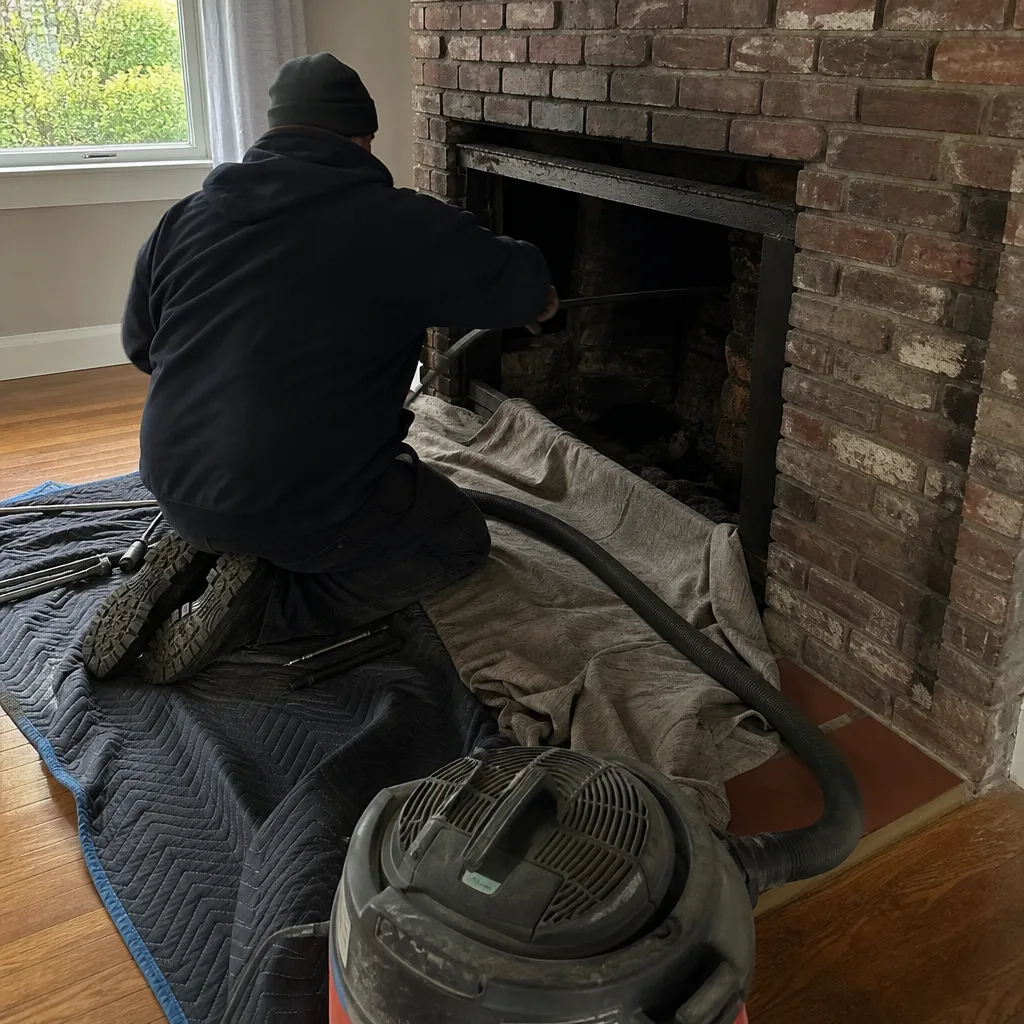 Before
 After
AfterChimney Cleaning & Sweep Maintenance Checklist for Boston Homeowners
The most common chimney maintenance mistake Boston homeowners make isn’t skipping the cleaning. It’s checking off “cleaned” without anyone recording what was found, which leaves the homeowner with no baseline when something goes wrong two winters later. In Boston, where a single nor’easter can drive water through a hairline crown crack and freeze-thaw cycles widen it into a structural problem within eighteen months, that missing record costs real money. This guide is a checklist built around evidence you can see, measure, and document, not around feelings about when the last sweep happened. We’ll walk through what actually fails in Boston chimneys, what a legitimate sweep should hand you in writing, and the one maintenance item almost every homeowner misses until a boiler technician or a chimney fire brings it up.
Quick Answer
A Boston chimney maintenance checklist should cover six components: cap, crown, flashing, flue liner, firebox, and damper, each checked before burning season and after any major storm. A proper Chimney Cleaning & Sweep includes a camera-scan inspection per NFPA 211 Level 2, documented photos, a written price before work starts, and a written record when it’s done. Book the sweep once a year, ideally in late summer or early fall before the cold-weather demand spike, and keep every inspection record in one folder for insurance and resale documentation.
Table of Contents
- The Pre-Season Chimney Checklist: Six Components That Fail in Boston
- What a Sweep Should Hand You in Writing (And What Missing Paperwork Tells You)
- How to Log a Cleaning Record That Satisfies Insurance and Massachusetts Disclosure Norms
- Post-Storm Checklist: What to Check After a Nor’easter or Ice Event
- The One Item Most Homeowners Skip: Liner Verification After HVAC or Boiler Work
- How Often Should a Boston Chimney Be Cleaned?
- What Does Chimney Cleaning Cost in Boston?
- Common Mistakes to Avoid
- When to Call a Professional
- Frequently Asked Questions
- The Bottom Line
BeforeAfterThe Pre-Season Chimney Checklist: Six Components That Fail in Boston
Boston’s climate does specific things to chimneys. The combination of Atlantic moisture, hard freezes, and older housing stock means certain failure modes show up here more than anywhere else in the Northeast. Here’s what to check on each component before the first fire of the season, and what each failure looks like when it’s happening.
1. The Cap: Look for a missing or damaged spark arrestor.
Your chimney cap sits at the very top of the flue and does three jobs: keeps rain out, keeps animals out, and contains sparks. In Boston, where squirrels and raccoons are persistent and the rainy season runs long, a missing or dented cap is an open invitation. Look for a cap that’s rusted through, tilted, or missing entirely. A missing spark arrestor means embers can exit the flue and land on your roof or a neighbor’s. If you can see daylight through rust holes in the cap mesh from the ground with binoculars, it’s time to replace it.
2. The Crown: Check for hairline cracks that freeze-thaw will widen.
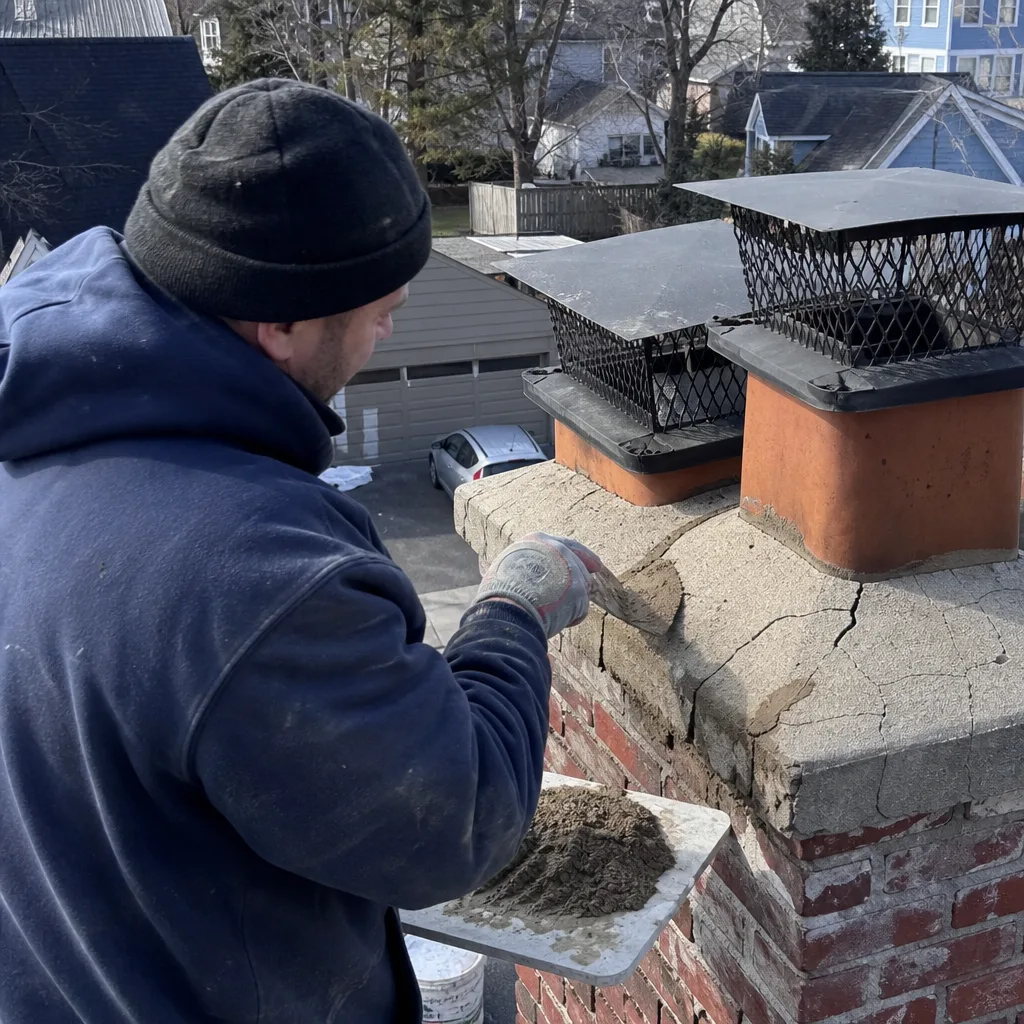
The crown is the concrete slab that caps the chimney’s top, and it’s the single most common water entry point in Boston chimneys. A hairline crack that looks cosmetic in October becomes a fissure by March, because every freeze-thaw cycle forces the crack slightly wider, and each widening lets more water sit inside the masonry. Look for cracks running from the flue liner to the chimney’s edge, spalling (concrete flaking off in chunks), or a crown that slopes toward the flue instead of away from it. If you see any of these, the fix is early intervention, before water reaches the brick below.
3. Flashing: Look for lifted or corroded metal where the chimney meets the roof.
Flashing is the metal that seals the joint where the chimney meets the roofline, and in Boston, this junction takes a beating from ice dams and wind-driven rain. Lift lines, visible gaps between flashing and brick, or rust that you can flake with a fingernail all mean water is getting behind the metal and into the roof deck. The telltale sign indoors is a brown stain on the ceiling near the chimney, but by then you’re already repairing drywall. Check the flashing from the ground with binoculars, or have the sweep document it during the annual visit.
4. The Flue Liner: Look for cracks, gaps, or flaking tile.
The flue liner is the smooth surface inside the chimney that contains heat and combustion gases. In Boston’s older homes, many liners are original clay tile from the 1920s through the 1960s, and they crack from decades of thermal cycling. A cracked liner is a fire risk and a carbon monoxide risk. The only way to verify liner condition is a camera scan, which is part of a proper Chimney Cleaning & Sweep in Boston, not a flashlight glance up the flue. If the camera shows gaps between tile sections or pieces of tile missing entirely, the liner needs replacement with a stainless system like DuraFlex or a resurfacing treatment like HeatShield.
5. The Firebox: Look for crumbling mortar joints and brick spalling.
The firebox is the chamber where the fire actually burns, and Boston’s humid summers accelerate mortar deterioration. Run your hand over the joints, or look for white efflorescence on the brick, which tells you moisture is migrating through the masonry. Crumbling mortar joints are an early sign the firebox is nearing the end of its useful life. Small cracks are normal and cosmetic; gaps you can fit a quarter into are not.
6. The Damper: Check for smooth operation and a complete seal.
The damper is the metal door that opens to let smoke out and closes to keep warm air in. A damper that’s rusted open means heat escapes up the flue all winter, and your boiler works harder than it should. A damper that’s warped or stuck closed means smoke backs up into the room when you light a fire. Open and close it fully before the first burn of the season. If it grinds, sticks, or doesn’t seal fully, replace it before you use the fireplace.
What a Sweep Should Hand You in Writing (And What Missing Paperwork Tells You)
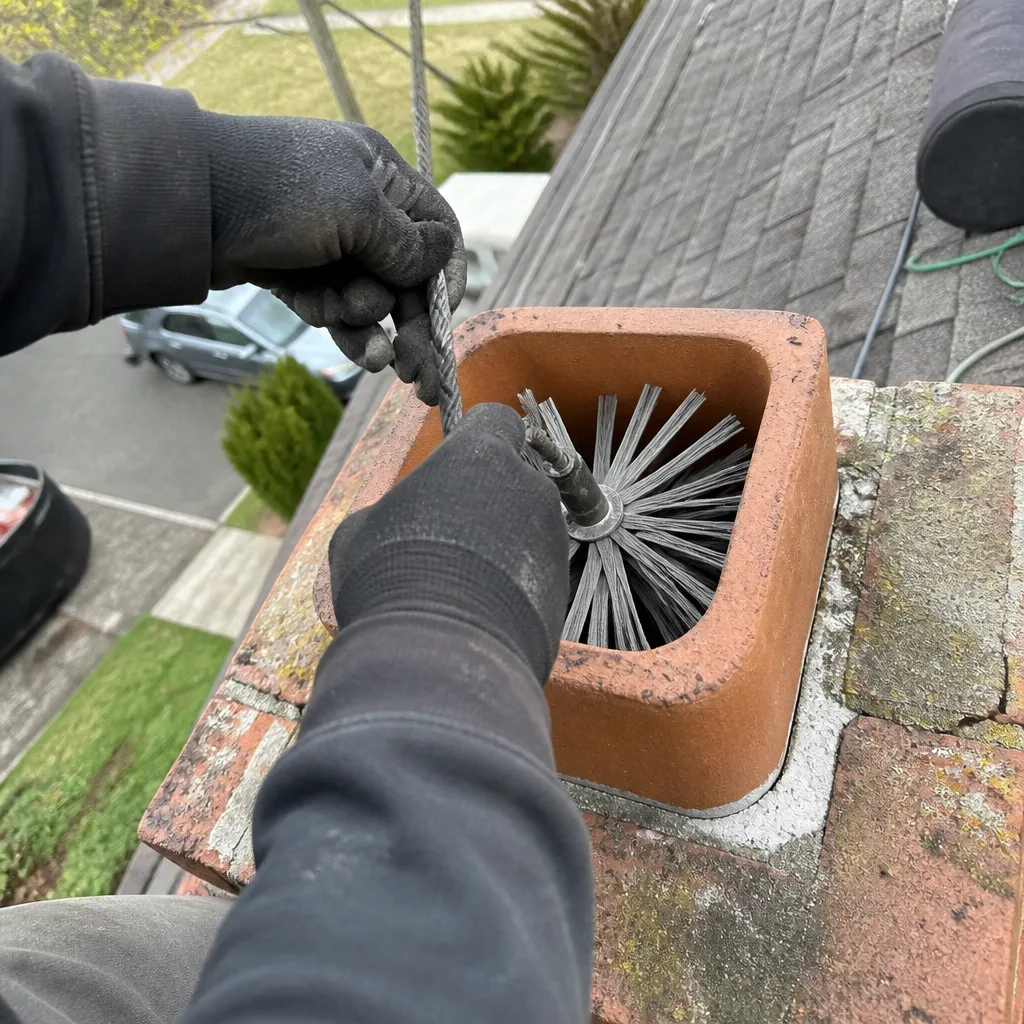
If a sweep leaves your house without handing you a written record of what was found and what was done, you did not get an inspection. For context, see Chimney Cleaning Warning Signs: A Boston Homeowner’s Reference Guide. You got a cleaning. Those are different things, and in Boston, where home values are high and insurance claims after chimney fires are contested line by line, the difference matters.
A legitimate sweep should leave you with four things, every time:
- A written scope of work before any cleaning begins. This names the work, the price, and what’s included. If the company won’t put it in writing before the tech starts, that’s a signal the final price may not match the quote. Level Two Chimney Boston has done written-price-before-work-start on every job since 2009, because that’s Clause 1 of the Haven Standard: Have it in writing.
- A documented photo record of the flue interior, crown, and cap. Not a verbal summary. Photos. If the sweep can’t show you the inside of your own flue, they didn’t look at it. A camera-scan inspection per NFPA 211 Level 2 is the minimum standard, and the photo archive should be included as standard, not as an add-on. This is Clause 4 of the Haven Standard, and it’s been our default since 2009.
- A written description of what was found. Creosote class (Class I, II, or III), liner condition, crown condition, flashing condition, damper function. Each item should be named and described in plain terms, then what it means in one clause. “Class III creosote is the glazed, tar-like deposit that constitutes a fuel load; it requires chemical treatment or mechanical removal before the flue is safe.”
- A written warranty for any repair work performed. If a crown was sealed, a cap replaced, or a liner installed, you should walk away with a written warranty document, not a verbal promise.
The absence of paperwork tells you the company is selling effort, not evidence. You want the evidence. It’s the only way to know what’s in your chimney.
How to Log a Cleaning Record That Satisfies Insurance and Massachusetts Disclosure Norms
Massachusetts law requires sellers to disclose known material defects in a home, and chimney condition is routinely listed on those disclosure forms. But here’s what most Boston homeowners don’t realize until after the fact: a wood-burning fireplace in Massachusetts typically requires a certificate of inspection from a licensed professional before a home sale can close, and if you can’t produce a consistent maintenance log, the buyer’s inspector will flag the chimney as an unknown, which means a repair credit or a delayed closing.
Here’s how to log a cleaning record that holds up:
- Keep the written scope, photo record, and warranty in a physical folder or a dedicated cloud folder. Not in your email inbox where it will scroll into oblivion. One folder per chimney, and add every annual record to it.
- Note the date, the technician’s name, what was cleaned, what was found, and what was recommended. This is your baseline. When something changes two years later, you’ll know exactly when it changed and whether it was documented at the time.
- If the sweep recommends repair work, get the recommendation in writing with a price and a timeframe. “Liner crack noted, recommend replacement within 24 months, $3,200 written estimate provided” is a defensible log entry. A verbal “you might want to think about the liner” is not.
- Keep the records going back at least as long as you own the home. Insurance adjusters and real estate attorneys want continuity. A three-year gap in the record invites the interpretation that the chimney was neglected.
This log is also your insurance documentation if a chimney fire occurs. Insurers routinely ask for maintenance history after a claim, and a homeowner who can produce a dated photo record from a camera-scan inspection is in a far stronger position than one who says “we had it swept when we moved in.”
Post-Storm Checklist: What to Check After a Nor’easter or Ice Event
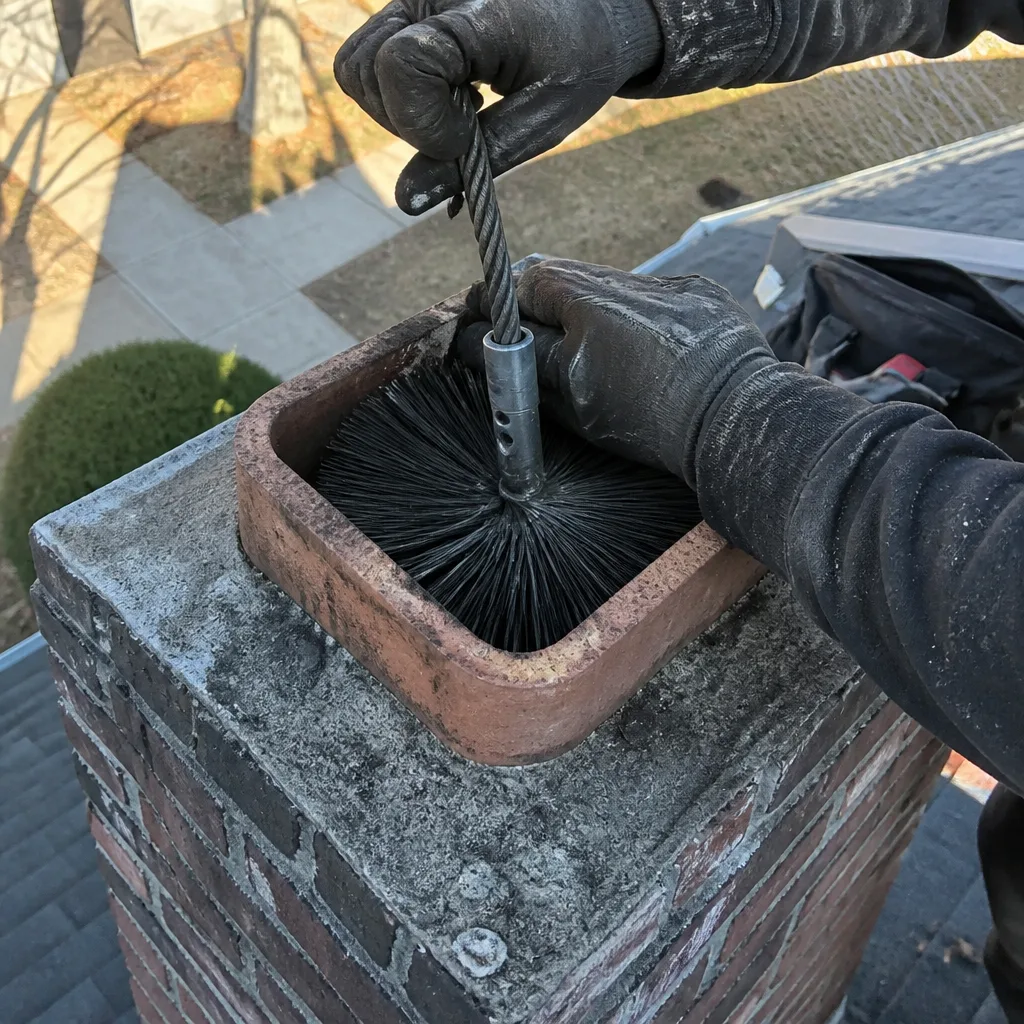
Boston gets hit by nor’easters and ice storms with enough regularity that the post-storm chimney check should be a habit, not an afterthought. Here’s what to look for after every major storm, before you light the first fire.
- Check the cap from the ground. High winds can rotate, dent, or completely remove a chimney cap. If the cap is gone, rain and animals get direct access to the flue. If it’s dented, the spark arrestor may be compromised.
- Look for water stains on the ceiling near the chimney. This is the indoor tell that storm-driven rain got past the flashing or through a crown crack. The stain may not appear for weeks, so check again a month after the storm.
- Check for ice dam formation at the chimney-roof junction. Ice dams form when snow melts, refreezes, and forces water backward under the flashing. If you see a ridge of ice built up against the chimney, the flashing is taking on water pressure it wasn’t designed for.
- Inspect the crown for new cracks. A hard freeze after a soaking rain is the exact condition that widens crown cracks. If you see a crack that wasn’t there in October, it’s not cosmetic. It’s a water entry point.
- Look at the brick for spalling or loose mortar. Ice expansion inside saturated brick can pop the face off individual bricks. Loose bricks at the chimney’s top are a fall hazard and a structural concern.
If any of these items comes back positive, call a sweep before using the fireplace. The $200-$300 you spend on a Chimney Repair in Boston assessment is cheap compared to what water does to a chimney once it gets inside.
The One Item Most Homeowners Skip: Liner Verification After HVAC or Boiler Work
Here’s the maintenance item that almost no Boston homeowner thinks about, and it’s the one we see failure on most often in older homes: after any HVAC or boiler work that involves the chimney, verify that the flue liner is still continuous and intact.
Here’s why this matters specifically in Boston. Many homes built before the 1970s have a single masonry chimney serving both the fireplace and an attached heating appliance, typically a boiler or a water heater. When a contractor replaces the boiler or runs new venting, they often connect the new appliance to the existing flue. But a boiler’s exhaust is lower-temperature and higher-moisture than a wood fire’s exhaust, and over time, that moisture condenses on the interior of a clay tile liner and destroys it from the inside out. The liner can develop gaps or complete separation at the joints, and the homeowner has no idea because the fireplace still works fine.
The risk here is not the fireplace. It’s carbon monoxide from the boiler venting into the living space through a compromised flue. Boston’s older housing stock, with its attached-appliance configurations, makes this a higher-frequency failure mode than in newer suburban construction where appliances vent separately.
So after any boiler replacement, hot water tank replacement, or HVAC retrofit, have the flue camera-scanned. If you’re already getting a Fireplace Services in Boston visit, the camera scan should be part of it. The liner verification is a five-minute addition to a standard sweep, and it’s the difference between catching a carbon monoxide risk early and finding out about it from a CO detector at 2 a.m.
How Often Should a Boston Chimney Be Cleaned?
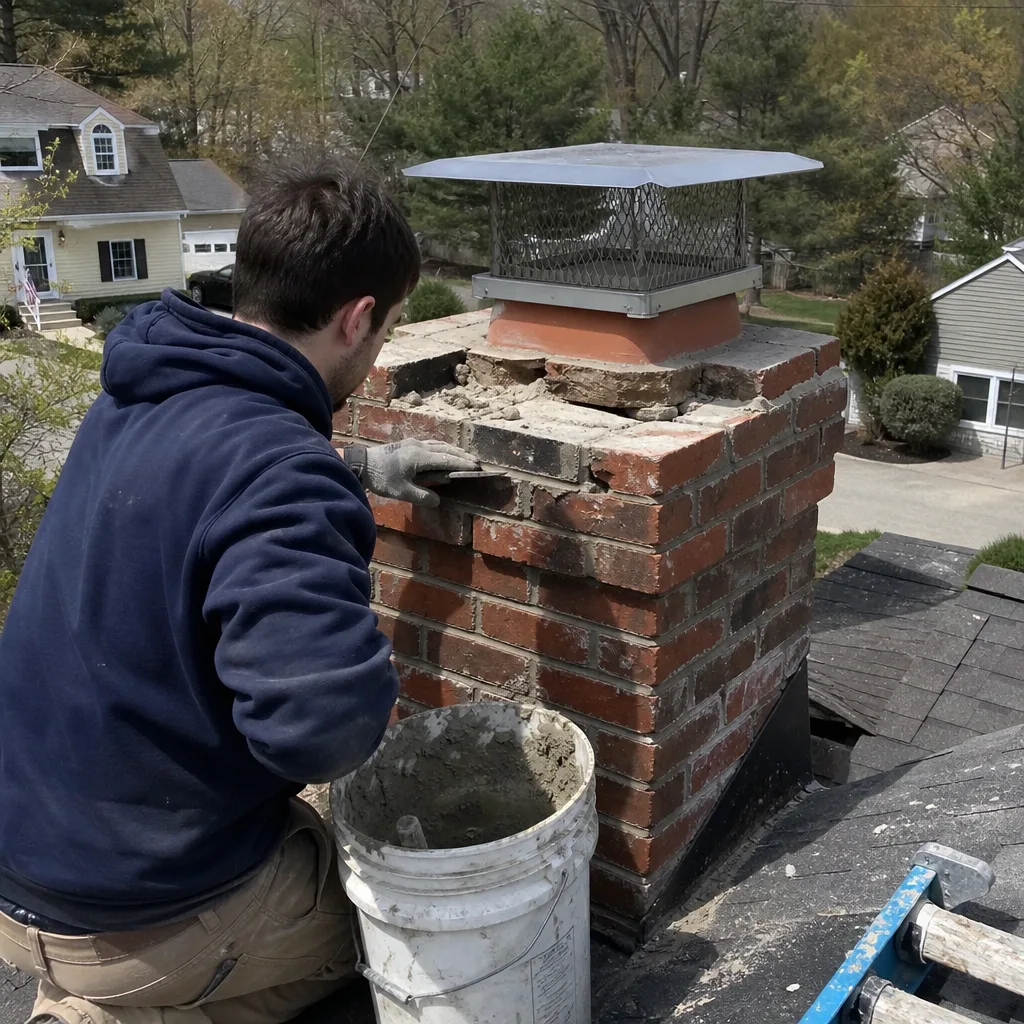
The NFPA 211 standard says chimneys should be inspected at least once a year and cleaned as needed; see The Complete Guide to Chimney Cleaning in Boston for full details. For most Boston homeowners who burn wood regularly from October through March, “as needed” means once a year, scheduled in late summer or early fall. Here’s the reasoning:
Creosote, the flammable byproduct of wood combustion, builds up fastest in the shoulder seasons when fires burn cooler and less efficiently. By the end of a Boston winter, a flue that was clean in September can carry a quarter-inch of creosote, enough to sustain a chimney fire if ignited. An annual sweep resets that fuel load to zero before the next burning season.
If you burn wood only occasionally, the cadence can shift to every other year, but the annual inspection still matters because it’s not just about creosote. The inspection catches the crown cracks, the flashing gaps, and the liner damage that happen regardless of how much you burn. Boston’s climate does year-round damage to masonry, even to chimneys that never see a fire.
What Does Chimney Cleaning Cost in Boston?
In Boston, a standard chimney sweep with a camera-scan inspection typically runs $250-$450, depending on the height of the chimney, the amount of creosote, and whether the flue has been neglected. If the sweep finds Class III creosote, which is the glazed, tar-like deposit that forms from prolonged low-temperature burning, the cleaning cost can push toward $600 because chemical treatment or mechanical removal is required.
Here’s the cost breakdown by service type:
- Standard sweep with NFPA 211 Level 2 inspection: $250-$450
- Sweep with Class III creosote removal: $450-$600
- Crown seal or minor crown repair: $300-$900 depending on crack severity
- Chimney cap replacement: $150-$400 installed, depending on material and flue size
- Stainless steel liner installation (if cracked liner found): $2,500-$6,000 depending on chimney height and access
- Full crown rebuild: $1,200-$2,500
Any sweep who gives you a price over the phone without seeing the chimney is guessing. A written price before work starts is the standard you should ask for, and if the company won’t commit to one, walk. You should know the exact dollar figure before the tech arrives, not after. Level Two Chimney Boston has built its practice around this since 2009, because a written price, written scope, and written warranty are the only honest way to sell chimney work.
Common Mistakes to Avoid
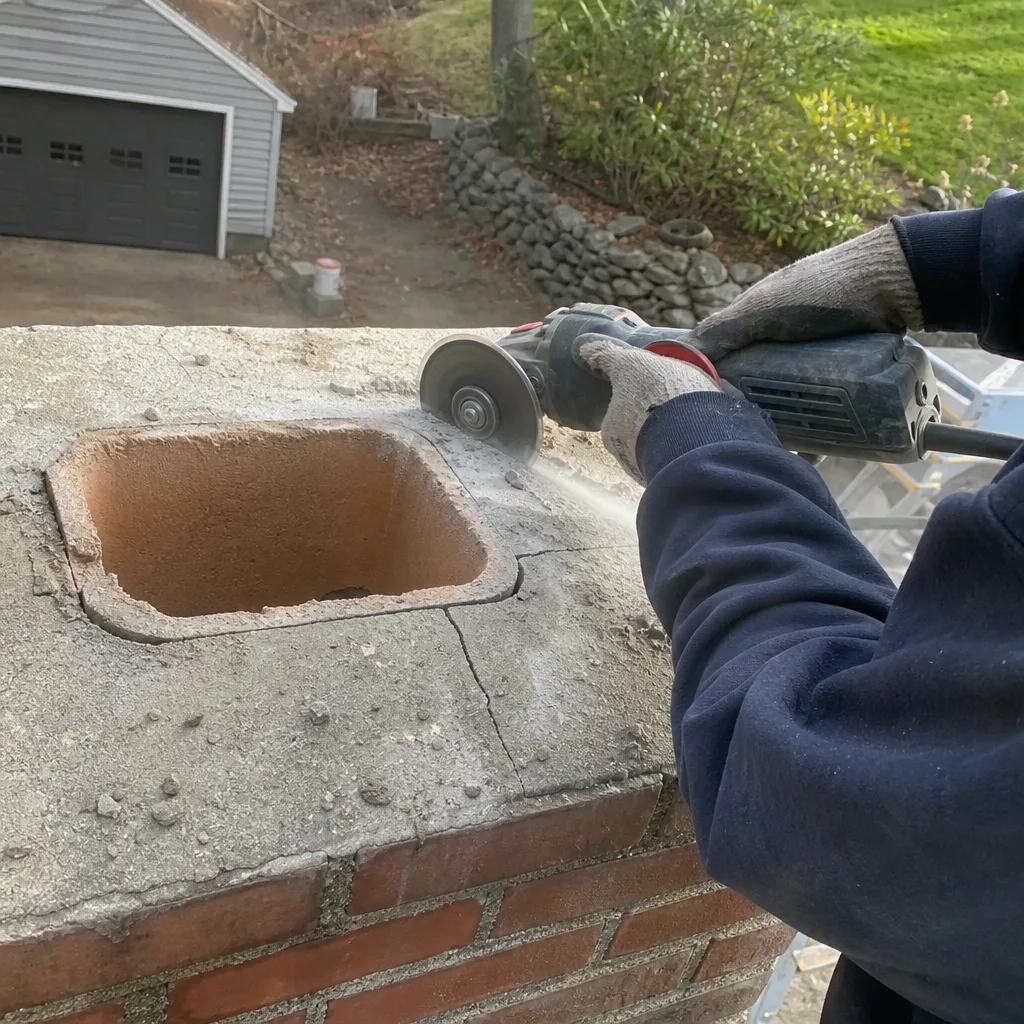
- Skipping the camera scan to save money. A “cleaning” that doesn’t include a documented look inside the flue tells you nothing about liner condition, and it’s the liner that determines whether your chimney is safe to use. Paying $180 for a flashlight look is not a discount. It’s a false economy.
- Burning green or unseasoned wood because it’s cheaper. Green wood burns cooler and produces more creosote per fire than seasoned hardwood. Boston’s damp climate already works against you here, and the extra creosote accumulates faster than you’d expect.
- Assuming the chimney is fine because the fireplace works. The fireplace can draw perfectly while the liner above it is cracked, the crown is leaking, or the boiler venting is compromised. Function is not the same as condition.
- Not keeping the inspection records. The absence of a maintenance log can cost you a repair credit at closing or weaken an insurance claim after a chimney fire. Keep the records.
- Waiting until October to book the sweep. Every chimney company in Boston is booked solid in October and November. Call in August or early September, or expect to wait four to six weeks for an appointment.
- Treating crown cracks as cosmetic. In Boston’s freeze-thaw climate, a hairline crack is a scheduled masonry failure. What looks small in October is structural by March.
When to Call a Professional
Call a chimney professional in Boston if you see any of these: evidence of water entry in the ceiling near the chimney; a cap that’s missing, dented, or rusted through; loose or spalling brick at the chimney’s top; a damper that won’t open or close; or a boiler or HVAC replacement that was connected to an existing flue without a liner verification. These are all conditions that get more expensive the longer they wait, and several of them are safety risks rather than cosmetic issues. If you’re not sure what you’re looking at, that’s fine. A camera-scan inspection gives you the evidence you need to make a decision, and it costs less than the repair you’ll eventually need if you ignore the problem. Level Two Chimney Boston offers free estimates in Boston, call (857) 567-8887.
Frequently Asked Questions
A standard chimney sweep with a camera-scan inspection in Boston typically costs $250-$450. Class III creosote removal, which requires chemical or mechanical treatment, pushes that to $450-$600. Any quote should be itemized in writing before the tech starts work, and if a company won’t give you a written price up front, that’s a signal to find one that will. Call (857) 567-8887 for an exact quote, estimates are free.
You need a new liner if a camera scan shows cracks, gaps between tile sections, or missing tile pieces in the existing liner. A cracked liner is a fire risk and a carbon monoxide risk, and no amount of sweeping fixes it. The only way to know is to look, which means a camera-scan inspection, not a visual check from the roof. If the recommendation is made, ask for the footage or photos and a written price before agreeing to the work. If the evidence isn’t shown to you, get a second opinion.
If you skip a cleaning, creosote continues to build up inside the flue. At a quarter-inch of buildup, the creosote can sustain a chimney fire, which reaches temperatures that crack flue tiles, melt mortar, and sometimes spread to the roof structure. Skipping the inspection also means you miss the crown cracks and liner damage that happen regardless of use. The cleaning is cheap insurance against a repair that costs ten times as much. Call (857) 567-8887 to schedule a sweep before burning season.
Once a year, scheduled in late summer or early fall, before the cold-weather demand spike. If you burn wood heavily from October through March, the annual cadence is non-negotiable. If you’re an occasional burner, the cleaning can stretch to every other year, but the annual inspection should still happen to catch water and masonry issues that have nothing to do with how much you burn.
You can check the cap, crown, and flashing from the ground or with a ladder, but you cannot inspect the flue interior without a camera. Everything above the damper is hidden from view, and that’s where the dangerous conditions develop. The NFPA 211 standard specifies a Level 2 inspection for any chimney that’s being evaluated after a change or before a sale, and that requires camera documentation. If you want the safety judgment, you need the camera.
Annual chimney cleaning removes the creosote fuel load that makes chimney fires possible, so yes, it’s the single most effective preventive measure you can take. But it works in combination with burning seasoned wood, maintaining the cap and crown, and verifying the liner after any HVAC work. A clean flue with a cracked liner is still a hazard, which is why the camera-scan inspection matters as much as the cleaning itself. Call (857) 567-8887 to get the full picture of your chimney’s condition.
The Bottom Line
A Boston chimney maintenance checklist works when it’s built around evidence, not habit. Check the cap, crown, flashing, liner, firebox, and damper before the season, after every major storm, and after any HVAC or boiler work. Get the camera-scan inspection and the written photo record every time, not as an add-on but as the standard. Log every record in one folder, and keep it for as long as you own the home. The chimney that fails in Boston isn’t the neglected one, it’s the one that was never documented. Schedule the sweep in late summer, keep the records, and when something changes, you’ll know exactly what changed and when. For more guides & resources, visit our blog. That’s the difference between a repair and a replacement.
Written by Corrine Halstead, Owner at Level Two Chimney Boston, serving Boston since 2009.