
Last updated September 20, 2026
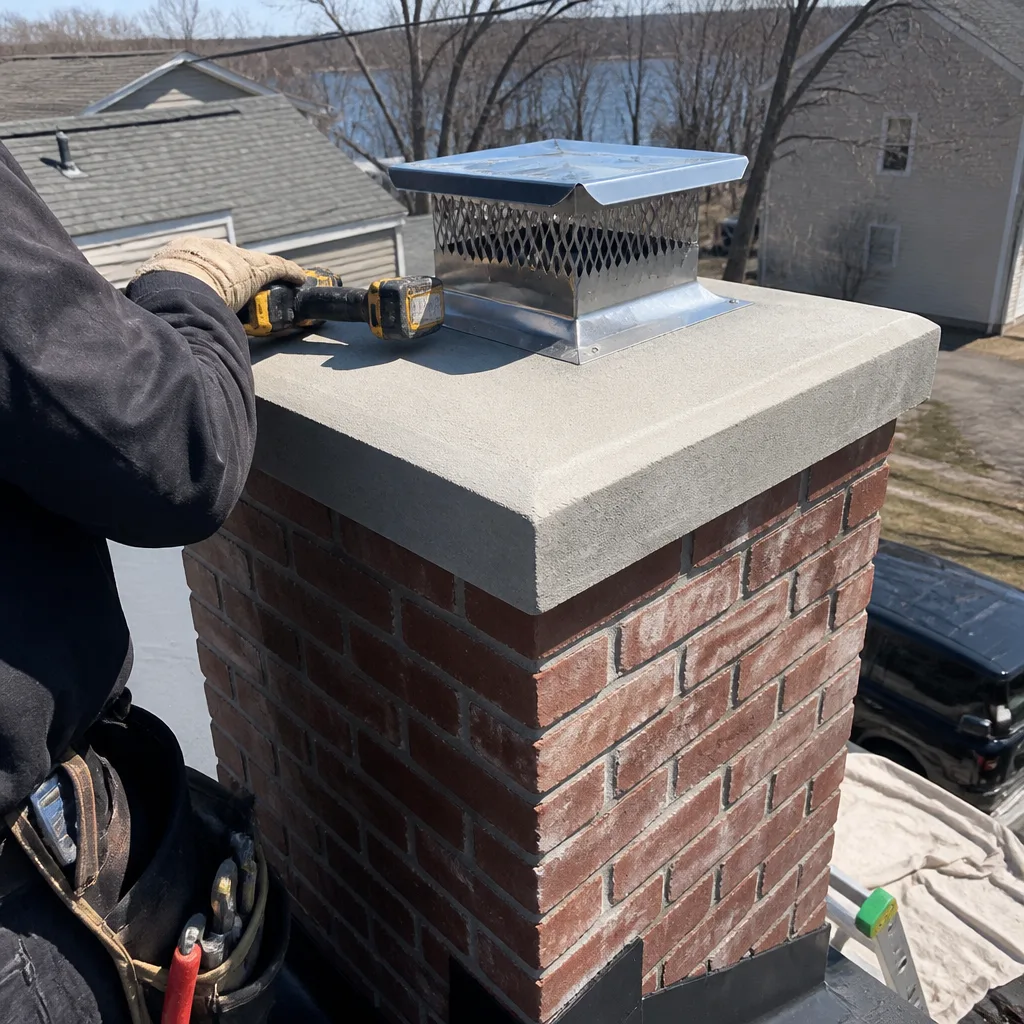
Level 1 sweep and inspection to the NFPA 211 annual standard - flue, crown, cap, and flashing checked and photographed
Chimney sweep logs do not sweep chimneys. They loosen some creosote - which then falls where a brush and vacuum still have to collect it.
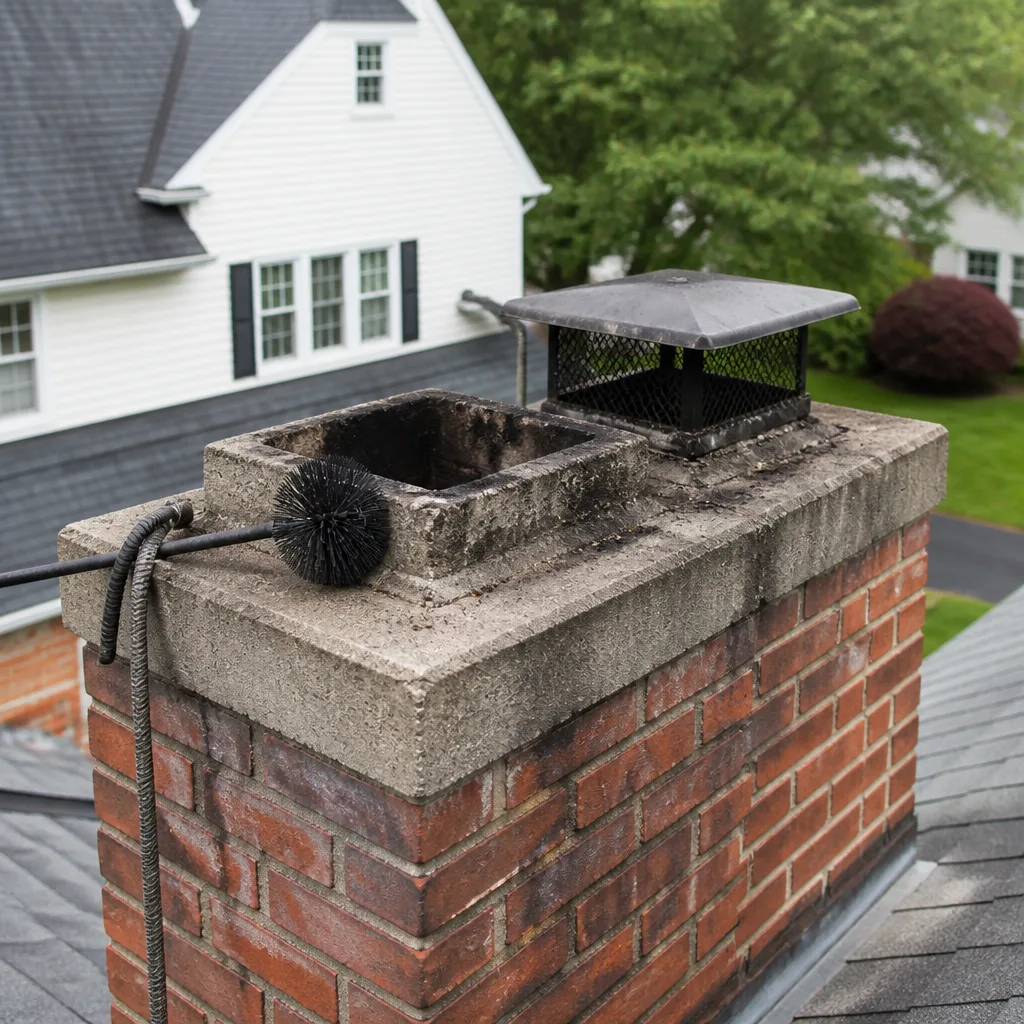
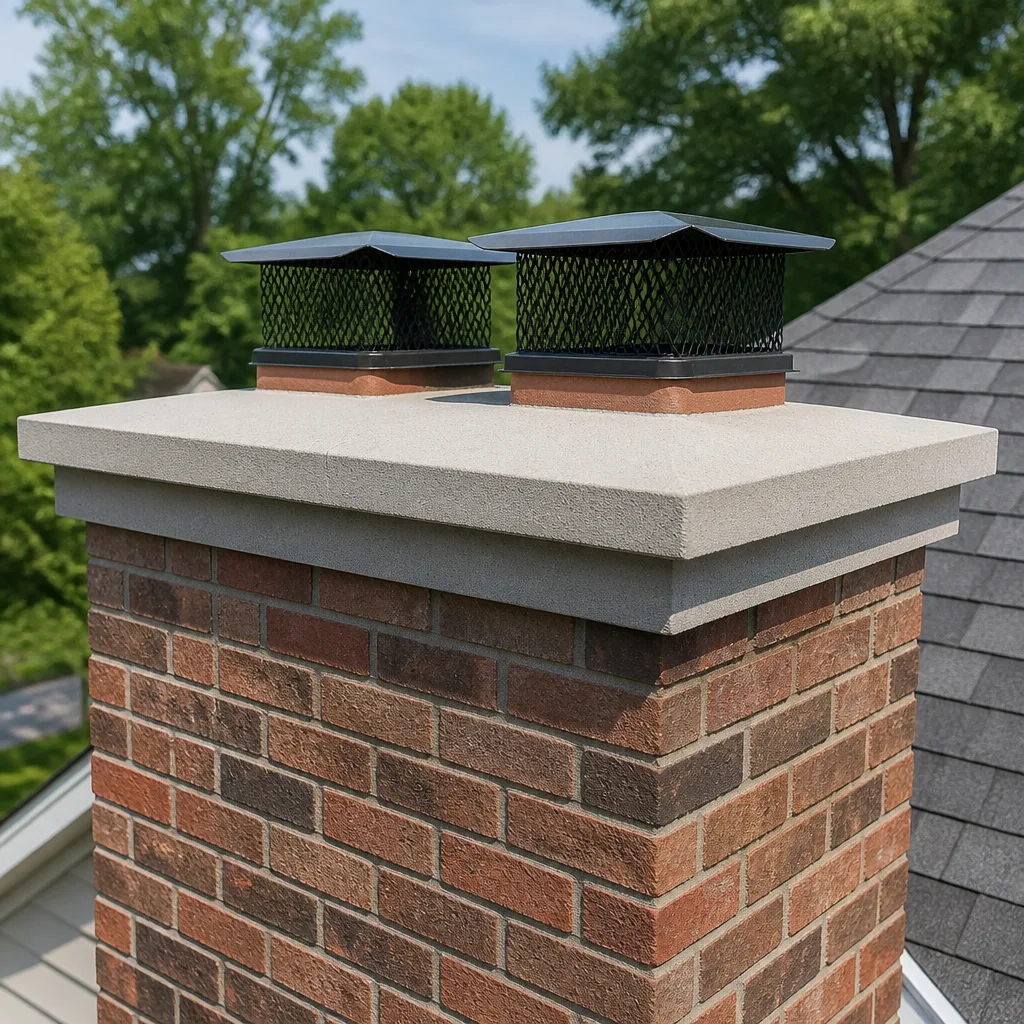
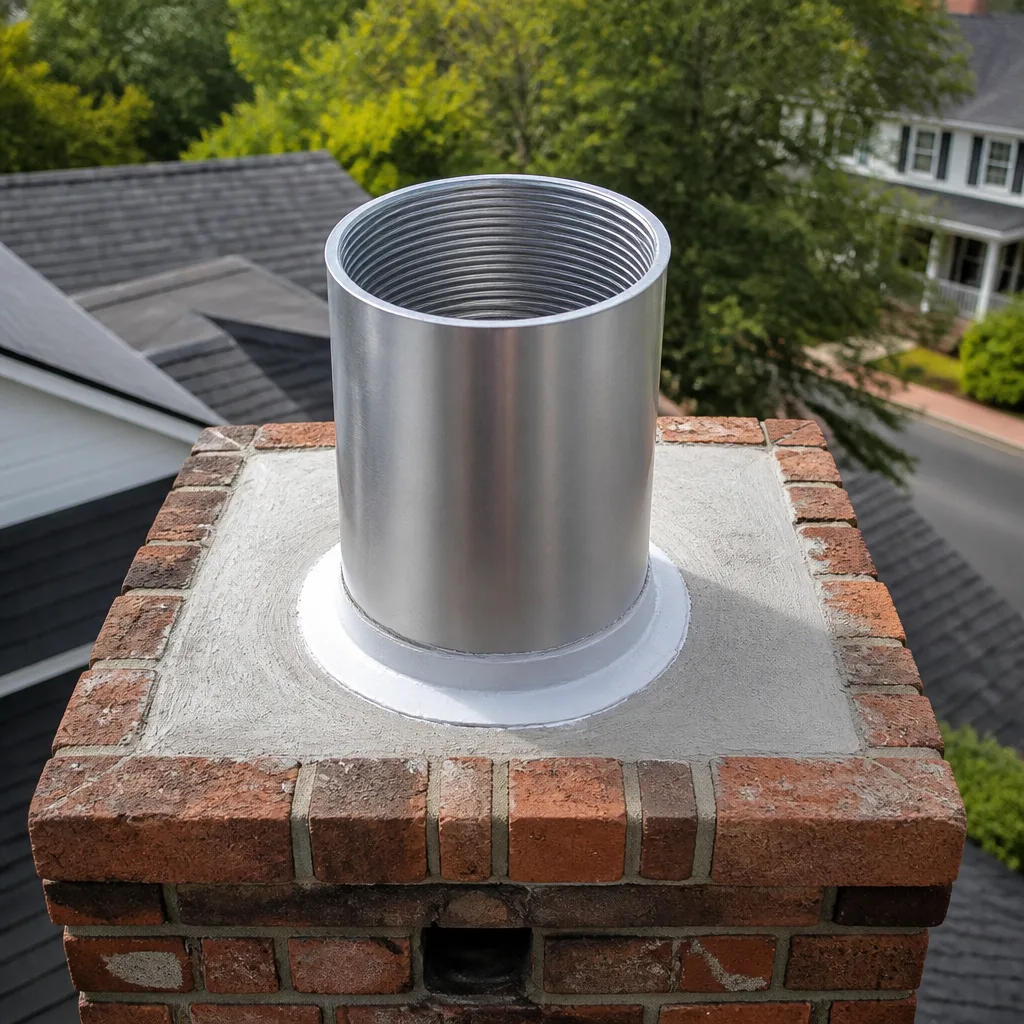
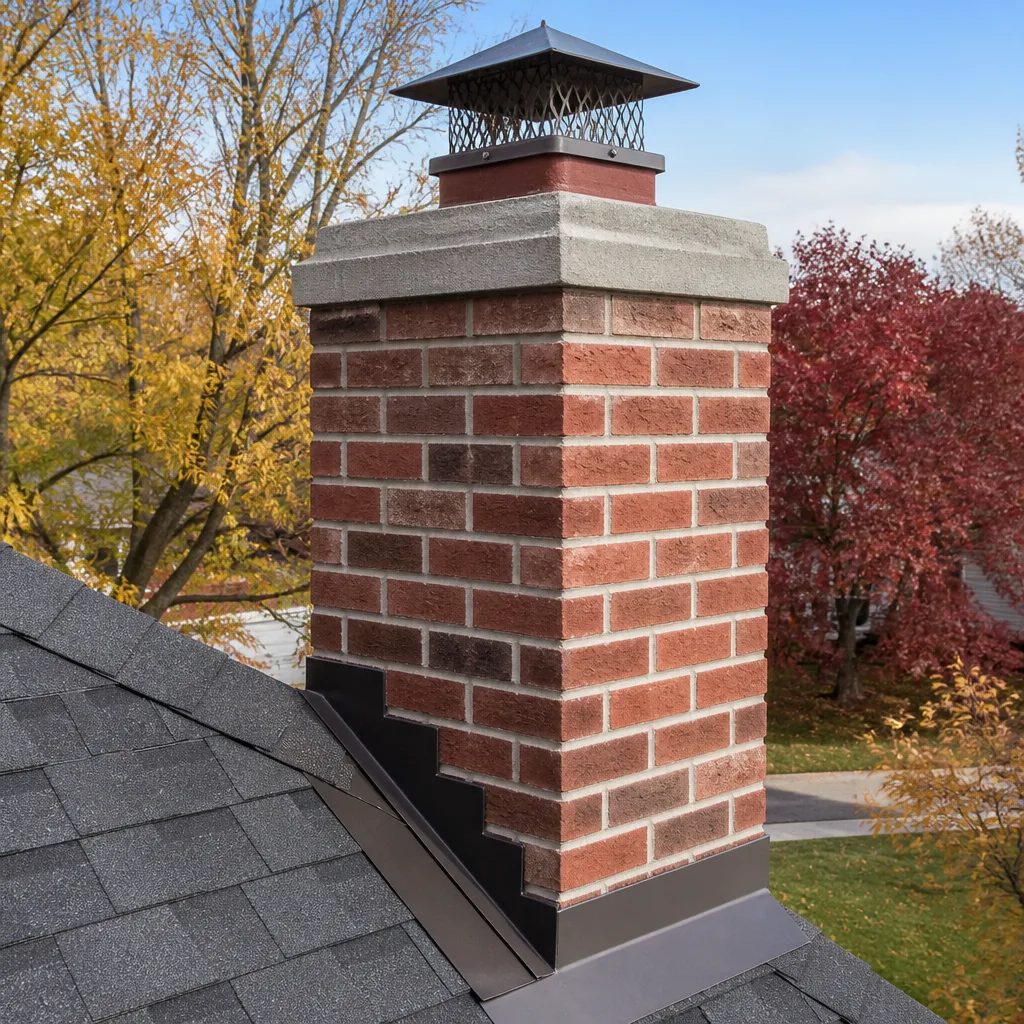
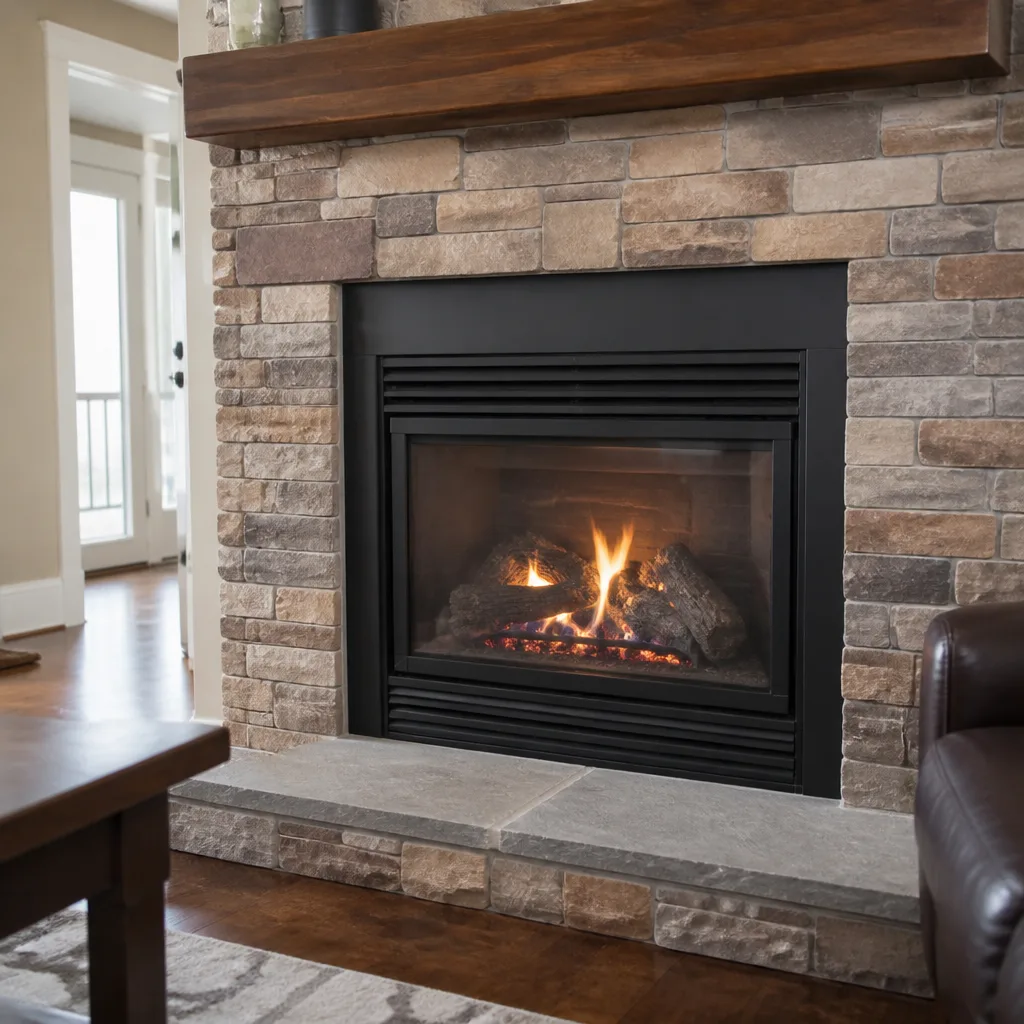
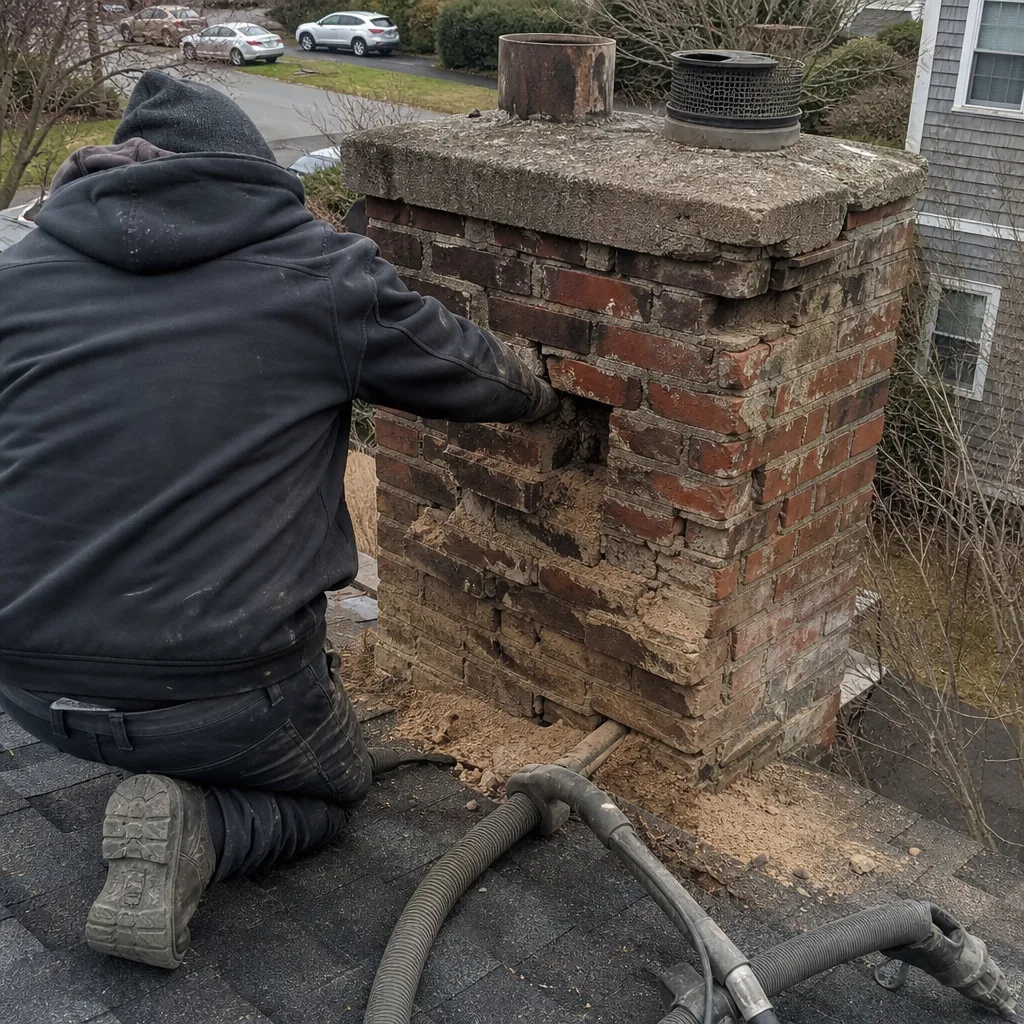 Before
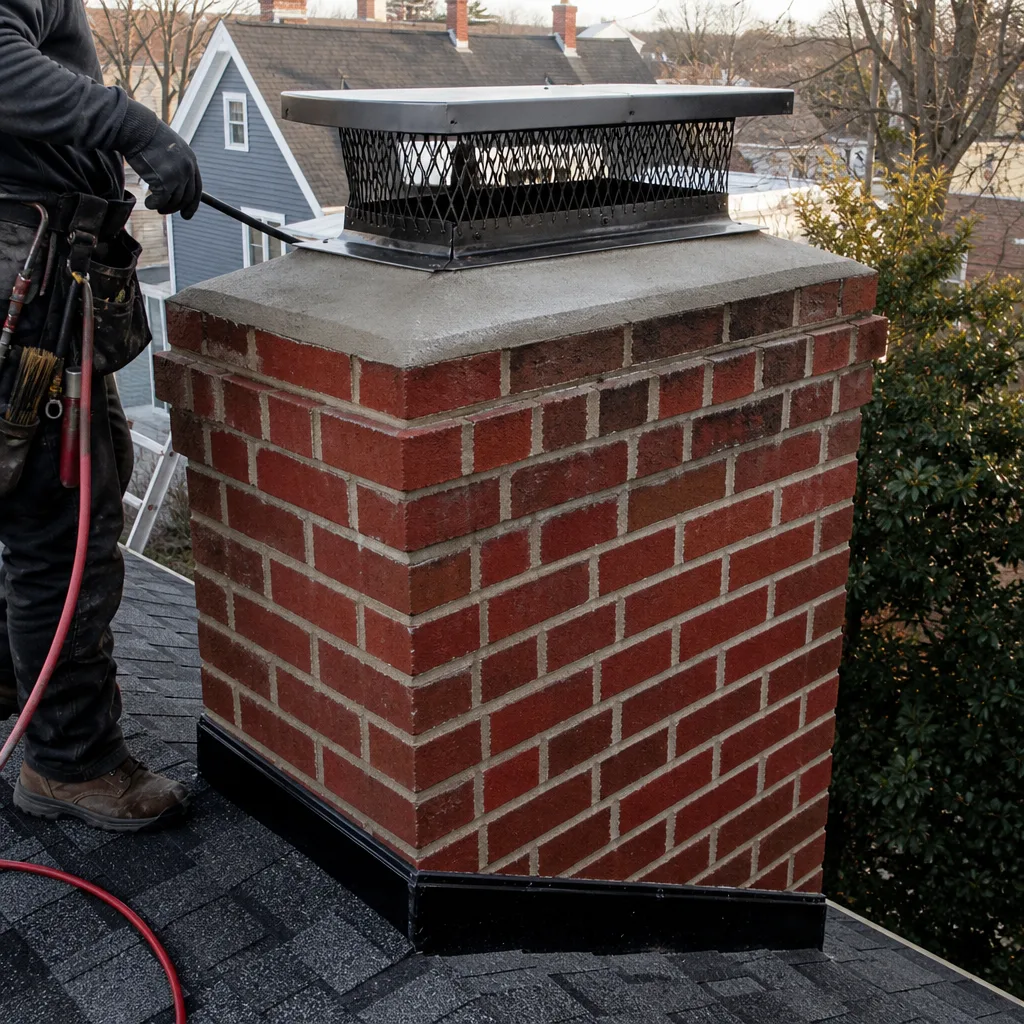 After
After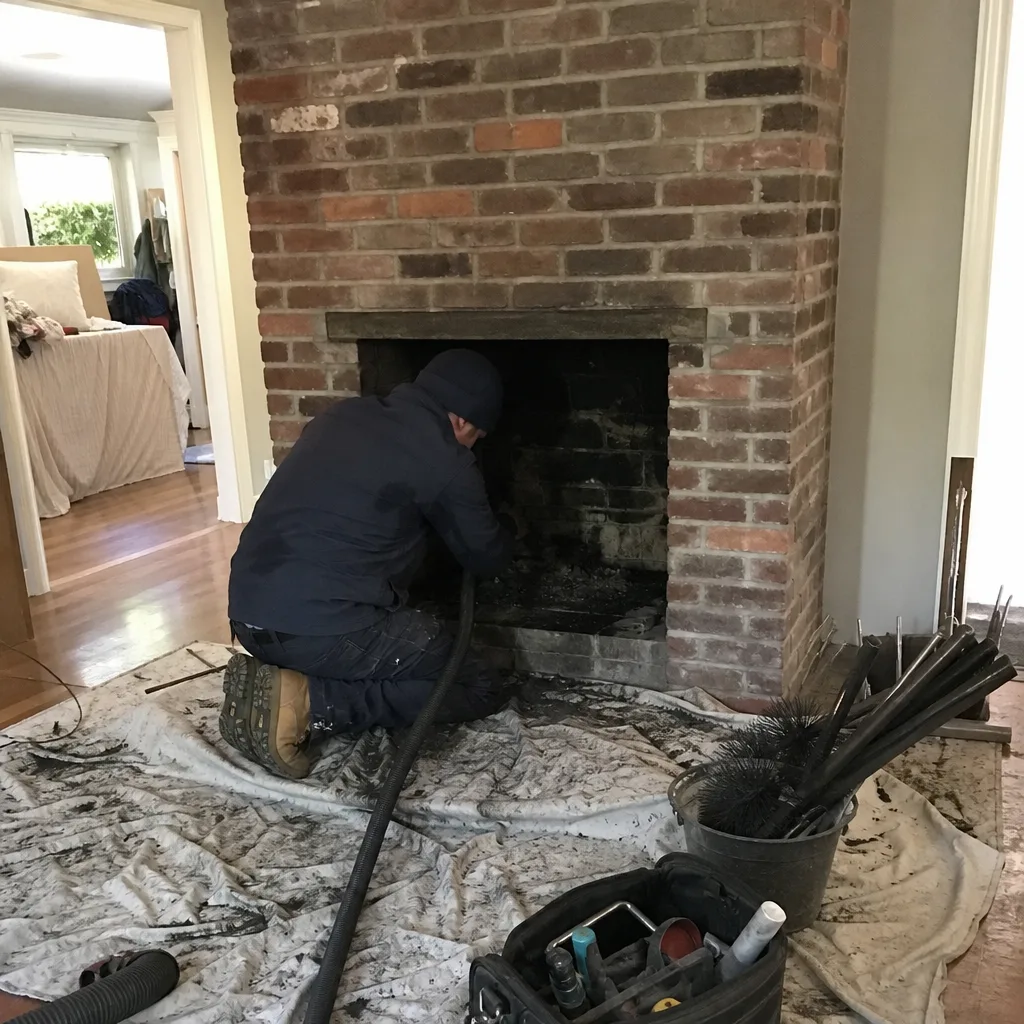 Before
 After
After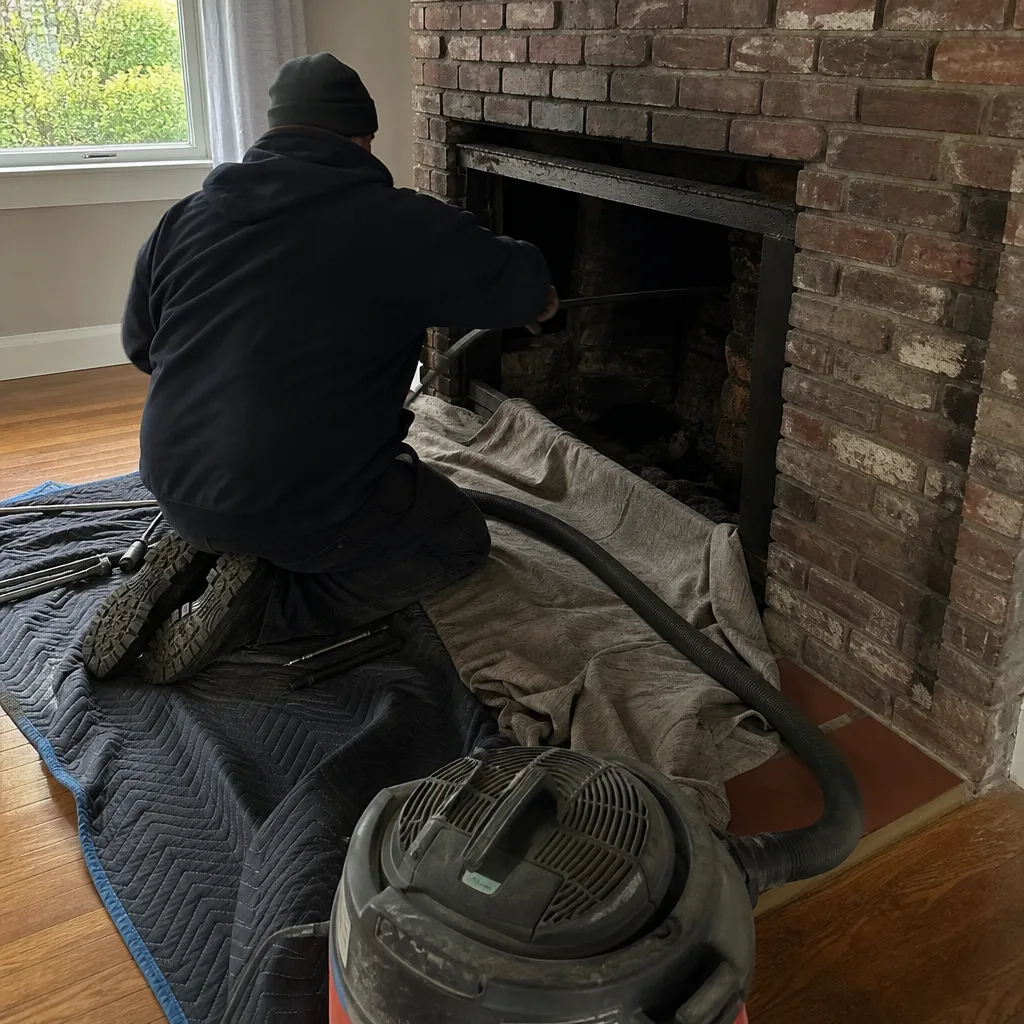 Before
 After
AfterThe Complete Guide to Chimney Cleaning in Boston
More than 60% of Boston’s residential housing stock was built before 1960. That means most chimneys in this city were originally designed for fuels and appliances that no longer exist inside them. A triple-decker in Dorchester that burned coal in 1940, then oil in 1975, then got converted to gas in 2005 now has a flue carrying combustion byproducts it was never sized or lined for. This guide explains what that history means for how your chimney should be cleaned, inspected, and maintained today in Boston specifically, not what a generic national checklist says, and you can find more guides & resources on our blog.
Quick Answer
Chimney cleaning in Boston typically costs $189 to $389 for a standard sweep, depending on flue condition, accessibility, and whether you need a Level 2 camera inspection included. Most Boston homes should schedule a sweep and inspection once a year if the fireplace is used regularly, and every two years if it’s decorative or gas-only. The real cost driver in Boston isn’t the cleaning, it’s what the camera finds once someone actually looks.
Table of Contents
- Why Boston Chimneys Are Different From the Rest of the Country
- What Chimney Cleaning Actually Involves
- How Often Should You Clean a Chimney in Boston?
- The Oil-to-Gas Conversion Problem Nobody Talks About
- Freeze-Thaw Cycles and What They Do to Your Liner
- Why a Level 2 Camera Inspection Is the Boston Baseline
- What Your Written Cleaning Record Should Include (and Why It Matters)
- Common Mistakes to Avoid
- When to Call a Professional
- Frequently Asked Questions
- The Bottom Line
BeforeAfterWhy Boston Chimneys Are Different From the Rest of the Country
National chimney guides assume a suburban house with a wood-burning fireplace built in the 1990s. That is not what most Boston homeowners live in.
Boston’s housing stock runs older, denser, and wetter than almost any other major metro in the country. The triple-deckers of Dorchester and Roxbury, the brick rowhouses of the South End and Beacon Hill, the converted Victorians of Somerville and Cambridge all predate modern chimney codes by decades. Many were built before flue liners were required at all, which means the interior walls of the flue are raw brick and mortar, not the smooth clay or steel liner you’d find in a newer home.
Then you add Boston weather. The city averages around 48 inches of rain and 49 inches of snow annually, with frequent freeze-thaw cycles from November through March. Water gets into brick and mortar, freezes, expands, and spalls the surface, which is the trade term for when brick faces crack and flake off. Every cycle opens new gaps for more water to get in. A chimney that looks fine from the sidewalk can be losing mortar from inside the flue where you can’t see it without a camera.
And then there’s the conversion history. Tens of thousands of Boston homes switched from oil heat to natural gas between 1980 and 2015, a change that altered what goes up the flue. We’ll get into why that matters in a moment. The short version: your chimney was designed for one job, and it’s now being asked to do a different one, in a climate that punishes masonry harder than almost anywhere else.
What Chimney Cleaning Actually Involves
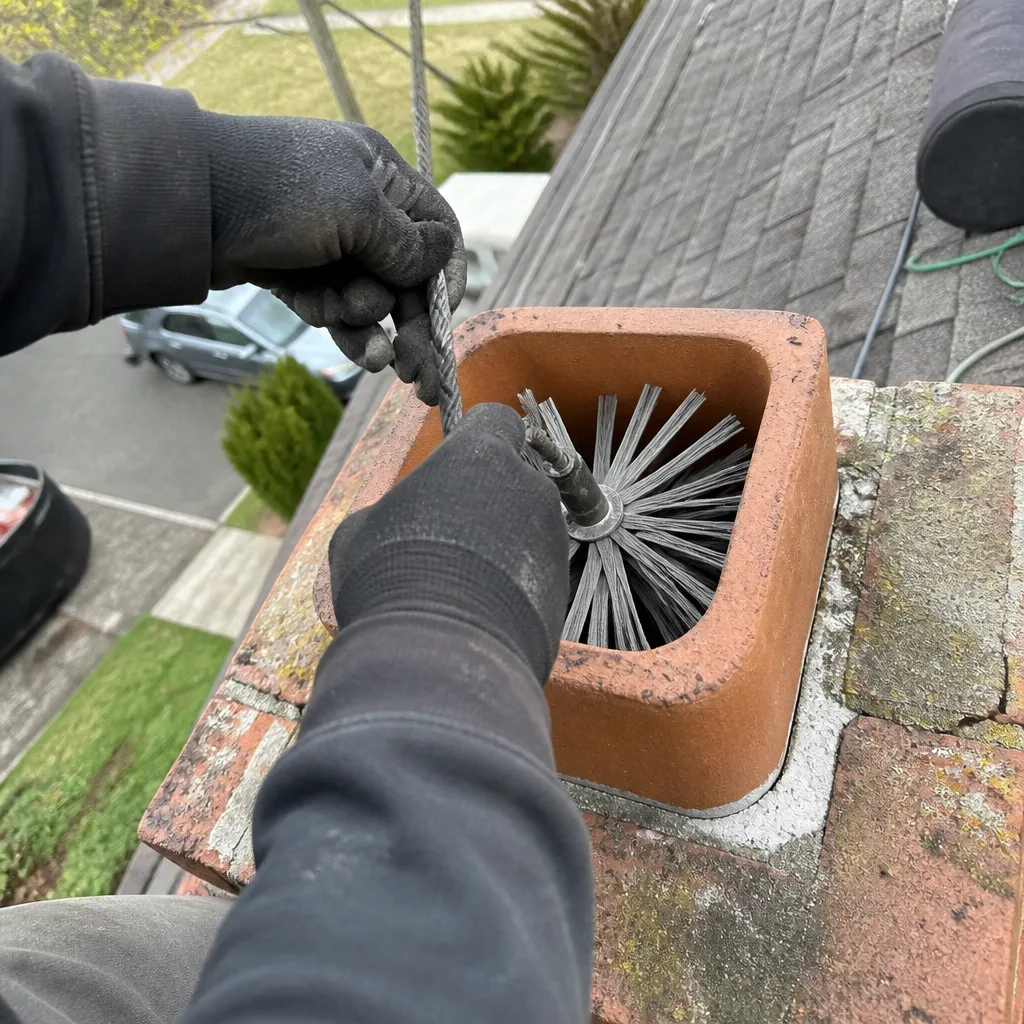
A proper chimney cleaning in Boston should never be just a brush up the flue. That’s the old model, and it leaves the most important work undone. Here’s what a complete sweep looks like when done to the standard we’ve used since 2009:
- Pre-inspection. Before any brush touches the flue, the technician should check the firebox, damper, smoke chamber, and exterior crown for visible damage. This determines whether cleaning is even safe to perform or whether a problem needs to be flagged first.
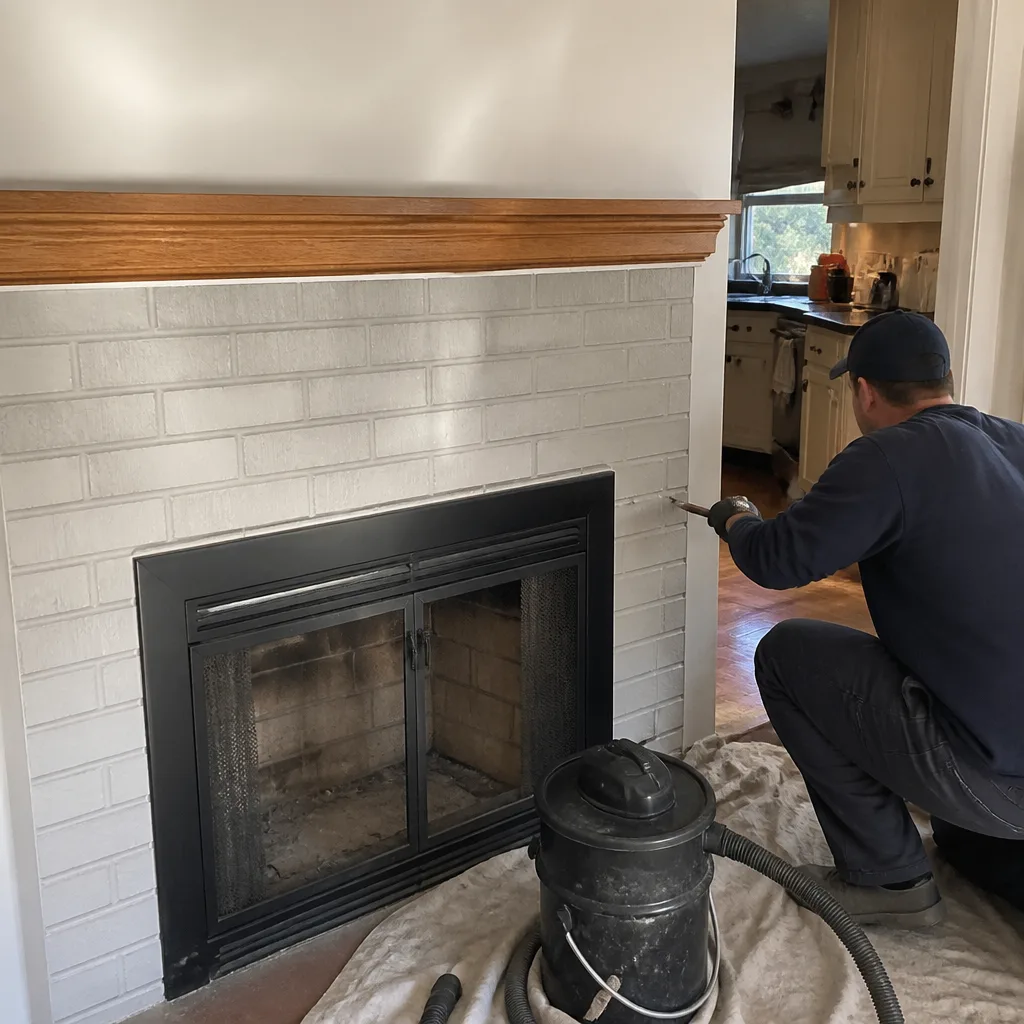
- Interior protection. Drop cloths go down around the hearth. Plastic sheeting covers doorways if needed. A good sweep leaves your living room as clean as it was when they arrived.
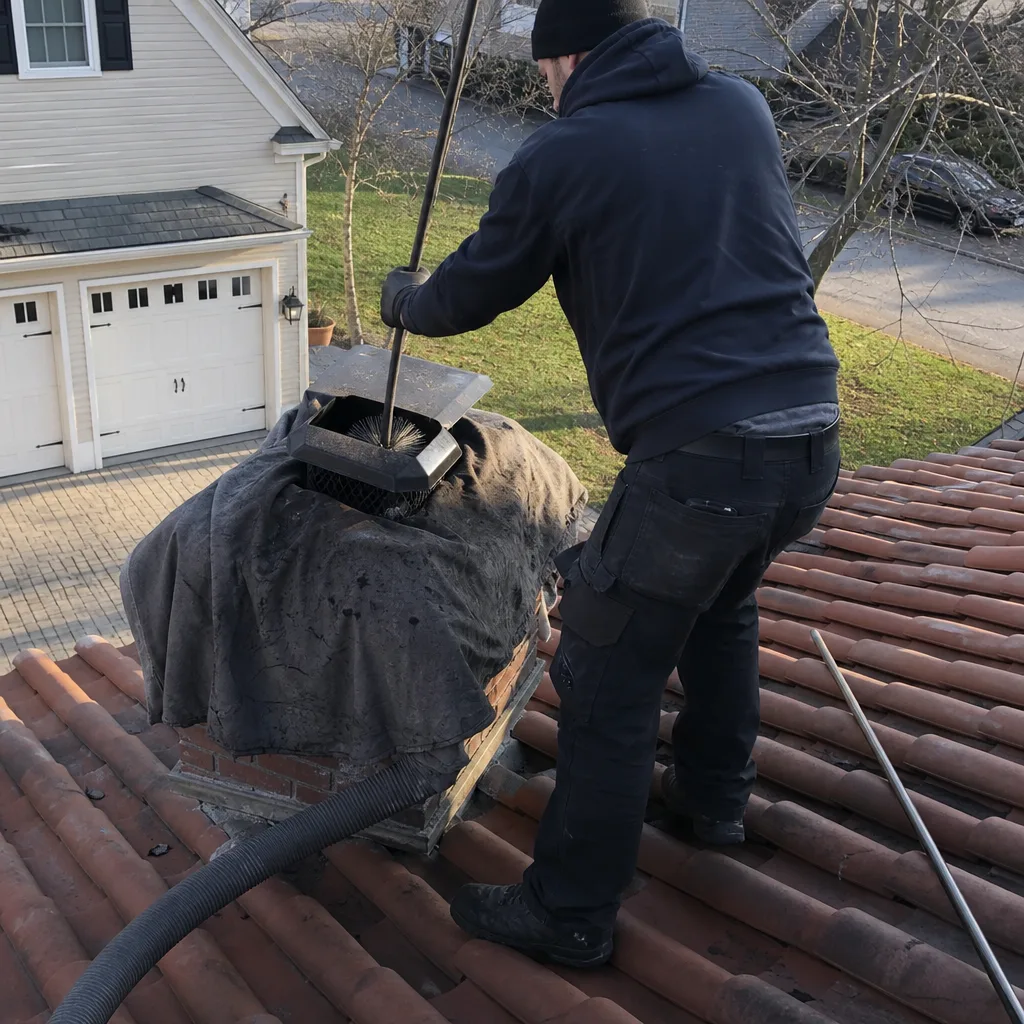
- Mechanical sweeping. Wire or poly brushes sized to your specific flue dimensions run from top to bottom, or bottom to top with a rotary system. This removes soot, creosote, and, in Boston specifically, the crusty residue that burning oil leaves behind.
- Smoke chamber and firebox cleaning. These areas accumulate debris that a flue-only brush misses. They need to be cleared by hand or vacuum.
- Camera scan. A Level 2 inspection under NFPA 211 means running a camera down the entire flue after cleaning. This is the step that differentiates a documentable service from a guess. The camera shows the liner condition, mortar joints, any cracks, any missing sections, and any staging or obstruction you couldn’t otherwise see.
- Documentation. You should walk away with photos from the camera scan, a written report of what was found, and a written record of the cleaning itself. If a company won’t provide that, they haven’t actually inspected anything.
At Level Two Chimney Boston home, we’ve made the camera scan and photo record standard on every visit, not an upsell. Clause 4 of the Haven Standard requires a documented photo record on every job, and we’ve run that practice continuously since 2009, long before insurers or regulators asked for it.
How Often Should You Clean a Chimney in Boston?
The answer depends on what’s actually going up the flue, and that’s where most generic advice falls apart.
- Wood-burning fireplace used weekly during winter: Clean once a year. Creosote accumulates quickly in cold Boston winters, especially when burning less-than-seasoned wood, which is common in a city where storage space is scarce and wood often sits outside in the weather.
- Wood-burning fireplace used occasionally (a few fires a month): Clean once a year still. Creosote doesn’t care how romantic the fire was. It builds up regardless, and Boston’s damp air causes it to harden faster.
- Gas fireplace or gas insert: The firebox itself needs less attention, but the flue still needs an inspection every one to two years. Gas produces acidic condensate that eats at flue liners over time. You won’t see the damage until it’s significant.
- Decorative-only fireplace (never used): Inspect every two years. Animals nest in unused flues, and you can’t tell from the living room whether a squirrel has built a condo in your smoke chamber.
- Converted oil-to-gas heating flue: This is the one Boston homeowners miss. The flue for your boiler or furnace needs an annual look. We’ll explain why in the next section.
The National Fire Protection Association standard says chimneys should be swept when any appreciable buildup occurs, and inspected at least annually. In Boston’s wet, cold climate and older housing stock, we treat that as a floor, not a ceiling.
The Oil-to-Gas Conversion Problem Nobody Talks About
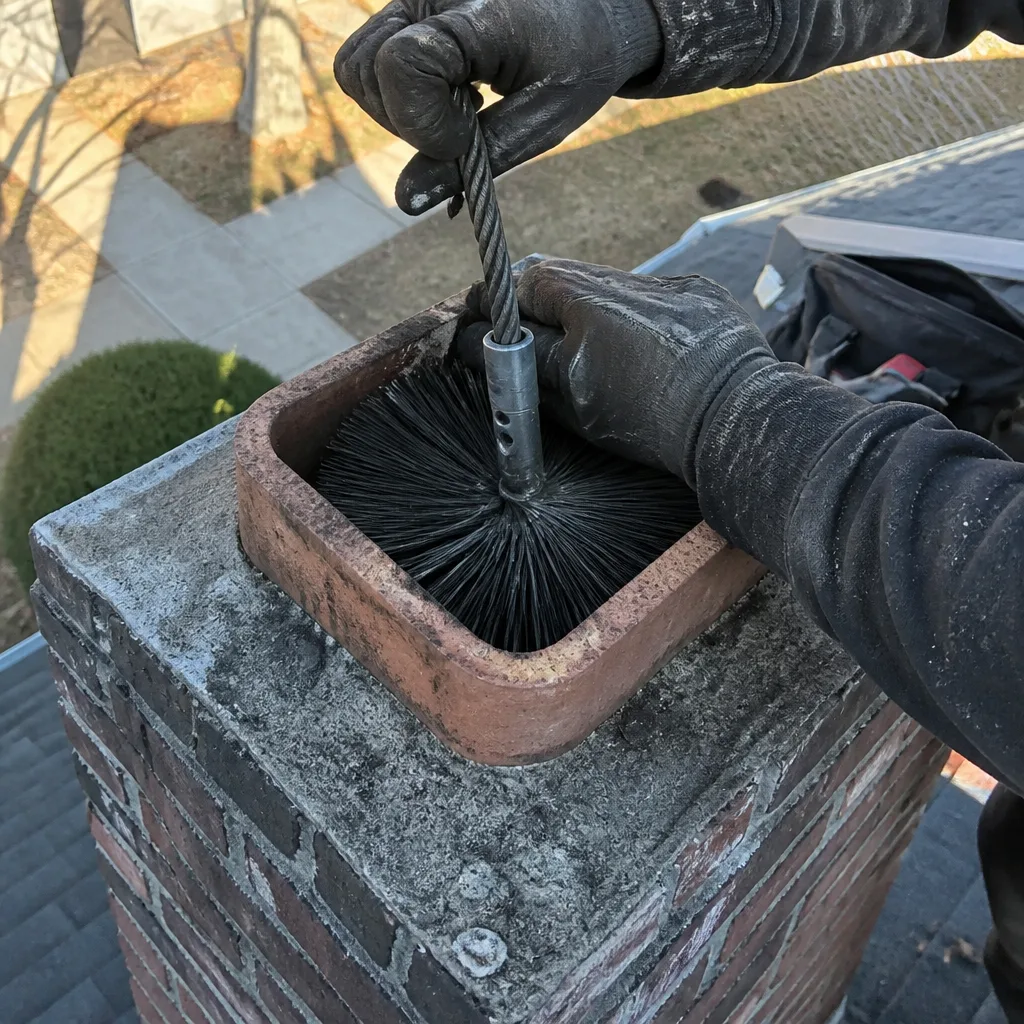
When a Boston home converted from oil heat to natural gas, the old oil flue was often left in place and simply reused for the new gas appliance. On paper, that works. In practice, it creates a set of conditions that standard creosote-focused cleaning completely misses.
Oil combustion produces soot. It’s thick, oily, and it clings to flue walls, especially in the large masonry flues that old oil systems used. Gas combustion, by contrast, produces primarily water vapor and low-temperature acidic gases. When gas exhaust flows through a flue that still has oil soot on its walls, the water vapor condenses and mixes with the soot to form an acidic slurry that sits on the liner. That slurry eats away at clay tile liners and corrodes steel liners far faster than either fuel would do on its own.
We’ve seen this pattern in neighborhoods across Boston: Jamaica Plain, West Roxbury, Hyde Park, Roslindale, all full of mid-century homes that converted decades ago. The chimney looks fine from outside. Inside, the liner is being slowly dissolved by an acidic reaction that a standard sweep won’t address because the technician is looking for creosote, not acid corrosion.
What this means in practical terms: if your home is in Boston, was built before 1980, and switched from oil to gas, you need a technician who understands that the residue in your flue is chemically different from a wood-burning fireplace’s residue. The cleaning approach is different. The inspection priorities are different. And the questions you should ask are different, as detailed in our How to Hire a Chimney Cleaning Contractor in Boston: A Step-by-Step Guide: “What condition is the liner in, not just how clean is the flue?”
Chimney Cleaning & Sweep in Boston done right starts with knowing which fuel actually operates in the home today, and which one did before.
Freeze-Thaw Cycles and What They Do to Your Liner
Boston gets an average of 90 to 110 freeze-thaw days per winter. That number matters more than almost anything else on the spec sheet for your chimney, because each cycle is a tiny hammer blow to your masonry and flue liner.
Here’s the mechanism. Water gets into porous brick, mortar, or a cracked crown. Overnight, the temperature drops below freezing. The water expands by about 9% when it turns to ice. That expansion pushes against whatever is holding it. When it thaws the next morning, it contracts, leaving behind a slightly larger gap than was there before. Repeat that 100 times in a season, year after year, and you get spalling brick faces, crumbling mortar joints, crown fractures that widen into full splits, and clay tile liners that crack vertically all the way down.
The real problem is that most of this damage happens invisibly, inside the flue or behind the chimney chase, until it’s advanced enough to become dangerous. A cracked liner allows heat and combustion gases to reach the surrounding masonry and, in older Boston homes, the wood framing that’s often pressed right up against the chimney. That’s the scenario that turns a routine cleaning visit into a fire-hazard discovery.
This is also why we recommend an annual camera scan for Boston homes with active fireplaces. A Level 2 inspection catches freeze-thaw damage at the visible crack stage, when a liner repair might be a few hundred dollars, rather than the full reline stage, when it’s a few thousand. Freeze-thaw is not a question of if in Boston. It’s a question of when, and whether you catch it before the damage compounds.
Why a Level 2 Camera Inspection Is the Boston Baseline
A flashlight look from the hearth does not inspect a chimney. It sees maybe 18 inches up the flue and the underside of the damper. That’s it. The remaining 15 to 30 feet of flue, the smoke chamber, the connector pipe, everything that actually matters, remains a mystery. Calling that an inspection is like checking the doorknob and claiming you’ve secured the house.
NFPA 211 defines three levels of inspection:
- Level 1: A visual check of the readily accessible areas. Appropriate when nothing has changed: same appliance, same fuel, same usage, no weather events, no damage suspected.
- Level 2: Adds a camera scan of the entire flue interior, plus accessible attic, crawlspace, and exterior chimneys. Required when a home changes hands, changes fuel type, goes through an earthquake or severe weather, or has had a chimney fire.
- Level 3: A Level 2 plus opening up concealed areas of the chimney or house structure, typically after significant damage is suspected or confirmed.
For most Boston homes, a Level 2 is the correct baseline, not an upgrade. Here’s the logic. If your home was built before 1960 and has been converted at least once, and if you’ve had a decade or more of freeze-thaw cycles, then the “nothing has changed” condition that justifies a Level 1 doesn’t apply. Something has changed. The fuel changed. The liner aged. The mortar took a hundred freeze-thaw hits. The only way to know what all that change added up to is to put a camera down the flue and look.
We defaulted to camera-scan documentation on every visit starting in 2009. It’s why our namestandard is the inspection level itself. Every Fireplace Services in Boston visit includes the camera footage as part of your record. You see what we see, in your own photos, with a written report that names the condition in plain terms.
What Your Written Cleaning Record Should Include (and Why It Matters)
You should walk away from every chimney cleaning with documentation. Not a verbal summary. Not a vague invoice that says “swept flue.” An actual written record. Here’s what it should include:
- Scope of work: Exactly what was cleaned, what method was used, and what was inspected.
- Photos from the camera scan: Before and after images of the flue interior. These are your proof of what was there and what was done.
- Condition findings in plain language: Not just “liner shows wear.” You want to see “clay tile liner with vertical crack at approximately 15 feet, needs reline or repair within 12 months.” Specific. Named. Referenceable.
- Written price for any recommended work: If something needs repair, you should get a written quote before you make any decision. Not a verbal number.
- Date and technician name: Traceable accountability.
This documentation matters for three reasons in Massachusetts specifically. First, insurance. If you ever file a claim related to chimney damage or a fire, your insurer will ask what maintenance was done and when. A written record with photos is the difference between a smooth claim and a denied one. Second, real estate disclosure. Massachusetts home sellers are legally required to disclose known defects. A documented inspection history protects you both as a buyer (you can see the history) and as a seller (you can show what you knew and when). Third, your own memory. Most homeowners can’t recall the name of the company that cleaned their chimney two years ago, let alone what they found. A photo record keeps that history intact.
If a company doesn’t provide a written record by default, that’s a signal worth listening to. Clause 1 of the Haven Standard is simple: written price, written scope, written warranty, before anyone starts.
Common Mistakes to Avoid
- Skipping the camera check because the fireplace “works fine.” A flue can be dangerous while the fireplace still draws well enough. The camera finds what the draft hides. In Boston’s older housing stock, a flue that appears to work is often a flue that has been slowly losing liner integrity for years without anyone noticing.
- Assuming gas means maintenance-free. Gas produces acidic condensate that damages liners over time. A gas fireplace or gas furnace flue still needs inspection. Boston’s conversion wave means thousands of flues are quietly degrading.
- Waiting until fall to schedule. Every sweep company in Boston is booked solid in September and October. Scheduling in late summer gets you a better appointment window and often a lower price than the peak-season rush.
- Hiring the cheapest brush-and-go service. A $99 sweep that uses a flashlight instead of a camera isn’t a bargain. It’s an uninspected flue you paid for twice: once for the useless visit, then again for the real inspection later.
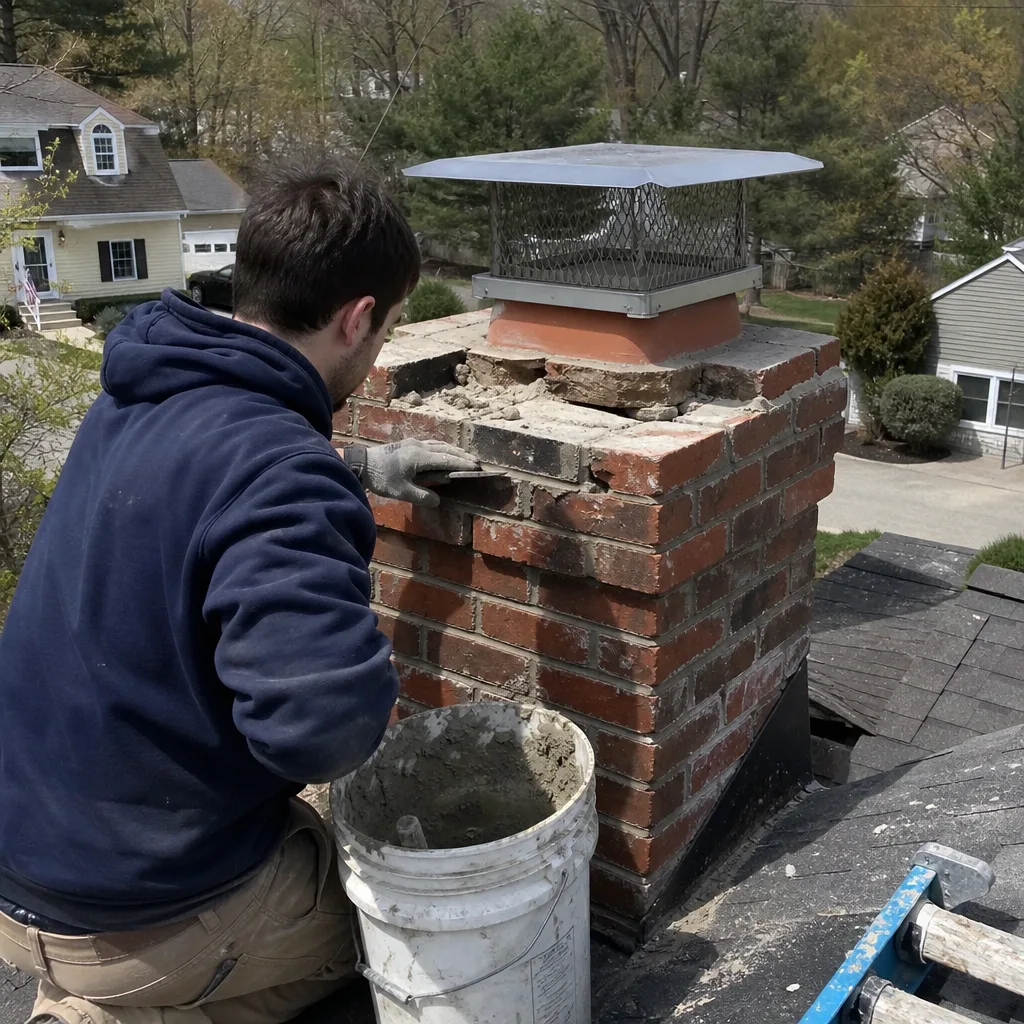
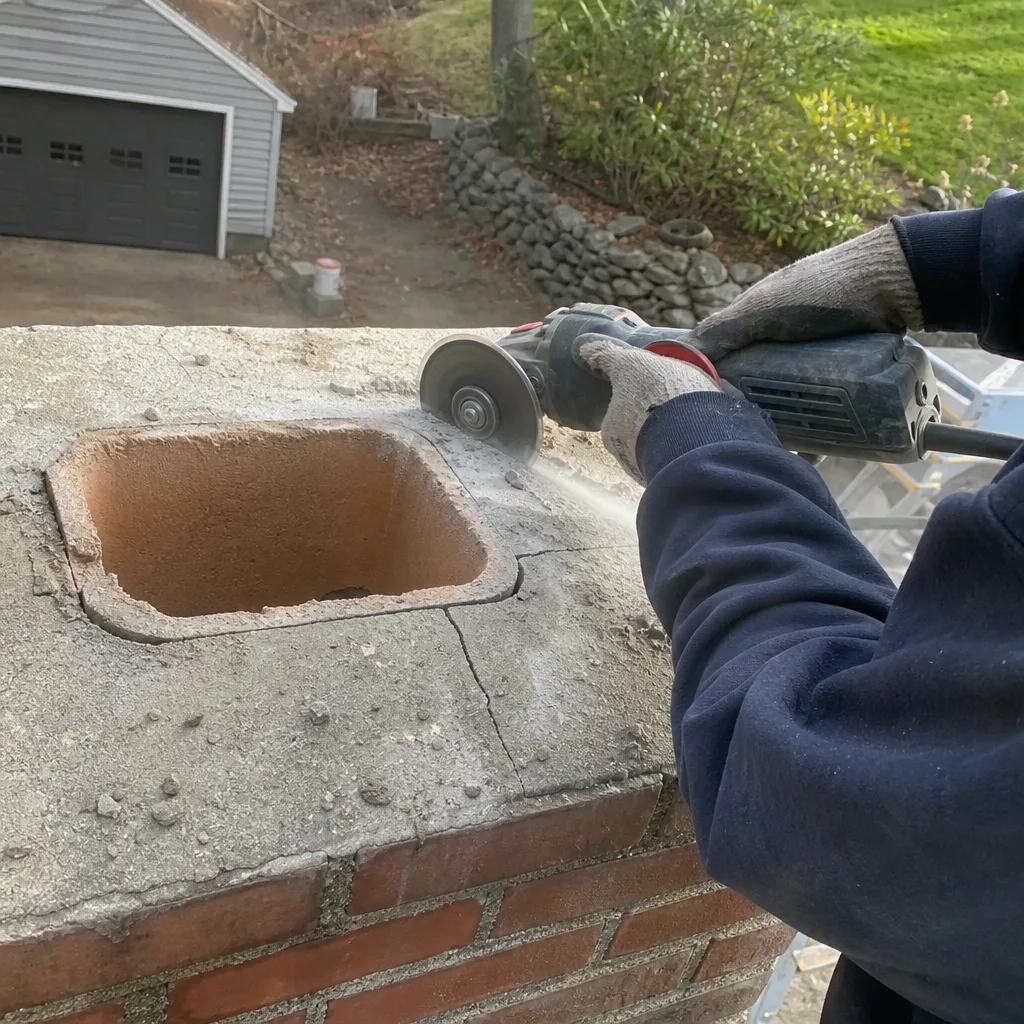
- Ignoring the crown and cap. The chimney crown is the concrete slab at the top that seals everything. If it’s cracked, water gets in and feeds the freeze-thaw cycle. A cleaning should include a look at the cap and crown every time.
- Burning anything other than seasoned wood. Construction scraps, treated lumber, wrapping paper, cardboard. All of it produces residues and temperatures your flue wasn’t designed for, and some of it creates toxic gases. If it’s not firewood, don’t burn it.
When to Call a Professional
Call a professional if you notice any of these: a persistent smoky smell in the house even when the fireplace isn’t in use, visible soot or staining on the wall above the mantel, sounds of animals in the chimney, crumbling mortar on the exterior, water staining on the ceiling near the chimney chase, or if you’ve just bought a Boston home and don’t have a recent camera scan on file. If you’ve had a chimney fire, even a small one that self-extinguished, the flue needs a professional inspection before another fire is lit, as covered in our DIY vs Professional Chimney Cleaning: The Boston Homeowner’s Decision Guide. Level Two Chimney Boston offers free estimates in Boston, call (857) 567-8887.
Frequently Asked Questions
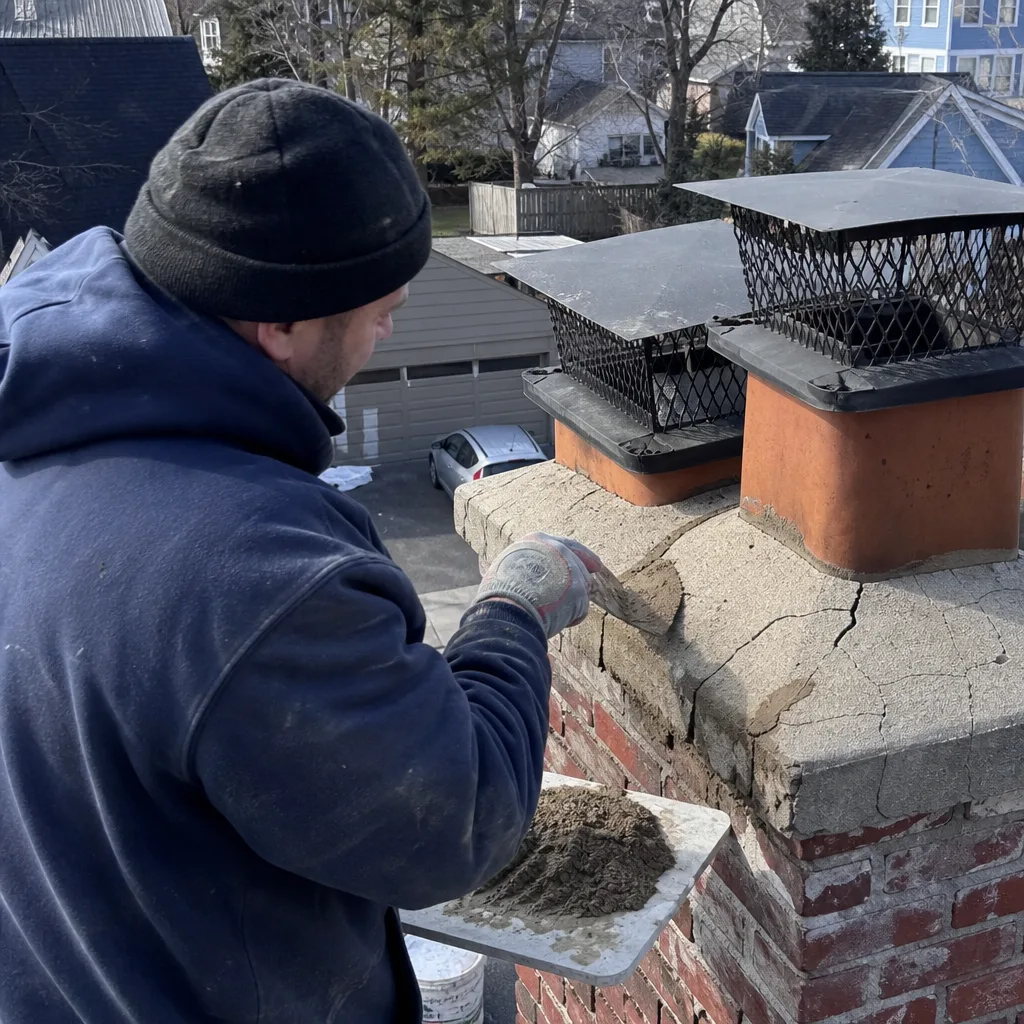
Standard chimney cleaning in Boston runs $189 to $389 for a typical single-flue sweep. The range depends on flue height, the type and amount of residue, whether a roof ladder setup or interior access is required, and whether a video scan is included. At Level Two Chimney Boston, the written price includes both the full sweep and the camera scan on every visit. Call (857) 567-8887 for an exact written quote; estimates are free, and the price is fixed before any work starts.
Once a year for wood-burning fireplaces used regularly, and every one to two years for gas-only or decorative flues. Boston’s damp winters and the city’s high percentage of older, converted flues push the real schedule toward the more frequent end. If you use the fireplace more than a few times a month during heating season, annual is the correct cadence.
You can verify it yourself with the camera footage. A new liner is necessary when the existing one has cracks, gaps, spalling, or corrosion that would allow heat or gases into places they shouldn’t go. If a company tells you the liner needs replacement, ask to see the video showing the specific damage. If they can’t produce it, get a second opinion, ours is free on any written estimate. If they can, you’ll see exactly why the work is needed.
Creosote and soot keep building. The flue passage narrows. Combustion byproducts back up into the house more easily. If the chimney is wood-burning, built-up creosote is a fire hazard, and if it’s gas, corrosion continues. In Boston specifically, water entering through a neglected crown or cap combined with freeze-thaw cycles means damage compounds every winter you skip. Most people who skip cleanings end up paying more for repairs than they saved on maintenance.
The smell is typically old oil soot getting damp and off-gassing or condensate mixing with soot residue in the flue. Boston homes that converted from oil to gas often have flues that were never properly cleaned of oil residue before the gas appliance was connected. The fix is a thorough cleaning of the old soot, followed by a camera inspection to confirm the liner is intact. This is one of the most common calls we take in older Boston neighborhoods.
Yes. Cleaning doesn’t require shutting down your heating for more than a couple of hours, and the work can be done safely in cold weather. The bigger issue is that winter bookings in Boston fill up quickly, especially after the first cold snap when everyone fires up their fireplace for the first time and notices something wrong. Book before the cold arrives. Call (857) 567-8887 to schedule.
The Bottom Line
Chimney cleaning in Boston is not a generic service. Your chimney is older than the national average, it’s been through fuel conversions, and it survives brutal freeze-thaw cycles every winter. That combination means the inspection matters more than the brush, the camera matters more than the flashlight, and the written record matters more than the verbal assurance. Get a sweep and a Level 2 camera scan once a year. Get a written report with photos. Don’t accept a price that isn’t in writing. If you’re what most Boston homeowners are, someone who researched before calling, go to Chimney Repair in Boston to understand what common findings look like and what repairs actually cost. Then make one call and ask what the price is. You should get an answer in writing, before anyone steps into your house.
Written by Corrine Halstead, Owner at Level Two Chimney Boston, serving Boston since 2009.